



Introduction
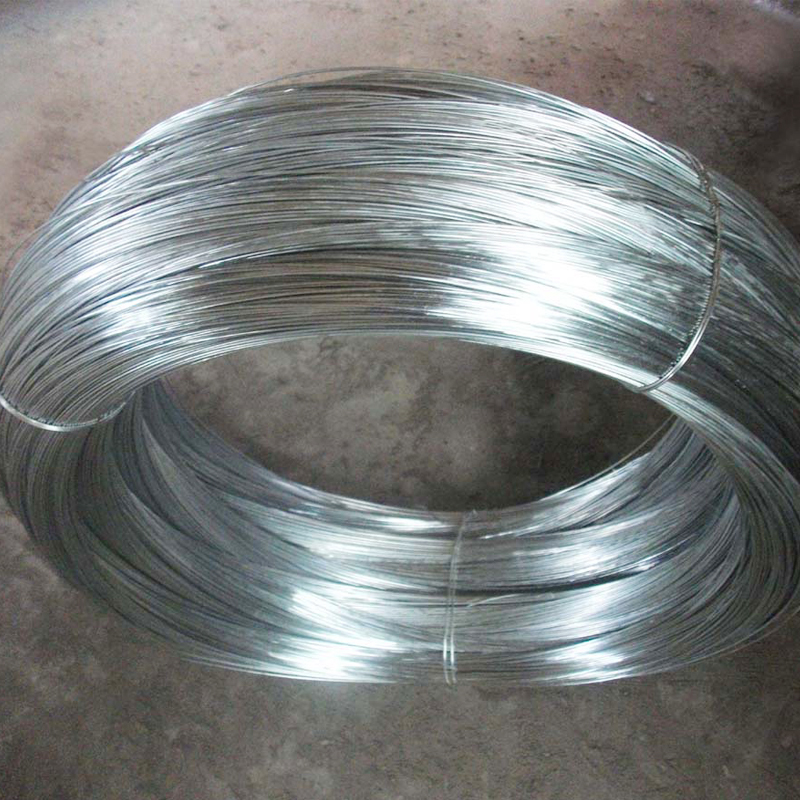
3mm iron wire, a foundational material across numerous industrial applications, represents a common yet critically important component in sectors ranging from construction and agriculture to manufacturing and automotive. Its utility stems from a balance of tensile strength, ductility, and cost-effectiveness. Positioned within the broader metallic materials supply chain, it's typically produced from low-carbon steel through a drawing process. Core performance characteristics include load-bearing capacity, formability for fabrication, and resistance to yielding under specified stress conditions. However, its susceptibility to corrosion, especially in humid or saline environments, represents a primary industry pain point demanding consideration of protective coatings or material substitutions.
Material Science & Manufacturing
The primary raw material for 3mm iron wire is low-carbon steel, generally containing between 0.05% and 0.25% carbon by weight. Other alloying elements, such as manganese (typically 0.30-0.90%) and silicon (0.02-0.30%), are added to improve strength, ductility, and workability. The iron ore is first smelted to produce pig iron, which then undergoes further refining to lower the carbon content. Manufacturing begins with hot rolling of steel billets into wire rod. This rod is then pickled in an acid solution to remove mill scale. The core process is wire drawing, where the rod is pulled through a series of progressively smaller dies, reducing its diameter to 3mm. Critical parameters include die angle (typically 6-12 degrees), die material (often tungsten carbide for wear resistance), drawing speed (optimized to prevent overheating and fracture), and lubrication (using soaps or oils to reduce friction). Post-drawing, the wire may undergo annealing to relieve work hardening and improve ductility. Surface treatments, such as galvanizing or coating with polymers, are frequently applied to enhance corrosion resistance. Quality control involves monitoring tensile strength, elongation, and diameter consistency throughout the process.
Performance & Engineering
The performance of 3mm iron wire is fundamentally governed by its mechanical properties. Tensile strength, typically ranging from 400-550 MPa, dictates its load-bearing capacity before fracture. Yield strength, around 250-350 MPa, determines its resistance to permanent deformation. Elongation at break (15-25%) indicates its ductility, and its ability to deform before fracturing. Engineering considerations include stress concentration points, particularly at bends or joints. Fatigue analysis is crucial in applications involving cyclic loading, as repeated stress cycles can lead to premature failure. Environmental resistance is a major concern. Iron corrodes readily in the presence of moisture and oxygen, forming iron oxide (rust). This corrosion reduces the wire’s effective cross-sectional area and weakens it. Galvanizing (zinc coating) provides sacrificial protection, while polymer coatings create a barrier against corrosive agents. Compliance requirements vary by application. For construction applications, standards like ASTM A82/A82M specify the mechanical and chemical properties of galvanized steel wire. For automotive applications, stringent standards regarding material purity and consistency are imposed. Force analysis during application must account for dynamic loads, temperature fluctuations, and potential corrosive environments.
Technical Specifications
| Parameter | Unit | Typical Value | Testing Standard |
|---|---|---|---|
| Nominal Diameter | mm | 3.0 ± 0.05 | ISO 286 |
| Tensile Strength | MPa | 450-550 | ASTM A82/A82M |
| Yield Strength | MPa | 280-380 | ISO 6892-1 |
| Elongation at Break | % | 18-22 | ASTM E8 |
| Zinc Coating Thickness (Galvanized) | µm | 45-60 | ASTM B693 |
| Carbon Content | % | 0.05-0.25 | ASTM E415 |
Failure Mode & Maintenance
Common failure modes for 3mm iron wire include tensile fracture (due to exceeding its tensile strength), ductile rupture (slow crack propagation under sustained load), fatigue failure (crack initiation and growth under cyclic loading), and corrosion-induced failure (weakening due to rust). Fatigue cracking often initiates at stress concentration points, such as bends or areas of surface damage. Corrosion occurs more rapidly in environments with high humidity, salinity, or exposure to acidic substances. Delamination can occur in coated wires if the coating is compromised, allowing corrosive agents to reach the underlying metal. Oxidation is a slower process but contributes to long-term degradation. Maintenance strategies depend on the application. Regular visual inspections can identify signs of corrosion or damage. Protective coatings should be reapplied as needed. For critical applications, periodic non-destructive testing (NDT) methods, such as ultrasonic testing or magnetic particle inspection, can detect subsurface cracks or defects. Lubrication can reduce friction and wear in moving wire applications. Proper storage in a dry environment prevents premature corrosion.
Industry FAQ
Q: What is the impact of varying carbon content on the wire's properties?
A: Increasing carbon content generally increases tensile and yield strength but reduces ductility and weldability. Low-carbon steel, used for 3mm wire, provides a good balance between strength and formability. Higher carbon content would make the wire more brittle and prone to cracking during forming operations.
Q: How does galvanizing compare to other corrosion protection methods?
A: Galvanizing provides sacrificial protection – the zinc coating corrodes preferentially, protecting the iron. Other methods, like paint or polymer coatings, create a barrier. Galvanizing is often more durable and provides long-term corrosion protection, even if the coating is scratched. However, it may not be suitable for high-temperature applications.
Q: What are the limitations of using 3mm iron wire in highly corrosive environments?
A: Even with galvanizing or coatings, 3mm iron wire has limitations in severely corrosive environments (e.g., saltwater immersion, exposure to strong acids). In such cases, stainless steel or other corrosion-resistant alloys are preferable, despite their higher cost.
Q: What is the significance of the annealing process after wire drawing?
A: Wire drawing work-hardens the steel, making it brittle. Annealing reverses this effect by heating the wire to a specific temperature and then cooling it slowly, restoring ductility and improving its formability without significantly reducing its strength.
Q: How does temperature affect the load-bearing capacity of 3mm iron wire?
A: Generally, tensile strength decreases with increasing temperature. At elevated temperatures, the yield strength also decreases, and creep becomes a concern. Applications involving high temperatures require careful material selection and stress analysis.
Conclusion
3mm iron wire remains a widely utilized material due to its favorable cost-to-performance ratio, serving as a versatile component in diverse industries. Its properties, governed by material composition and manufacturing processes, are well-defined and predictable. However, its susceptibility to corrosion represents a significant operational challenge, requiring careful consideration of protective measures.
Future developments may focus on enhancing corrosion resistance through advanced coating technologies, such as nano-coatings, and exploring high-strength low-alloy (HSLA) steel formulations to improve mechanical performance. Continued refinement of manufacturing processes, combined with rigorous quality control, will ensure the continued reliability and effectiveness of 3mm iron wire in a wide range of applications.