



Introduction
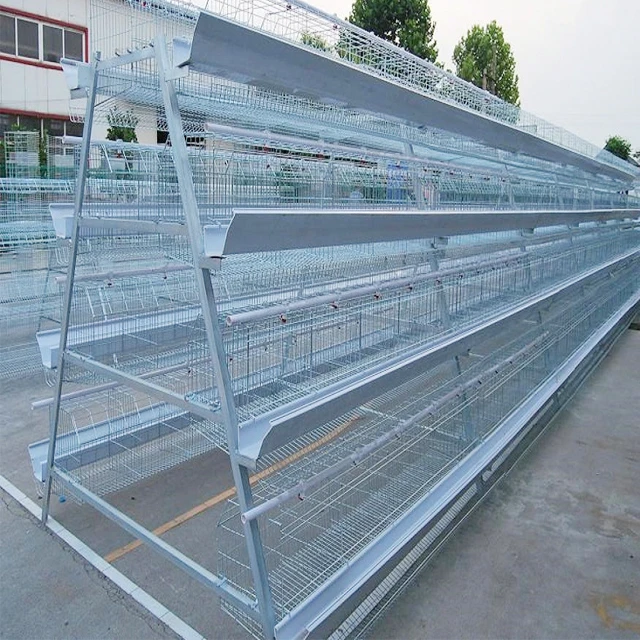
72 welded wire, referencing the gauge (wire diameter) typically expressed in hundredths of an inch, is a foundational component in a vast array of industrial and agricultural applications. Primarily utilized for fabrication of cages, fencing, reinforcement mesh, and structural supports, its performance is dictated by the properties of the constituent steel, the precision of the welding process, and the resultant mechanical characteristics of the finished product. Positioned early in the supply chain for several industries – including agriculture, construction, security, and animal husbandry – 72 welded wire's quality directly impacts the structural integrity and longevity of downstream products. Core performance characteristics revolve around tensile strength, weld shear strength, corrosion resistance, and dimensional stability. The selection criteria are deeply rooted in balancing cost-effectiveness with the specific demands of the intended application; for instance, a cage for broilers will have drastically different requirements than a security fence perimeter. Understanding these nuances is critical for informed material specification and procurement.
Material Science & Manufacturing
The foundational material for 72 welded wire is typically low-carbon steel, although galvanized steel and stainless steel variants are also common depending on the desired corrosion resistance. The steel’s composition directly affects weldability, ductility, and ultimate tensile strength. Common grades include AISI 1008, 1010, and 1018. Raw material selection involves stringent quality control, assessing chemical composition to meet ASTM A876/A876M standards. Manufacturing begins with wire drawing, a process that reduces the diameter of the steel rod through a series of progressively smaller dies, inducing work hardening and increasing tensile strength. Critical parameters during wire drawing include die angle, reduction ratio, and drawing speed, all influencing the wire’s final mechanical properties. Welding is typically achieved through electric resistance welding (ERW), employing a combination of pressure and electrical current to fuse the wires at their intersection points. Key manufacturing parameters during the ERW process are welding current, welding time, electrode force, and wire surface preparation. Insufficient current results in incomplete fusion, while excessive current can lead to spatter and material degradation. Cooling rates post-welding are also crucial; rapid cooling can induce residual stresses and compromise weld integrity. Galvanization, if required, is commonly performed via hot-dip galvanizing, immersing the welded wire mesh in a molten zinc bath to create a protective coating. Quality control throughout the manufacturing process includes dimensional checks (wire diameter, mesh aperture size), tensile testing, and weld shear testing.
Performance & Engineering
The performance of 72 welded wire is largely determined by its ability to withstand applied loads without failure. Force analysis involves assessing tensile stress, shear stress at weld points, and bending moments imposed by external forces. The wire’s yield strength and ultimate tensile strength are critical parameters, dictated by the steel grade and manufacturing process. Weld shear strength is particularly important, as the welds are the most vulnerable points in the structure. Design considerations must account for dynamic loading, impact forces, and potential fatigue failure over the product's lifespan. Environmental resistance is a significant concern; exposure to moisture, corrosive chemicals, and UV radiation can accelerate degradation. Galvanization provides a sacrificial barrier against corrosion, but the rate of zinc consumption is influenced by environmental factors such as salinity and pH. Compliance requirements vary depending on the application. For agricultural applications, adherence to standards related to animal welfare and food safety is essential. For fencing applications, standards related to perimeter security and structural integrity are paramount. Finite element analysis (FEA) is frequently employed in engineering designs to optimize wire gauge, mesh aperture size, and weld spacing to achieve the desired performance characteristics while minimizing material costs. Corrosion protection systems beyond galvanization, such as powder coating or epoxy coatings, may be implemented for applications requiring enhanced durability.
Technical Specifications
| Parameter | Unit | Typical Value (AISI 1010 Steel, Galvanized) | Testing Standard |
|---|---|---|---|
| Wire Diameter | inches | 0.072 | ASTM A876 / A876M |
| Tensile Strength | psi | 60,000 - 80,000 | ASTM A370 |
| Yield Strength | psi | 36,000 - 45,000 | ASTM A370 |
| Weld Shear Strength | psi | 40,000 - 60,000 | ASTM A938 |
| Zinc Coating Thickness | μm | 50 - 80 | ASTM B695 |
| Elongation | % | 15 - 25 | ASTM A370 |
Failure Mode & Maintenance
72 welded wire is susceptible to several failure modes depending on the application and environment. Common issues include fatigue cracking at weld points due to cyclic loading, particularly in applications involving vibration or impact. Corrosion is a major concern, leading to gradual material loss and reduced load-bearing capacity. Galvanized coatings can degrade over time, exposing the underlying steel to corrosion. Stress corrosion cracking can occur in environments containing chlorides or other corrosive agents. Mechanical damage, such as bending or cutting, can compromise the structural integrity of the wire. Delamination of the galvanization layer can occur due to inadequate surface preparation or improper coating application. Maintenance strategies include regular inspection for signs of corrosion, cracks, or damage. Damaged sections should be repaired or replaced promptly. For galvanized wire, periodic re-galvanizing or application of a protective coating can extend its service life. In highly corrosive environments, cathodic protection systems can be implemented to mitigate corrosion. Proper handling and installation are crucial to avoid introducing stress concentrations or damaging the wire. Avoiding sharp bends and ensuring adequate support are key preventative measures.
Industry FAQ
Q: What is the significance of the wire diameter tolerance in 72 welded wire, and how does it impact downstream processing?
A: Wire diameter tolerance is critical because it directly impacts the consistency of the mesh aperture size and the overall structural integrity. A tighter tolerance (e.g., ±0.002 inches) ensures more uniform welding and a more predictable product. Deviations outside the specified tolerance can cause issues in automated fabrication processes, leading to increased scrap rates and compromised product quality. It is essential to ensure the wire manufacturer provides a certificate of conformance validating the diameter meets specifications.
Q: How does the type of welding process (e.g., ERW vs. MIG) affect the weld strength and ductility of 72 welded wire?
A: Electric Resistance Welding (ERW) is the most common method for 72 welded wire due to its efficiency and cost-effectiveness. However, the weld strength and ductility are highly dependent on precise control of welding parameters. MIG welding, while capable of producing stronger welds, is less commonly used for high-volume production of welded wire mesh due to its slower speed and higher cost. ERW welds generally exhibit good shear strength but can be prone to brittleness if not properly controlled. The heat-affected zone around the weld is also a critical area to monitor for potential metallurgical changes that could affect performance.
Q: What are the key differences between Class 1 and Class 3 galvanized coatings, and which is more suitable for outdoor applications in coastal environments?
A: Galvanized coatings are classified based on the thickness of the zinc layer, influencing their corrosion resistance. Class 1 provides a lighter coating (approximately 30-40 μm zinc), suitable for indoor or mildly corrosive environments. Class 3 offers a significantly thicker coating (approximately 60-80 μm zinc) and is designed for outdoor applications and more severe corrosive conditions. For coastal environments with high salinity, Class 3 galvanization is strongly recommended to provide adequate protection against saltwater corrosion. The higher zinc content provides a longer-lasting sacrificial barrier, delaying the onset of rust.
Q: What impact does the steel grade (e.g., AISI 1008 vs. AISI 1018) have on the formability and weldability of 72 welded wire?
A: AISI 1008, with its lower carbon content, generally exhibits superior formability and weldability compared to AISI 1018, which has a higher carbon content. The higher carbon content in 1018 increases its strength and hardness but also makes it more brittle and susceptible to cracking during forming and welding. Selecting the appropriate steel grade depends on the specific application; if formability is paramount (e.g., creating complex shapes), 1008 is preferable. If higher strength is required and forming is minimal, 1018 may be suitable, but requires careful control of welding parameters.
Q: What non-destructive testing (NDT) methods are commonly used to assess the quality of welds in 72 welded wire mesh?
A: Common NDT methods include visual inspection for surface defects (cracks, porosity), dye penetrant testing to reveal surface cracks, and radiographic testing (X-ray) to detect subsurface flaws. Ultrasonic testing can also be employed to identify internal weld defects. Eddy current testing is useful for detecting surface and near-surface cracks. The choice of NDT method depends on the criticality of the application and the level of confidence required in the weld quality. Radiographic testing offers the most comprehensive assessment but is also the most expensive and time-consuming.
Conclusion
72 welded wire, despite its seemingly simple construction, represents a sophisticated materials solution reliant on a complex interplay of material science, manufacturing precision, and engineering considerations. Its performance is intrinsically linked to the chemical composition of the steel, the integrity of the welding process, and the effectiveness of any applied corrosion protection. Selecting the appropriate grade of steel, galvanization class, and weld parameters is crucial to achieving the desired strength, durability, and longevity for the intended application.
Future trends in 72 welded wire technology will likely focus on advanced coating technologies offering enhanced corrosion resistance, the development of higher-strength steel alloys, and the implementation of automated quality control systems utilizing machine vision and artificial intelligence. Optimizing manufacturing processes to reduce material waste and energy consumption will also be a key priority, driving innovation towards more sustainable and cost-effective production methods. Continuous improvement in weld quality and a deeper understanding of failure mechanisms will remain paramount to ensuring the reliability and performance of this widely used industrial material.