



Introduction
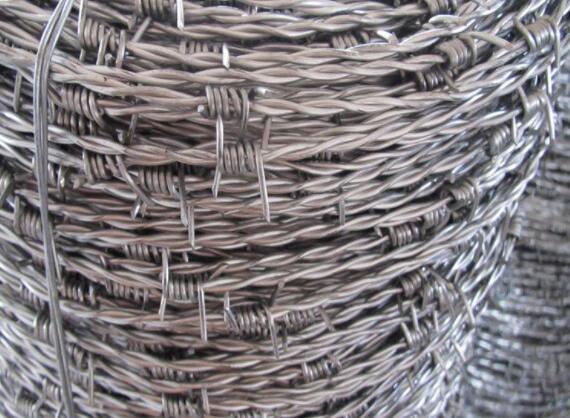
Fencing iron wire, encompassing galvanized, barbed, and woven varieties, represents a foundational element in perimeter security, agricultural containment, and industrial applications. Positioned within the broader metal products industry, specifically the wire and wire products sector, its performance is critically defined by tensile strength, corrosion resistance, and durability. The selection of appropriate fencing iron wire is paramount, directly impacting the longevity and effectiveness of barrier systems. This guide provides an in-depth technical examination of fencing iron wire, covering material science, manufacturing processes, performance characteristics, failure modes, and relevant industry standards, intended for procurement professionals, engineers, and end-users requiring a comprehensive understanding of this essential material. Core performance characteristics revolve around resisting environmental degradation, maintaining structural integrity under tension and impact, and providing a long service life with minimal maintenance.
Material Science & Manufacturing
Fencing iron wire is predominantly manufactured from low-carbon steel, typically ranging from SAE 1006 to 1018, chosen for its ductility and weldability. The raw material undergoes a cold drawing process to achieve the desired wire diameter, increasing tensile strength through work hardening. Galvanization, most commonly using a hot-dip process, is crucial for corrosion protection. The steel is immersed in molten zinc, creating a metallurgical bond that provides a barrier against atmospheric elements. Barbed wire utilizes additional manufacturing steps, employing a forming machine to helically wrap steel barbs around the wire. Woven wire fencing, conversely, involves weaving multiple wires in a specific pattern, often utilizing a lock crimp or a hinge joint configuration. Key parameters during manufacturing include zinc coating thickness (measured in g/m2), wire diameter tolerance (typically ±0.02mm), barb spacing and height consistency, and weave pattern accuracy. Steel composition must adhere to stringent quality control, verifying carbon content, manganese levels (for improved strength), and sulfur/phosphorus content (minimizing brittleness). Surface preparation prior to galvanization—acid pickling and fluxing—is critical for ensuring optimal zinc adhesion and preventing premature corrosion. Improper fluxing can lead to white rust formation, compromising the protective coating.
Performance & Engineering
The engineering performance of fencing iron wire is dictated by its ability to withstand tensile forces, shear stresses (particularly in woven configurations), and impact loads. Tensile strength, typically ranging from 400-600 MPa for galvanized wire, determines the wire's resistance to breaking under tension. Yield strength, usually around 250-350 MPa, indicates the point at which permanent deformation begins. Galvanization thickness directly impacts corrosion resistance, governed by electrochemical principles. The zinc coating acts as a sacrificial anode, corroding preferentially to protect the underlying steel. Environmental resistance considerations extend beyond simple corrosion; UV exposure can degrade polymeric coatings often applied over galvanization for aesthetic or enhanced corrosion protection. Force analysis in fence design must account for wind loading, snow accumulation (in colder climates), and potential impacts from animals or trespassers. Compliance requirements vary geographically, often dictated by local building codes and agricultural regulations concerning fence height, wire spacing, and structural integrity. Finite element analysis (FEA) is often employed to model fence behavior under load, optimizing wire gauge and post spacing for specific application requirements. The elongation at break is also a critical parameter, indicating the wire's ductility and ability to absorb energy before failure.
Technical Specifications
| Parameter | Galvanized Iron Wire | Barbed Wire (12.5 Gauge) | Woven Wire (Field Fence) |
|---|---|---|---|
| Tensile Strength (MPa) | 400-550 | 500-600 | 350-450 |
| Zinc Coating (g/m2) | 60-80 | 60-90 | 40-60 |
| Wire Diameter (mm) | 1.6-3.2 | 2.0-3.6 | 1.2-2.4 |
| Elongation at Break (%) | 15-25 | 10-20 | 12-18 |
| Barb Spacing (mm) | N/A | 300-400 | N/A |
| Aperture Size (Woven Wire - mm) | N/A | N/A | 50x150, 100x100 |
Failure Mode & Maintenance
Failure modes in fencing iron wire are diverse, stemming from corrosion, mechanical fatigue, and impact damage. Galvanic corrosion, accelerated by dissimilar metal contact (e.g., steel wire and aluminum posts), leads to localized degradation. Chloride-induced corrosion, prevalent in coastal environments, dramatically reduces the lifespan of galvanized coatings. Mechanical fatigue arises from repeated stress cycles due to wind loading or animal impact, potentially causing wire fracture or loosening of woven joints. Impact damage can directly break wires or distort the fence structure. Oxidation of the steel substrate, even under galvanization, can occur over extended periods, particularly in environments with high humidity and pollutants. Maintenance strategies include regular inspection for corrosion, tightening loose wires, and repairing broken sections. Applying a protective coating (e.g., zinc-rich paint) to damaged areas can slow down corrosion. Periodic re-galvanization of heavily corroded sections can extend the fence’s life, although this is often cost-prohibitive. Proper grounding of metallic fence posts can mitigate galvanic corrosion risks, preventing accelerated deterioration. In high-traffic areas, using heavier gauge wire and reinforced posts can minimize impact damage.
Industry FAQ
Q: What is the difference between Class 1 and Class 3 galvanization, and how does it impact fencing lifespan?
A: Class 1 galvanization typically refers to a zinc coating of approximately 60-80 g/m2, offering a moderate level of corrosion protection suitable for inland, less aggressive environments. Class 3 galvanization, with a coating of 180-200 g/m2, provides significantly enhanced corrosion resistance, extending the fencing lifespan considerably, especially in coastal areas, industrial environments, or agricultural settings with high salt content. The thicker coating acts as a more substantial barrier and sacrificial anode, delaying the onset of steel corrosion.
Q: How does the wire diameter affect the overall strength and cost of a fence?
A: Increasing the wire diameter directly increases the tensile strength of the fencing, enabling it to withstand greater loads and providing enhanced security. However, a thicker wire also increases material costs, requiring more steel for the same length of fence. The optimal wire diameter is a compromise between strength requirements, budget constraints, and the specific application. Thicker gauges are preferred for high-security applications or areas prone to significant stress.
Q: What are the common causes of sag in woven wire fencing, and how can it be prevented?
A: Sag in woven wire fencing is often caused by inadequate post spacing, insufficient wire tension during installation, or ground settlement. Over time, the weight of the wire and environmental factors can exacerbate the sag. Prevention involves using appropriately spaced posts (typically 2-3 meters apart), ensuring proper wire tensioning during installation, and selecting posts with adequate embedment depth to resist ground movement. Utilizing stay wires or bracing wires can also help maintain tension and prevent sagging.
Q: Can barbed wire fencing be used effectively for animal containment, and what are the associated considerations?
A: Barbed wire can be effective for animal containment, particularly for livestock. However, careful consideration must be given to animal welfare. The barb spacing and height should be appropriate for the type of animal being contained to minimize injury risk. Additionally, barbed wire can be more prone to causing damage to animal hides and wool. Alternatives like woven wire with smaller mesh sizes or electric fencing may be preferable for certain species.
Q: How do different weave patterns (e.g., hinge joint, fixed knot) in woven wire fencing impact its performance and longevity?
A: Hinge joint weave patterns allow for greater flexibility and conformability to uneven terrain, making them more resistant to stretching and breakage. The vertical wires pass through the horizontal wires, creating a "hinge" that allows for movement. Fixed knot weaves, where the vertical and horizontal wires are tightly knotted together, offer higher tensile strength and rigidity but are less forgiving to terrain variations. Fixed knot fences generally have a longer lifespan but are more expensive. The choice depends on the specific application and environmental conditions.
Conclusion
Fencing iron wire, despite its seemingly simple construction, represents a complex interplay of material science, manufacturing precision, and engineering considerations. Its performance is fundamentally linked to corrosion resistance, tensile strength, and the ability to withstand environmental stresses. Proper material selection, manufacturing control, and installation practices are critical for ensuring a long service life and optimal functionality. Understanding the nuances of galvanization, wire diameters, and weave patterns empowers informed decision-making for a wide range of applications.
Future trends in fencing iron wire technology will likely focus on advanced coating materials—such as zinc-aluminum alloys—offering superior corrosion protection and increased durability. The development of more sustainable manufacturing processes and the exploration of alternative wire materials with enhanced mechanical properties will also be key areas of innovation. Continued adherence to international standards and rigorous quality control will remain essential for maintaining the reliability and performance of fencing iron wire in demanding environments.