



Introduction
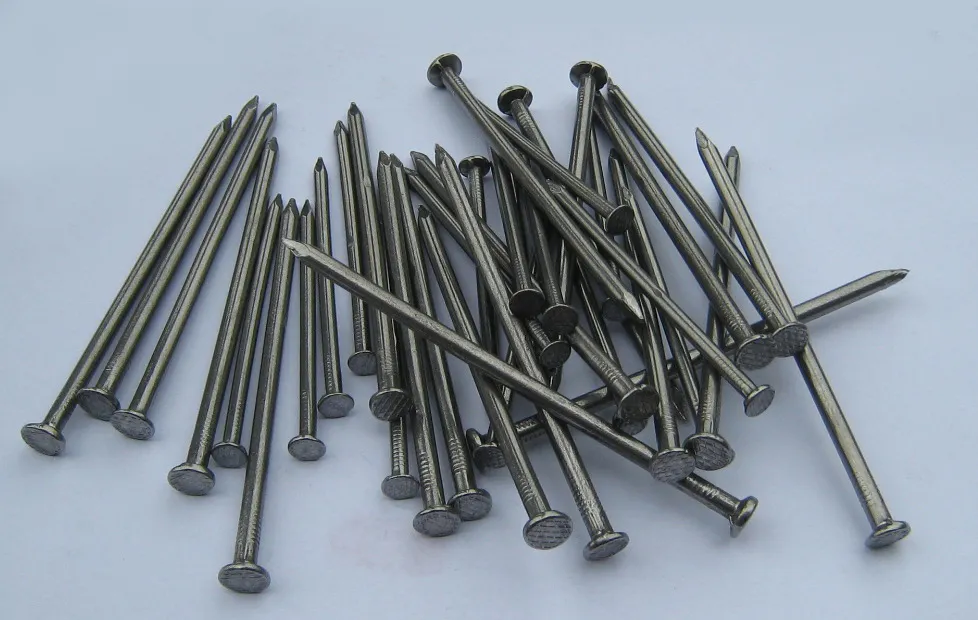
Galvanized common nails are a fundamental fastening element in construction, woodworking, and a variety of industrial applications. Defined by their robust steel shank and broad, flat head, common nails are designed for general-purpose nailing where a strong, reliable connection is required. The galvanization process, typically involving a zinc coating, provides crucial corrosion resistance, extending the service life of the nail, particularly in exposed environments. Technically positioned as a mechanical fastener, galvanized common nails compete with screws, bolts, and adhesives, offering a cost-effective and rapid installation solution. Core performance characteristics include shear strength, tensile strength, and the adherence of the zinc coating to the steel substrate. Understanding these properties is paramount for selecting the appropriate nail size and type for specific applications, mitigating failures related to load bearing, environmental degradation, and improper installation.
Material Science & Manufacturing
The primary raw material for galvanized common nails is carbon steel, typically AISI 1008 or similar low-carbon grades, selected for their ductility and weldability. Steel composition directly influences tensile strength (typically 400-600 MPa) and yield strength (250-400 MPa). The manufacturing process begins with wire drawing, reducing the steel diameter to the desired nail shank size. Subsequent cutting and heading operations form the nail head. The critical stage involves galvanization, typically hot-dip galvanizing. This process immerses the nails in a molten zinc bath (approximately 450°C). A metallurgical reaction occurs, forming a series of zinc-iron alloy layers, providing cathodic protection to the steel. Zinc thickness, controlled by withdrawal speed and bath composition, significantly impacts corrosion resistance. Chemical compatibility is a key consideration: the zinc coating must adhere strongly to the steel, and the process must avoid hydrogen embrittlement, which can reduce ductility. Quality control involves rigorous testing of coating thickness (measured in microns), coating uniformity, and adhesion strength. Modern manufacturing increasingly employs automated processes, including robotic handling and precise coating control, to minimize variations and ensure consistent product quality. Alternative galvanizing processes, such as electro-galvanizing, offer finer coating control but may provide less robust corrosion protection.
Performance & Engineering
The performance of galvanized common nails is governed by several engineering principles. Force analysis considers both shear and tensile loads. Shear strength, the resistance to forces acting parallel to the shank, is critical in applications involving racking or lateral movement. Tensile strength, the resistance to forces pulling directly on the nail, is important in applications where the nail is subjected to direct pull-out forces. Environmental resistance is directly related to the quality and thickness of the zinc coating. Exposure to moisture, salt spray, and acidic environments accelerates corrosion, leading to coating degradation and ultimately, nail failure. Compliance requirements vary by region and application. Building codes often specify nail size, type, and spacing based on structural load calculations. For example, the International Building Code (IBC) provides guidelines for nail schedules in wood framing. The nail’s ability to penetrate the substrate material (wood, metal, etc.) is also critical. The nail head’s design (flat, round, etc.) influences its holding power and its resistance to bending over. Proper nail driving technique—avoiding bending the nail and ensuring complete penetration—is crucial for optimal performance. Finite Element Analysis (FEA) can be used to model the stress distribution within the nail and surrounding materials, optimizing nail dimensions and material properties for specific load conditions.
Technical Specifications
| Diameter (Gauge) | Shank Length (mm) | Head Diameter (mm) | Coating Thickness (μm) |
|---|---|---|---|
| 2.3 | 50 | 9.5 | 40-60 |
| 2.8 | 75 | 11.3 | 40-60 |
| 3.3 | 90 | 12.9 | 40-60 |
| 3.8 | 120 | 14.3 | 40-60 |
| 4.5 | 150 | 16.0 | 40-60 |
| 5.0 | 200 | 17.5 | 40-60 |
Failure Mode & Maintenance
Galvanized common nails are susceptible to several failure modes. Corrosion is a primary concern, particularly in marine or industrial environments. Gradual zinc depletion leads to exposure of the underlying steel, initiating rust formation. Hydrogen embrittlement, resulting from the hot-dip galvanizing process, can reduce ductility and lead to brittle fracture, especially under sustained tensile stress. Fatigue cracking can occur due to repeated loading and unloading cycles, initiating at the nail head or shank. Shear failure can result from exceeding the nail’s shear strength, causing the shank to break or bend. Pull-out failure occurs when the nail loses its grip on the substrate material, often due to insufficient penetration or wood splitting. Delamination of the zinc coating can occur due to poor surface preparation before galvanizing or due to mechanical damage. Maintenance primarily focuses on preventative measures. Regular inspection of nailed structures can identify early signs of corrosion. Applying a protective coating (paint, varnish, or sealant) over the nail heads can provide an additional barrier against moisture and corrosion. In cases of localized corrosion, removing the affected nails and replacing them with new, galvanized nails is the recommended solution. Avoid using galvanized nails in direct contact with aluminum, as this can accelerate galvanic corrosion. Proper storage of nails in a dry environment will minimize pre-emptive corrosion.
Industry FAQ
Q: What is the significance of different zinc coating thicknesses, and how does it relate to the intended service life of the nails?
A: Zinc coating thickness directly correlates to the level of corrosion protection and the expected service life. Thicker coatings provide greater cathodic protection, slowing down the corrosion rate of the steel. A coating thickness of 40-60 μm is generally sufficient for indoor or dry applications. However, for outdoor exposure, especially in coastal or industrial environments, a coating thickness of 70-100 μm or higher is recommended. The service life is highly dependent on the specific environmental conditions, but thicker coatings significantly extend the time before corrosion becomes a structural concern.
Q: How does the steel grade used in the nail shank impact its performance, specifically its shear and tensile strength?
A: The steel grade significantly influences the nail’s mechanical properties. Higher carbon steel grades generally offer higher tensile and shear strengths but may be less ductile, increasing the risk of brittle fracture. Low-carbon steel, like AISI 1008, provides a good balance of strength and ductility, making it suitable for most common nailing applications. The specific heat treatment process applied to the steel can also affect its strength and hardness.
Q: What are the potential drawbacks of using electro-galvanized nails compared to hot-dip galvanized nails?
A: Electro-galvanization produces a thinner, more uniform zinc coating, offering a smoother finish. However, the coating is typically less adherent and provides less robust corrosion protection than hot-dip galvanization. The zinc layer deposited electrochemically is less metallurgically bonded to the steel substrate, making it more susceptible to chipping and abrasion. Hot-dip galvanization provides a thicker, more durable coating due to the alloy layers formed during the process.
Q: What measures can be taken to prevent hydrogen embrittlement during the galvanizing process?
A: Hydrogen embrittlement can be mitigated by controlling the galvanizing process parameters. This includes using appropriate steel grades with lower susceptibility to hydrogen absorption, implementing post-galvanizing baking treatments to drive out absorbed hydrogen, and carefully controlling the acid pickling process used to clean the steel prior to galvanizing. The use of inhibitors in the pickling bath can also reduce hydrogen absorption.
Q: What factors should be considered when selecting the appropriate nail gauge and length for a specific application?
A: Nail gauge (diameter) and length selection depend on the materials being fastened and the anticipated loads. Thicker materials require larger gauge nails. Longer nails provide greater pull-out resistance. The wood species being fastened also influences nail selection; denser woods require larger gauge nails to prevent splitting. Building codes often specify minimum nail size and spacing requirements based on structural load calculations. Consideration should be given to the potential for shear forces and tensile loads when selecting the appropriate nail dimensions.
Conclusion
Galvanized common nails remain a crucial fastening solution due to their cost-effectiveness, ease of installation, and inherent strength. Understanding the interplay between material science – specifically the properties of carbon steel and the protective qualities of zinc galvanization – and manufacturing processes is essential for ensuring consistent product performance. The longevity of galvanized common nails relies heavily on the quality of the zinc coating and adherence to appropriate installation techniques.
Future developments may focus on optimizing galvanizing processes to enhance coating adhesion and corrosion resistance, potentially incorporating new alloy compositions or surface treatments. Further research into alternative coating materials that offer superior environmental protection without the limitations of zinc is also anticipated. Continued adherence to industry standards and rigorous quality control will be paramount in maintaining the reliability and structural integrity of nailed connections.