




Introduction
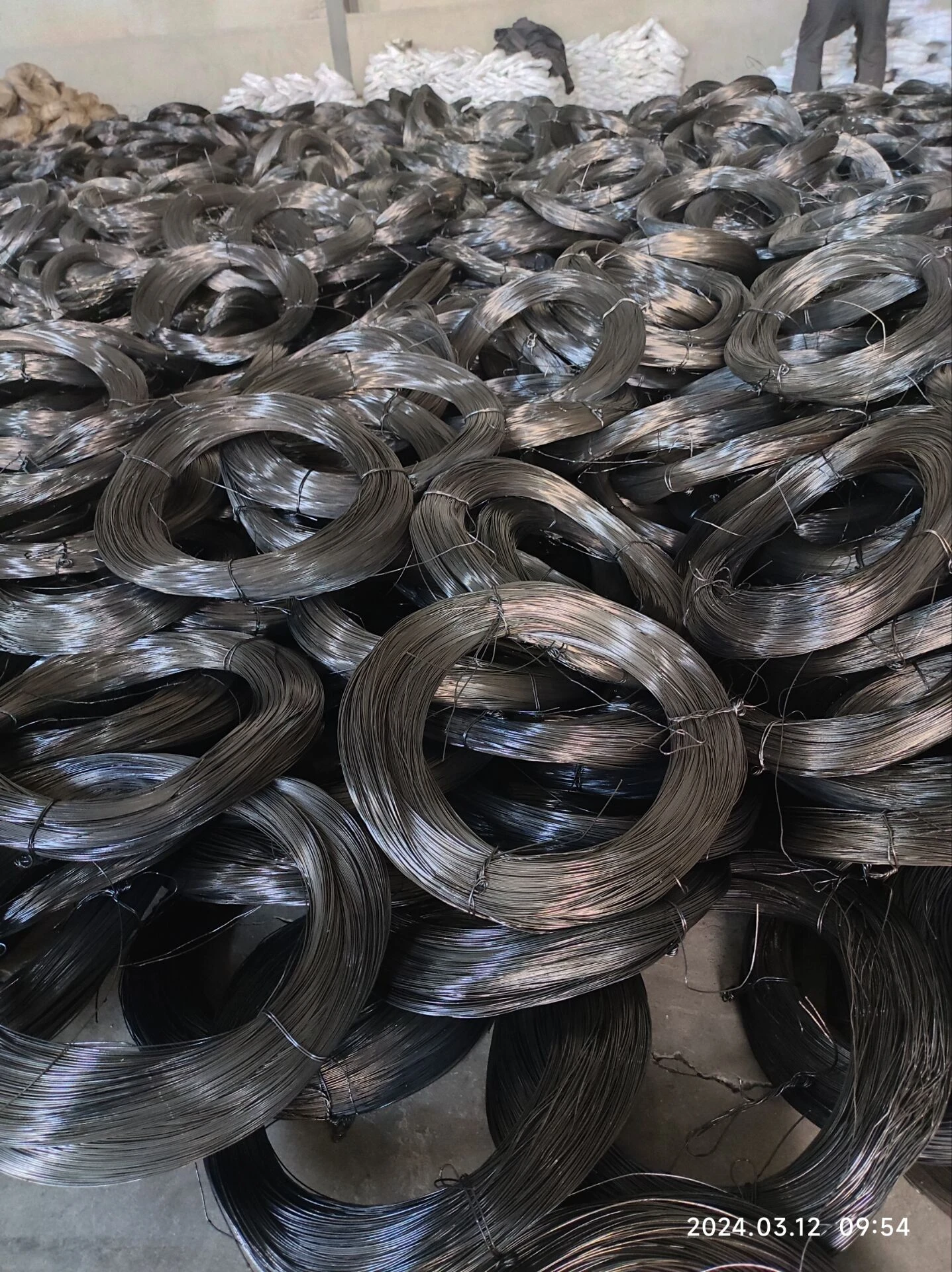
Iron binding wire, commonly referred to as tie wire, is a low-carbon steel wire utilized extensively in construction, agricultural, and industrial applications for bundling, fastening, and securing materials. Its technical position within the industry chain lies between raw steel production and final product assembly, serving as a critical component in reinforcing, packaging, and structural support. Core performance characteristics include tensile strength, ductility, and formability, directly impacting its load-bearing capacity and ease of manipulation. A key industry pain point is consistent wire diameter and surface finish to ensure reliable knotting and minimize material waste during application. Corrosion resistance is also a significant concern, influencing longevity in outdoor or harsh environments. The wire’s ability to maintain its structural integrity under varying loads and environmental conditions defines its functional effectiveness.
Material Science & Manufacturing
Iron binding wire is primarily manufactured from low-carbon steel, typically containing 0.05% to 0.25% carbon. The raw material undergoes several processing stages. Initially, steel billets are hot-rolled into wire rod. This process imparts a specific grain structure that contributes to the wire’s ductility. Subsequently, the wire rod is pickled to remove surface scale and oxides, preparing it for further drawing. The core manufacturing process is wire drawing, where the wire rod is pulled through a series of progressively smaller dies, reducing its diameter and increasing its tensile strength. Critical parameters during drawing include die angle, drawing speed, and lubrication. Insufficient lubrication leads to friction and heat buildup, resulting in surface defects and potential breakage. Annealing, a heat treatment process, is often employed after drawing to restore ductility and relieve internal stresses. The final stage typically involves spooling the wire onto coils for ease of handling and transportation. Surface coatings, such as galvanization or epoxy coating, are applied to enhance corrosion resistance. Chemical composition is precisely controlled to meet specified mechanical properties. Hydrogen embrittlement can occur during the pickling process, requiring post-treatment to mitigate its effects.
Performance & Engineering
The performance of iron binding wire is largely dictated by its tensile strength, yield strength, and elongation. Tensile strength, determined through standardized pull tests (ASTM A610), indicates the maximum stress the wire can withstand before fracture. Yield strength defines the point at which permanent deformation begins. Elongation measures the wire’s ductility, or its ability to stretch without breaking. Engineering analysis focuses on the force required to break the wire under various loading conditions, including direct tension, bending, and torsion. Environmental resistance is a critical consideration; exposure to moisture, chlorides, and acidic environments can accelerate corrosion. Galvanized coatings provide sacrificial protection, preventing the underlying steel from corroding. The wire’s ability to form secure knots is also a key performance factor. Knot strength is influenced by wire diameter, surface finish, and the tightness of the knot. Compliance requirements vary by application and region. Construction applications often adhere to building codes specifying minimum wire gauge and strength requirements. Fatigue performance, the wire’s resistance to repeated loading and unloading, is paramount in applications subject to cyclical stresses. Finite element analysis (FEA) can be used to model stress distributions and predict fatigue life.
Technical Specifications
| Diameter (mm) | Tensile Strength (MPa) | Yield Strength (MPa) | Elongation (%) |
|---|---|---|---|
| 1.2 | 350-450 | 200-280 | 15-25 |
| 1.6 | 300-400 | 180-250 | 12-20 |
| 2.0 | 280-380 | 160-230 | 10-18 |
| 2.5 | 250-350 | 140-200 | 8-15 |
| 3.0 | 230-320 | 120-180 | 6-12 |
| 3.5 | 200-300 | 100-160 | 4-10 |
Failure Mode & Maintenance
Iron binding wire is susceptible to several failure modes. Corrosion is a primary concern, particularly in marine or chemically aggressive environments. Rust weakens the wire, reducing its tensile strength and leading to eventual fracture. Fatigue cracking can occur under cyclical loading, initiating at surface defects or stress concentrations. Overloading, exceeding the wire’s tensile strength, results in immediate breakage. Hydrogen embrittlement, as mentioned previously, can contribute to brittle failure. Knot failure can also occur if knots are improperly tied or subjected to excessive stress. Maintenance primarily focuses on preventative measures. Galvanized or coated wire should be selected for corrosive environments. Regular inspection for signs of corrosion or damage is crucial. Wires exhibiting significant rust or cracks should be replaced immediately. Proper storage, avoiding exposure to moisture and direct sunlight, can extend service life. Avoiding sharp bends and kinks during handling minimizes stress concentrations and reduces the risk of fatigue failure. Periodic application of corrosion inhibitors can provide additional protection in severe environments. Careful knot tying techniques are critical for maximizing knot strength and preventing slippage.
Industry FAQ
Q: What is the impact of carbon content on the mechanical properties of iron binding wire?
A: Increasing carbon content generally increases tensile and yield strength but reduces ductility and weldability. Low-carbon steel is preferred for binding wire due to its superior ductility, allowing for easier knotting and forming without fracturing. Higher carbon content makes the wire more brittle and less adaptable to the bending and twisting required in typical binding applications.
Q: How does galvanization protect against corrosion, and what are its limitations?
A: Galvanization provides a sacrificial coating of zinc that corrodes preferentially to the underlying steel, protecting it from oxidation. However, the protection is limited by the rate of zinc corrosion and the exposure environment. In highly corrosive environments, the zinc layer will eventually deplete, and corrosion will begin to attack the steel. Crevice corrosion can also occur in areas shielded from air circulation.
Q: What is the significance of wire diameter in relation to load-bearing capacity?
A: Load-bearing capacity increases proportionally to the cross-sectional area of the wire, which is related to the square of the diameter. A larger diameter wire can withstand significantly higher tensile forces and is therefore essential for applications requiring greater strength and security. Selecting the appropriate diameter is crucial for ensuring structural integrity.
Q: What are the common causes of knot failure in iron binding wire applications?
A: Knot failure is often caused by improper tying techniques, resulting in loose or uneven knots. Overloading the knot, exceeding its rated strength, can also lead to breakage. Surface defects on the wire, such as burrs or irregularities, can create stress concentrations and weaken the knot. Corrosion can also compromise knot integrity over time.
Q: What standards are relevant for quality control of iron binding wire?
A: Key standards include ASTM A610 (Standard Specification for Carbon-Steel Wire for Reinforcing Concrete), which defines requirements for chemical composition, mechanical properties, and surface condition. ISO 9001 addresses quality management systems ensuring consistent production processes. Specific regional standards like EN 10218-2 (Wire products — Part 2: Plain wire for general purposes) may also apply depending on the intended market.
Conclusion
Iron binding wire remains a fundamental component in numerous industries, valued for its versatility, cost-effectiveness, and adequate mechanical properties. Understanding the interplay between material science, manufacturing processes, and performance characteristics is critical for selecting the appropriate wire gauge, coating, and application technique. Addressing industry pain points, such as ensuring consistent diameter and enhancing corrosion resistance, directly translates to improved reliability and reduced material waste.
Future developments will likely focus on enhancing corrosion protection through advanced coatings and exploring alternative materials offering higher strength-to-weight ratios. Implementing stricter quality control measures and adhering to international standards will further enhance the consistency and reliability of iron binding wire, solidifying its position as a vital fastening solution across diverse applications. Continued research into fatigue performance and failure analysis will lead to optimized designs and extended service life.