


Introduction
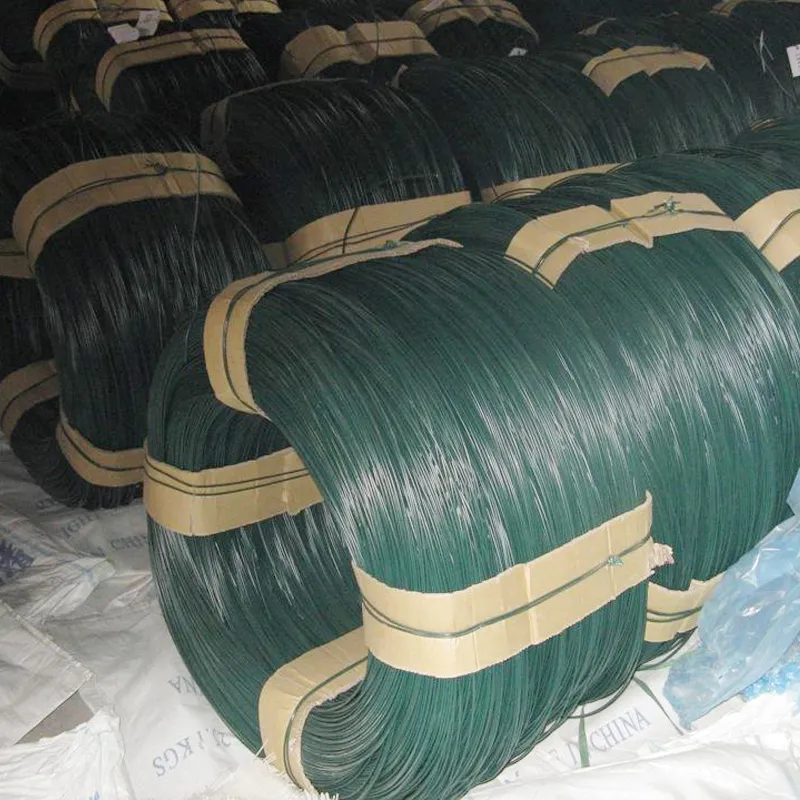
Iron tie wire, typically produced from low carbon steel, is a crucial fastening component across diverse industrial applications, most notably in construction, agriculture, and packaging. Positioned within the supply chain as a secondary forming product of steel mills, its primary function is to securely bind materials, providing temporary or permanent structural support. Unlike high-tensile wire used for load-bearing applications, iron tie wire prioritizes malleability and ease of manipulation. Core performance characteristics include tensile strength sufficient for binding purposes, ductility allowing for knotting and twisting, and corrosion resistance commensurate with its intended lifespan. A key industry pain point is maintaining consistent wire diameter and tensile strength to ensure reliable binding, particularly in automated systems, and managing surface oxidation which impacts binding efficiency and aesthetics.
Material Science & Manufacturing
The primary raw material for iron tie wire is low carbon steel, typically SAE 1008 or similar grades, characterized by a carbon content of 0.08-0.15%. This composition imparts sufficient ductility for forming while maintaining adequate tensile strength. Key physical properties include a density of approximately 7.87 g/cm³, a Young’s modulus of 200 GPa, and a Poisson’s ratio of 0.29. Manufacturing begins with hot rolling of steel billets into wire rod. This is followed by a series of drawing operations through progressively smaller dies, reducing the diameter and increasing tensile strength. The drawing process introduces work hardening, which is subsequently relieved through annealing. Annealing, typically performed in a controlled atmosphere furnace, restores ductility and prevents cracking during further processing. Surface treatment, often involving galvanization or passivation, is employed to enhance corrosion resistance. Critical process parameters include die lubrication, drawing speed, reduction ratio per draw, and annealing temperature. Variations in these parameters directly impact the wire’s mechanical properties and surface finish. Chemical compatibility considerations include avoiding prolonged exposure to strong acids or oxidizing agents, which accelerate corrosion.
Performance & Engineering
The performance of iron tie wire is fundamentally governed by its tensile strength and ductility. Engineering calculations for binding applications require determining the necessary tensile force to withstand anticipated loads (e.g., wind loads on agricultural supports, weight of bundled materials). Force analysis utilizes Hooke’s Law (stress = strain x Young’s modulus) to predict wire deformation under load. Environmental resistance is a significant factor; exposure to moisture and chlorides accelerates corrosion. Galvanization provides a sacrificial coating, protecting the underlying steel from corrosion. However, the zinc coating itself degrades over time, particularly in acidic environments. The wire’s ability to form secure knots is critical. Knot strength is typically 60-80% of the wire’s tensile strength, depending on knot complexity. Compliance requirements vary by application. Agricultural applications may adhere to standards related to pesticide compatibility, while construction applications must meet building code requirements for fastening materials. Creep, the slow deformation of the wire under constant load, is a potential failure mode, particularly in long-term applications.
Technical Specifications
| Diameter (mm) | Tensile Strength (MPa) | Elongation (%) | Zinc Coating Thickness (µm) |
|---|---|---|---|
| 0.8 | 350-450 | 15-20 | 10-20 |
| 1.0 | 400-500 | 18-25 | 15-25 |
| 1.2 | 450-550 | 20-30 | 20-30 |
| 1.4 | 500-600 | 22-35 | 25-35 |
| 1.6 | 550-650 | 25-40 | 30-40 |
| 1.8 | 600-700 | 28-45 | 35-45 |
Failure Mode & Maintenance
Iron tie wire is susceptible to several failure modes. Fatigue cracking can occur under cyclic loading, particularly at the bend radius of knots. Corrosion, especially in chloride-rich environments, leads to pitting and reduced tensile strength. Hydrogen embrittlement, a phenomenon where hydrogen atoms diffuse into the steel lattice, can drastically reduce ductility and promote brittle fracture. Oxidation, even with galvanization, leads to gradual degradation of the protective coating. Delamination of the zinc coating can expose the underlying steel to corrosion. Maintenance primarily focuses on preventative measures. Regular inspection for signs of corrosion or damage is crucial. In harsh environments, applying a supplementary protective coating (e.g., epoxy resin) can extend the wire’s lifespan. Proper storage, avoiding prolonged exposure to moisture, is essential. For applications where wire failure poses a significant risk, periodic replacement based on service life estimates is recommended. Failure analysis should involve microscopic examination of fracture surfaces to determine the root cause (e.g., corrosion, fatigue, overload).
Industry FAQ
Q: What is the impact of varying carbon content in the steel used for tie wire?
A: Higher carbon content increases tensile strength but reduces ductility, making the wire more brittle and prone to cracking during knotting. Lower carbon content promotes ductility but compromises tensile strength. The optimal carbon content (typically around 0.08-0.15%) balances these competing requirements for the intended application.
Q: How does galvanization affect the long-term performance of iron tie wire?
A: Galvanization provides sacrificial corrosion protection. However, the zinc coating gradually degrades, particularly in acidic environments or when exposed to chlorides. The rate of degradation depends on the thickness of the coating and the severity of the environment. Periodic inspection and potential re-coating may be required for long-term durability.
Q: What is the significance of wire diameter in relation to binding strength?
A: Wire diameter directly correlates with tensile strength. A larger diameter wire provides greater binding strength but may be more difficult to manipulate. The appropriate diameter depends on the anticipated load and the required ease of use. Engineering calculations should determine the minimum required diameter for a given application.
Q: Can iron tie wire be used in direct contact with treated lumber?
A: Yes, but caution is advised. Some wood preservatives contain chemicals that can accelerate corrosion of the steel. Galvanized wire offers improved resistance to this type of corrosion, but it’s still recommended to consult the lumber treatment specifications and choose compatible fasteners.
Q: What is the typical service life of iron tie wire in an agricultural application?
A: The service life varies significantly depending on the environmental conditions and the type of crop supported. In mild climates, galvanized iron tie wire may last several seasons. In harsh environments with high humidity and salinity, the service life may be reduced to a single season. Regular inspection is crucial to identify and replace deteriorated wire.
Conclusion
Iron tie wire remains a fundamental fastening solution across a diverse range of industries due to its cost-effectiveness, ease of use, and adequate strength for binding applications. Understanding the interplay between material science, manufacturing processes, and environmental factors is critical for ensuring reliable performance and maximizing service life. The selection of appropriate wire diameter, surface treatment (galvanization), and regular inspection are key to mitigating failure modes such as corrosion, fatigue cracking, and hydrogen embrittlement.
Future trends may involve the development of alternative coating materials offering enhanced corrosion resistance, as well as automated quality control systems to ensure consistent wire properties. Further research into the long-term effects of different environmental factors on wire degradation will be crucial for optimizing material selection and extending the service life of this essential industrial component.