



Introduction
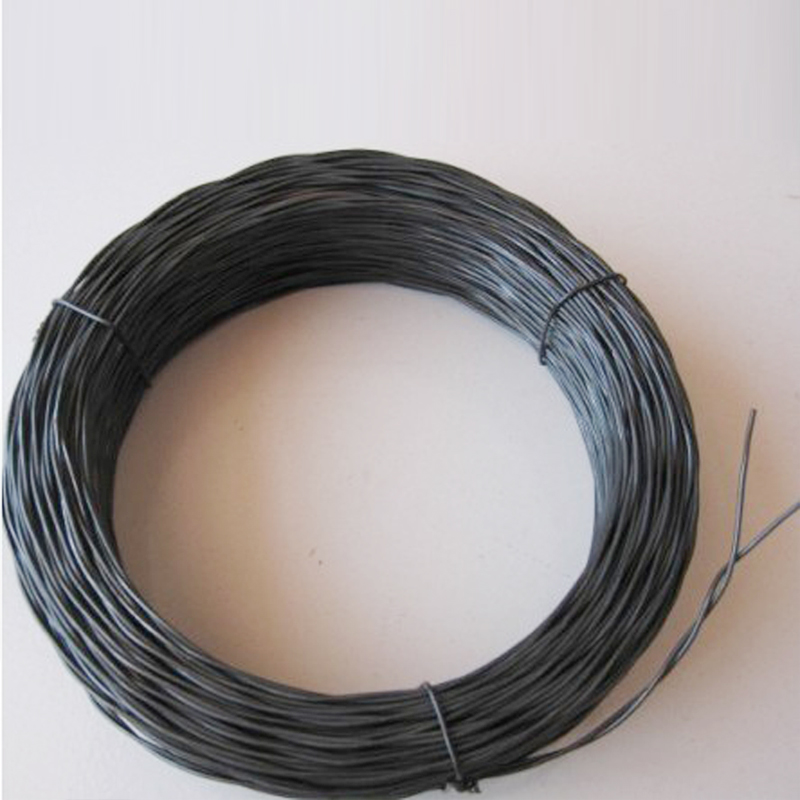
Iron wire, manufactured in China, represents a foundational material across diverse industrial applications, ranging from construction and agriculture to automotive and consumer goods. Its technical position within the materials supply chain is as a semi-finished product, typically derived from hot-rolled or cold-drawn steel rod. The product undergoes further processing – galvanizing, coating, or specialized shaping – to meet specific end-use requirements. Core performance characteristics center around tensile strength, ductility, conductivity (for certain grades), and corrosion resistance. Chinese manufacturers have become dominant players in the global iron wire market due to economies of scale and competitive pricing, but quality consistency and adherence to international standards remain critical areas of focus for discerning buyers. The selection of appropriate iron wire grade directly impacts the lifespan and performance of the final assembled product, making a thorough understanding of its properties paramount.
Material Science & Manufacturing
The primary raw material for iron wire is low-carbon steel, typically ranging from 0.05% to 0.25% carbon content. Higher carbon content increases tensile strength but reduces ductility and weldability. Other alloying elements, such as manganese, phosphorus, and sulfur, are present in varying amounts, influencing the material’s properties. Manufacturing processes typically begin with hot rolling of steel billets into rods. These rods are then subjected to several processes: pickling to remove surface oxides, phosphating to improve coating adhesion, and drawing through a series of dies to reduce diameter and increase tensile strength. Wire drawing introduces significant work hardening, requiring intermediate annealing steps to restore ductility. Annealing is typically performed in a controlled atmosphere to prevent oxidation. The final product undergoes quality control checks, including dimensional measurements, tensile testing, and surface inspection. Galvanizing, typically hot-dip galvanization using a zinc coating, is a common post-processing step to enhance corrosion resistance. Electrogalvanizing offers a more controlled coating thickness but generally provides less corrosion protection. The control of die lubrication during wire drawing is crucial to prevent surface defects and ensure consistent diameter. Critical parameters include die angle, reduction ratio per pass, and drawing speed. Improper control leads to increased friction, heat generation, and potential wire breakage. Chemical composition control of the steel billet is the first step in ensuring a quality final product, followed by precise control of the drawing process.
Performance & Engineering
The performance of iron wire is fundamentally governed by its mechanical properties. Tensile strength, measured in MPa (Megapascals), determines the wire’s ability to withstand pulling forces before breaking. Yield strength indicates the point at which permanent deformation begins. Ductility, often quantified by elongation percentage, measures the wire’s ability to deform plastically before fracture. These properties are directly related to the cold-working process during wire drawing and the subsequent annealing treatments. Environmental resistance is a key performance criterion, especially in outdoor applications. Corrosion is the primary degradation mechanism. Galvanizing provides a sacrificial coating, protecting the underlying steel from oxidation. The effectiveness of galvanizing depends on coating thickness, uniformity, and the presence of defects. In applications involving bending or forming, fatigue resistance becomes critical. Cyclic loading can lead to fatigue cracking, particularly at stress concentration points. Wire rope construction relies heavily on the torsional properties of the individual wires and their ability to withstand repeated bending. Engineering calculations for wire applications require precise knowledge of the wire’s mechanical properties and consideration of the applied load, temperature, and environmental conditions. For example, calculating the safe working load for a suspension cable requires accurate determination of tensile strength, safety factors, and potential corrosion rates.
Technical Specifications
| Parameter | SAE 1008 Steel (Typical) | Q195 Steel (Chinese Standard) | Galvanized Iron Wire – Class 1 | High Tensile Iron Wire (HT) |
|---|---|---|---|---|
| Tensile Strength (MPa) | 440-550 | 380-480 | 380-480 | 700-1000 |
| Yield Strength (MPa) | 205-275 | 220-280 | 220-280 | 450-700 |
| Elongation (%) | 20-25 | 22-28 | 15-20 | 10-15 |
| Diameter (mm) | 0.8 – 4.0 | 0.8 – 5.0 | 0.8 – 4.0 | 0.8 – 3.2 |
| Zinc Coating Thickness (µm) | N/A | N/A | 45-60 | N/A |
| Carbon Content (%) | 0.08 | 0.06-0.15 | 0.08-0.15 | 0.2-0.4 |
Failure Mode & Maintenance
Iron wire is susceptible to several failure modes. Corrosion is a prevalent issue, particularly in humid or corrosive environments. Rust formation weakens the wire and reduces its load-bearing capacity. Galvanizing provides protection, but scratches or damage to the coating expose the underlying steel to corrosion. Fatigue cracking can occur under cyclic loading, initiating at stress concentration points (e.g., bends, kinks, surface defects). Hydrogen embrittlement, a phenomenon where hydrogen atoms diffuse into the steel lattice, can reduce ductility and lead to brittle fracture, especially in high-strength wire. Overloading exceeding the wire’s tensile strength results in immediate fracture. Maintenance primarily focuses on preventative measures. Regular inspection for corrosion is crucial, and damaged galvanizing should be repaired. Lubrication of wire ropes and cables reduces friction and wear. Proper storage in a dry environment prevents corrosion. For galvanized wire, avoiding contact with dissimilar metals can minimize galvanic corrosion. If fatigue cracking is a concern, implementing a regular inspection schedule and replacing wires showing signs of damage is essential. Furthermore, ensuring correct installation and avoiding sharp bends or kinks during use significantly extends the wire's lifespan.
Industry FAQ
Q: What is the difference between SAE 1008 and Q195 steel wire, and which is preferable for general fencing applications?
A: SAE 1008 is a US standard low-carbon steel with a more tightly controlled composition and generally superior consistency. Q195 is a common Chinese standard low-carbon steel. While both are suitable for fencing, SAE 1008 typically offers better ductility and weldability. However, for cost-sensitive applications, Q195 is frequently used. The choice depends on the required level of performance and budget constraints. For long-term durability and resistance to deformation, SAE 1008 is the better choice.
Q: How does the galvanizing process affect the wire's fatigue life?
A: The galvanizing process, while providing corrosion protection, can slightly reduce fatigue life. The coating adds a small amount of stiffness and can introduce micro-cracks during the forming process. However, the increased corrosion resistance significantly extends the overall service life of the wire, outweighing the slight reduction in fatigue strength in most applications. A thicker, more uniform galvanizing layer offers greater protection.
Q: What safety factors should be considered when using iron wire for load-bearing applications, such as suspending objects?
A: A safety factor of at least 5:1 is recommended for static load-bearing applications, and 7:1 to 10:1 for dynamic or frequently loaded applications. This means the wire's minimum breaking strength should be five to ten times greater than the maximum expected load. Factors such as environmental conditions (corrosion) and potential impact loads must also be considered when determining the appropriate safety factor.
Q: What are the typical corrosion rates for galvanized iron wire in different environments (e.g., marine, industrial, rural)?
A: Corrosion rates vary significantly. In a severe marine environment with high salt spray, corrosion rates can be 50-100 µm/year. Industrial environments with pollutants can have rates of 20-50 µm/year. Rural environments with clean air typically exhibit corrosion rates of 5-10 µm/year. These are estimates, and actual rates depend on specific conditions.
Q: What are the key quality control tests that should be performed on incoming iron wire shipments?
A: Essential quality control tests include: visual inspection for surface defects (scratches, corrosion), diameter measurement, tensile testing to verify strength, bend testing to assess ductility, and coating thickness measurement (for galvanized wire). Periodic chemical analysis can verify the steel grade and composition. A Certificate of Analysis (COA) from the manufacturer should accompany each shipment.
Conclusion
Iron wire produced in China represents a versatile and cost-effective material for a wide range of industrial applications. Understanding the underlying material science, manufacturing processes, and performance characteristics is crucial for selecting the appropriate grade and ensuring long-term reliability. Factors such as tensile strength, ductility, corrosion resistance, and fatigue life must be carefully considered based on the specific application requirements.
Continued advancements in steelmaking and coating technologies are leading to improved quality and performance of iron wire. Future trends will likely focus on developing higher-strength, corrosion-resistant alloys and more environmentally friendly coating processes. Effective quality control and adherence to international standards are paramount to maintaining the integrity and reliability of iron wire in critical applications.