




Introduction
Iron & wire, encompassing a wide range of ferrous alloys formed into linear configurations, represents a foundational material in countless industrial applications. Its position in the industry chain is fundamental, serving as both a raw material for further processing and a finished component in sectors including construction, automotive, agriculture, and electrical engineering. Core performance characteristics are defined by tensile strength, ductility, conductivity (electrical and thermal, dependent on alloy composition), corrosion resistance, and weldability. The enduring demand for iron & wire stems from its cost-effectiveness, relative abundance, and adaptability to diverse forming and treatment processes. Current industry challenges include mitigating corrosion in aggressive environments, achieving higher strength-to-weight ratios, and adapting production to meet increasingly stringent environmental regulations regarding manufacturing by-products and end-of-life recyclability.
Material Science & Manufacturing
The primary raw material for iron & wire is iron ore (hematite, magnetite, limonite, siderite). The iron content varies depending on the ore type. Manufacturing begins with ironmaking via blast furnaces or direct reduction processes, yielding pig iron. Pig iron contains significant carbon and other impurities, necessitating further refinement. Steelmaking processes (Basic Oxygen Steelmaking - BOS, Electric Arc Furnace - EAF) reduce carbon content and introduce alloying elements (manganese, silicon, chromium, nickel, etc.) to achieve desired properties. Wire drawing is the predominant manufacturing process. This involves pulling the steel billet or rod through a series of progressively smaller dies, reducing the diameter and increasing the length. Lubrication is critical to reduce friction and prevent die wear. Key parameters include die angle, reduction ratio (area decrease per pass), drawing speed, and lubricant type. Annealing processes (heat treatment) are interspersed between drawing stages to restore ductility and prevent work hardening. Surface treatments like galvanizing (zinc coating for corrosion protection), electroplating (copper, nickel, chromium), or polymer coating are commonly applied to enhance properties. The chemical composition of the steel significantly impacts its mechanical properties. Carbon content dictates hardness and strength but reduces ductility. Manganese improves hardenability and acts as a deoxidizer. Silicon enhances strength and magnetic properties. Alloying with chromium provides corrosion resistance.
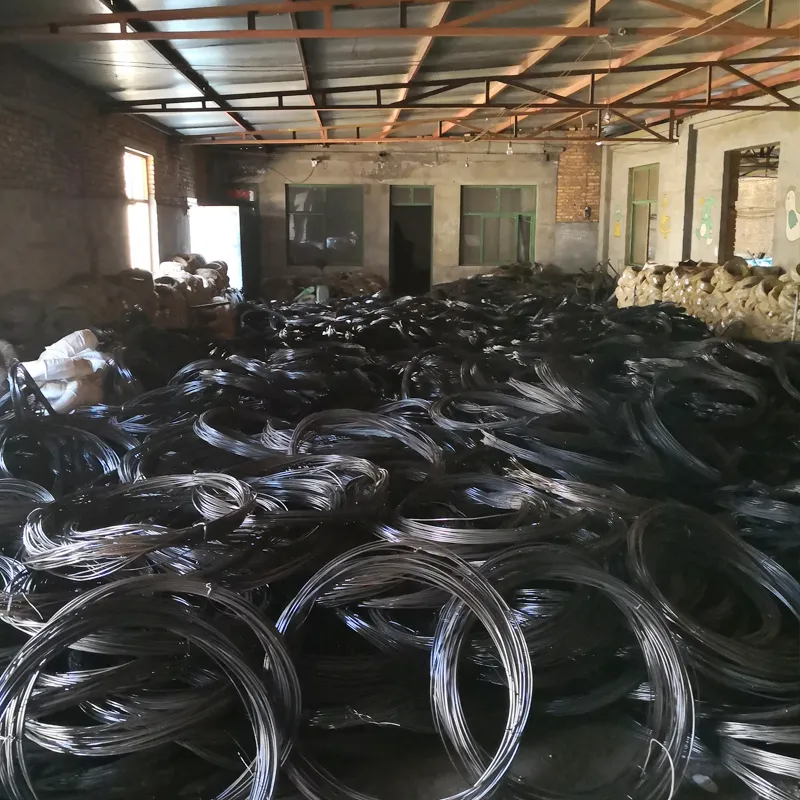
Performance & Engineering
The performance of iron & wire is governed by its mechanical properties, specifically tensile strength (resistance to breaking under tension), yield strength (stress at which permanent deformation occurs), elongation (ductility measure), and modulus of elasticity (stiffness). These parameters are crucial for applications involving load-bearing, structural support, and dynamic forces. Environmental resistance is a major engineering consideration. Iron is susceptible to corrosion (rusting), primarily oxidation in the presence of moisture and oxygen. Galvanizing, as mentioned previously, provides a barrier against corrosion. Another approach is using weathering steel, containing alloys that form a protective oxide layer. Fatigue performance, the ability to withstand repeated loading cycles, is critical in applications like springs and suspension systems. Failure occurs through crack initiation and propagation. Stress concentration points (bends, notches) accelerate fatigue failure. Electrical conductivity is important in electrical wiring applications. Copper-coated steel wire offers a balance of strength and conductivity. Force analysis dictates wire gauge (diameter) selection based on expected loads and safety factors. Compliance requirements vary by industry. Construction applications must meet building codes and standards related to structural integrity. Automotive applications require adherence to industry-specific material specifications and safety regulations.
Technical Specifications
| Tensile Strength (MPa) | Yield Strength (MPa) | Elongation (%) | Diameter (mm) |
|---|---|---|---|
| 400-550 | 250-350 | 15-25 | 0.8-1.6 |
| 600-800 | 400-500 | 10-20 | 2.0-4.0 |
| 800-1000 | 550-700 | 8-15 | 5.0-8.0 |
| 1000-1200 | 700-900 | 5-10 | 9.0-12.0 |
| Galvanized Coating Thickness (µm) | Zinc Content (%) | Corrosion Resistance (Salt Spray Test Hours) | Adhesion Strength (MPa) |
| 50-150 | 95-99 | 240-720 | 5-8 |
Failure Mode & Maintenance
Common failure modes in iron & wire include tensile fracture (breaking under excessive load), fatigue cracking (failure due to repeated stress cycles), corrosion-induced failure (loss of strength due to rust), and hydrogen embrittlement (reduced ductility in high-strength steels exposed to hydrogen). Delamination can occur in coated wires if the coating-substrate bond is weak. Oxidation at high temperatures degrades the material's mechanical properties. Failure analysis often involves microscopic examination of fracture surfaces to identify the root cause. Preventative maintenance includes regular inspection for corrosion, cracks, and wear. Protective coatings should be reapplied as needed. Proper storage in a dry environment minimizes corrosion risk. For galvanized wire, maintaining the integrity of the zinc coating is paramount. Damaged coatings should be repaired promptly. Lubrication of wire ropes and cables reduces friction and wear, extending service life. Periodic load testing can identify potential weaknesses before catastrophic failure occurs. For high-stress applications, non-destructive testing methods (ultrasonic testing, magnetic particle inspection) can detect internal flaws.
Industry FAQ
Q: What is the impact of carbon content on the weldability of iron & wire?
A: Higher carbon content generally reduces weldability. It increases the hardness and susceptibility to cracking during cooling. Preheating and post-weld heat treatment are often required for welding high-carbon steel wires to mitigate these issues. The type of welding process also influences weldability; processes like Gas Metal Arc Welding (GMAW) are generally more suitable for higher carbon steels than Shielded Metal Arc Welding (SMAW).
Q: How does the galvanizing process affect the mechanical properties of the wire?
A: Galvanizing can slightly reduce ductility and increase brittleness due to the formation of intermetallic layers at the interface between the zinc coating and the steel substrate. However, the benefits of corrosion protection typically outweigh this minor reduction in mechanical properties. Careful control of the galvanizing process is crucial to minimize this effect.
Q: What are the common causes of hydrogen embrittlement in high-strength steel wire?
A: Hydrogen embrittlement is often caused by exposure to hydrogen-containing environments during manufacturing (pickling, electroplating) or service. The hydrogen diffuses into the steel, reducing its ductility and increasing its susceptibility to cracking under stress. Baking the wire at a moderate temperature can help drive out the hydrogen.
Q: What is the difference between annealing and tempering in the context of iron & wire manufacturing?
A: Annealing is a heat treatment process used to soften the steel and restore ductility after cold working (wire drawing). It involves heating the steel to a specific temperature and then slowly cooling it. Tempering, on the other hand, is performed after hardening to reduce brittleness and increase toughness. It involves reheating the hardened steel to a lower temperature.
Q: What quality control tests are typically performed on iron & wire during production?
A: Common quality control tests include tensile testing (to verify strength and ductility), dimensional checks (to ensure accurate diameter), surface inspection (for defects like cracks or corrosion), metallographic examination (to assess microstructure), and coating thickness measurement (for galvanized wire). Non-destructive testing methods like eddy current testing can also be used to detect surface and subsurface flaws.
Conclusion
Iron & wire remains a vital engineering material, its performance critically dependent on a complex interplay of material science, manufacturing processes, and environmental considerations. Achieving optimal performance necessitates a thorough understanding of alloy composition, mechanical properties, and failure mechanisms. The ongoing drive towards sustainability and cost-effectiveness is pushing innovation in areas such as high-strength, lightweight alloys, advanced corrosion protection techniques, and optimized manufacturing processes.
Future advancements will likely focus on developing more environmentally friendly coatings, reducing the carbon footprint of steel production, and enhancing the recyclability of iron & wire products. Continued research into fatigue behavior and hydrogen embrittlement will be crucial for improving the reliability and durability of wire-based components in critical applications. The integration of data analytics and predictive maintenance strategies will further optimize performance and minimize lifecycle costs.