




Introduction
Thin iron wire, typically defined as ferrous wire with a diameter less than 0.5mm, occupies a critical, yet often overlooked, position within numerous industrial supply chains. Unlike heavier gauge steel wire, its utility lies in applications demanding flexibility, conformability, and ease of processing. Its technical position is as a semi-finished product, derived from hot-rolled or cold-drawn steel rod, and serving as a precursor to a vast range of fabricated components. Core performance characteristics revolve around tensile strength, ductility, surface finish, and corrosion resistance – properties directly influencing its suitability for applications spanning from electrical components and fencing to mesh screens and specialized springs. A persistent industry pain point centers on consistent diameter control and the management of surface defects that compromise subsequent processing, leading to scrap and increased manufacturing costs. Furthermore, achieving desired mechanical properties without sacrificing corrosion resistance demands careful material selection and post-processing techniques. This guide provides an in-depth technical overview of thin iron wire, addressing material science, manufacturing, performance, failure modes, and relevant industry standards.
Material Science & Manufacturing
Thin iron wire is predominantly manufactured from low-carbon steel (typically SAE 1008 or equivalent), although higher carbon steels and alloy steels are employed for specialized applications requiring greater strength or specific magnetic properties. The raw material’s chemical composition dictates its inherent characteristics. Iron content is typically >98%, with varying percentages of carbon (0.05-0.25%), manganese (0.3-0.9%), phosphorus (≤0.04%), and sulfur (≤0.05%). Phosphorus and sulfur are particularly detrimental, promoting brittleness and hindering weldability. The manufacturing process usually begins with hot rolling of steel billets into rods. These rods are then subjected to a multi-stage cold drawing process, utilizing progressively smaller dies to reduce the diameter and increase tensile strength. Critical parameters during cold drawing include die angle, drawing speed, and lubrication. Insufficient lubrication causes galling, resulting in surface imperfections. The drawing process induces work hardening, requiring intermediate annealing stages to restore ductility. Annealing is typically performed in a controlled atmosphere to prevent oxidation. Subsequent surface treatments, such as galvanizing (zinc coating), electroplating, or polymer coating, are frequently applied to enhance corrosion resistance. Quality control relies heavily on precise diameter measurement using laser micrometers and eddy current testing to detect surface flaws. Wire drawing speed also influences the grain structure; faster speeds can lead to elongated grains, potentially reducing transverse tensile strength.
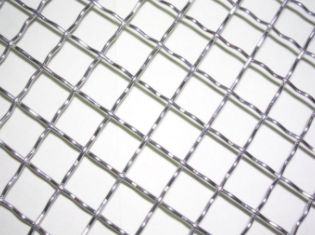
Performance & Engineering
The performance of thin iron wire is dictated by several key engineering properties. Tensile strength, measured in MPa, determines the wire’s ability to withstand pulling forces. Yield strength represents the point at which permanent deformation begins. Elongation at break, expressed as a percentage, indicates ductility. The Poisson’s ratio, relating lateral strain to axial strain, is important for applications involving bending or forming. In applications where the wire is subjected to cyclic loading, fatigue strength is paramount. Fatigue failures initiate at surface defects or stress concentrators. Environmental resistance is a crucial consideration. Exposure to corrosive environments (humidity, saltwater, chemicals) can lead to oxidation and subsequent degradation. Galvanizing provides sacrificial protection, but its effectiveness diminishes over time. For applications involving electrical conductivity, resistivity (measured in Ohm-meters) is a key parameter. Furthermore, the wire’s behavior at elevated temperatures must be considered, as its mechanical properties degrade with increasing temperature. Force analysis often involves calculating the stress on the wire under various load conditions, ensuring the stress remains below the yield strength to prevent permanent deformation. Compliance requirements, such as RoHS (Restriction of Hazardous Substances) and REACH (Registration, Evaluation, Authorisation and Restriction of Chemicals) regulations, dictate allowable levels of restricted substances in the wire and its coatings.
Technical Specifications
| Diameter (mm) | Tensile Strength (MPa) | Elongation (%) | Zinc Coating Thickness (µm) - Galvanized Wire |
|---|---|---|---|
| 0.20 | 400 - 550 | 15 - 25 | 5 - 10 |
| 0.30 | 380 - 520 | 12 - 22 | 8 - 15 |
| 0.40 | 350 - 480 | 10 - 20 | 10 - 20 |
| 0.50 | 320 - 450 | 8 - 18 | 12 - 25 |
| 0.60 | 300-420 | 6-16 | 15-30 |
| 0.80 | 280-400 | 4-14 | 20-35 |
Failure Mode & Maintenance
Thin iron wire is susceptible to several failure modes. Fatigue cracking, initiated by cyclic stress, is common in applications involving repeated bending or vibration. Corrosion is a significant concern, particularly in humid or corrosive environments. Rust formation weakens the wire and reduces its load-bearing capacity. Hydrogen embrittlement, induced by the presence of hydrogen in the steel lattice (often a byproduct of galvanizing), can lead to brittle fracture. Surface defects, such as scratches or inclusions, act as stress concentrators, accelerating fatigue failure. Delamination of coatings (e.g., galvanizing) reduces corrosion protection. Oxidation at high temperatures degrades the wire’s mechanical properties. Maintenance typically involves regular inspection for signs of corrosion or damage. For galvanized wire, periodic re-coating may be necessary to maintain corrosion protection. Lubrication of moving parts utilizing the wire can minimize wear and fatigue. Removal of debris and contaminants prevents abrasive wear and corrosion. In applications where the wire is subject to high stress, periodic replacement is recommended to prevent catastrophic failure. Proper storage in a dry environment minimizes corrosion risk. Non-destructive testing methods, such as eddy current testing, can detect subsurface defects before they lead to failure.
Industry FAQ
Q: What is the impact of sulfur content on the weldability of thin iron wire used in fencing applications?
A: Higher sulfur content (above 0.05%) significantly reduces weldability. Sulfur forms iron sulfide at grain boundaries, creating brittle zones that are prone to cracking during welding. This necessitates the use of low-sulfur wire or specialized welding procedures for fencing applications requiring welded connections.
Q: How does the cold drawing process affect the grain structure and mechanical properties of the wire?
A: Cold drawing refines the grain structure, increasing hardness and tensile strength, but reduces ductility. The drawing process introduces dislocations, hindering the movement of grain boundaries. Intermediate annealing steps are crucial to relieve stress and restore ductility, preventing brittle fracture during subsequent processing.
Q: What is the difference between hot-dip galvanizing and electrogalvanizing in terms of corrosion protection for thin iron wire?
A: Hot-dip galvanizing provides a thicker zinc coating with superior corrosion resistance due to the metallurgical bond formed between the zinc and the steel. Electrogalvanizing offers a thinner, more uniform coating, suitable for applications requiring a smoother surface finish but providing less corrosion protection. Hot-dip galvanizing is generally preferred for outdoor applications.
Q: What is the influence of wire diameter on its bending fatigue life?
A: Smaller diameter wires generally exhibit lower bending fatigue life compared to larger diameter wires, all else being equal. This is because stress concentration is more pronounced at smaller diameters. The bending radius also plays a critical role; smaller bending radii significantly reduce fatigue life.
Q: How can we mitigate hydrogen embrittlement in galvanized thin iron wire?
A: Mitigation strategies include using a post-galvanizing heat treatment (baking) to drive off hydrogen, controlling the zinc bath composition to minimize hydrogen absorption, and employing corrosion inhibitors to prevent the formation of hydrogen at the steel surface. Careful selection of the steel grade (low alloy steel) can also improve resistance to hydrogen embrittlement.
Conclusion
Thin iron wire, despite its seemingly simple form, presents a complex interplay of material science, manufacturing processes, and engineering considerations. Achieving optimal performance requires meticulous control over chemical composition, cold drawing parameters, surface treatment, and quality control measures. The selection of appropriate wire diameter, zinc coating thickness, and annealing procedures is crucial for meeting specific application requirements. Understanding the potential failure modes – fatigue cracking, corrosion, and hydrogen embrittlement – is essential for ensuring long-term reliability and preventing catastrophic failures.
Future developments are likely to focus on advanced coating technologies offering enhanced corrosion resistance and reduced environmental impact, alongside improvements in cold drawing techniques to minimize surface defects and optimize mechanical properties. The adoption of automated inspection systems utilizing machine vision will further enhance quality control and reduce manufacturing costs. Continued research into alloy steels specifically designed for thin wire applications will expand the range of available options, enabling the development of high-performance wire products tailored to increasingly demanding industrial needs.