



Introduction
Wire mesh gauge sizes define the diameter of the wire used in the construction of woven wire mesh. This specification is critical across numerous industrial applications, including filtration, screening, reinforcement, security, and architectural design. Unlike linear measurements, wire gauge employs a system where increasing gauge numbers correspond to decreasing wire diameters. This seemingly counterintuitive convention originates from the historical method of drawing wire through progressively smaller dies; a higher gauge number meant more drawing operations, resulting in finer wire. Within the industrial supply chain, proper gauge selection dictates mechanical strength, permeability, flow rates, and overall system performance. Incorrect gauge specification leads to premature failure, process inefficiencies, and potential safety hazards. This guide provides an in-depth technical overview of wire mesh gauge sizes, covering material science, manufacturing considerations, performance characteristics, failure modes, and relevant industry standards.
Material Science & Manufacturing
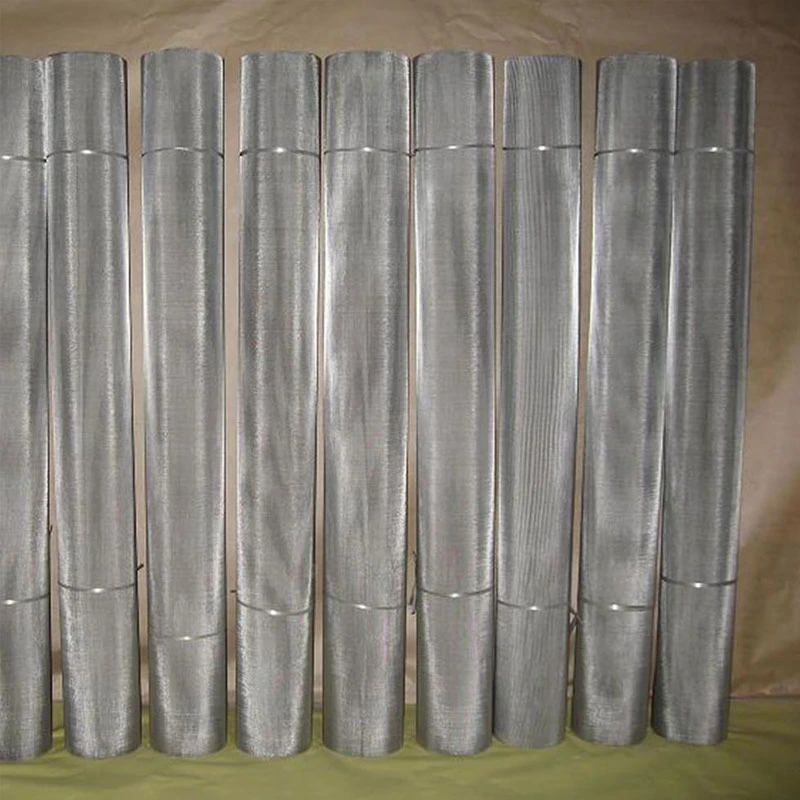
The raw material significantly impacts the practical gauge range achievable and the final mesh properties. Common materials include carbon steel (low, medium, and high carbon), stainless steel (304, 316, 316L, etc.), aluminum, copper, and specialty alloys (Monel, Inconel). Carbon steel, with its relatively low cost and high tensile strength, is prevalent in general-purpose screening and reinforcement applications. However, it’s susceptible to corrosion. Stainless steel offers superior corrosion resistance, making it ideal for food processing, pharmaceutical, and marine environments. Aluminum provides a good strength-to-weight ratio and is often used in aerospace and architectural applications. Manufacturing processes are broadly categorized into weaving, welding, and expanding. Weaving, the most common method, involves interlacing warp and weft wires. Precise control of tension, loom speed, and wire lubrication is crucial to maintain gauge consistency. Welding creates mesh by fusing wires at their intersection points, typically used for heavier-gauge applications requiring high structural integrity. Expanded metal, while not strictly 'woven,' utilizes a slitting and stretching process from sheet metal to create a mesh-like structure. Gauge control in expanded metal relies on the initial sheet thickness and the spacing of the slits. A critical manufacturing parameter is the annealing process; improper annealing can introduce residual stresses leading to dimensional instability and altered mechanical properties. During weaving, wire straightening is paramount to avoid distortions that impact aperture size and gauge accuracy. Consistent diameter control throughout the wire manufacturing process (drawing, spooling, and coating, if applicable) is essential for producing high-quality wire mesh.
Performance & Engineering
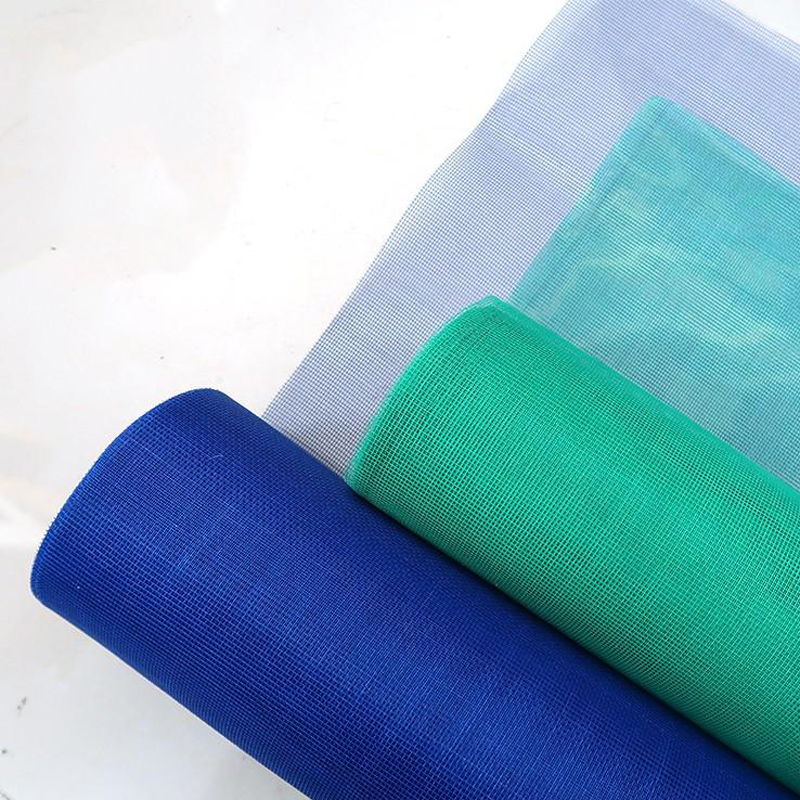
The performance of wire mesh is fundamentally linked to its gauge. Smaller gauge wires (higher gauge numbers) increase the density of the mesh, resulting in finer filtration capabilities and improved barrier properties. However, they also reduce the mesh's overall tensile strength and resistance to deformation. Force analysis, particularly concerning load-bearing applications, requires calculating the stress distribution within the wire matrix. Finite element analysis (FEA) is often employed to model the behavior of the mesh under various loading conditions. Environmental resistance is a major consideration. Corrosion, particularly in harsh chemical environments or marine settings, significantly reduces the mesh's lifespan. The selection of appropriate materials (e.g., stainless steel alloys with enhanced pitting resistance) and protective coatings (e.g., galvanization, epoxy coating) is critical. Compliance requirements vary widely by industry. In food and beverage processing, mesh must comply with FDA regulations regarding material leachability and hygienic design. In the pharmaceutical industry, stringent requirements exist regarding particle retention and sterilization compatibility. In the aerospace sector, materials must meet rigorous flammability, toxicity, and outgassing specifications. Aperture size, determined by the wire gauge and weave pattern, directly impacts flow rate and pressure drop in filtration systems. Understanding the Darcy-Weisbach equation and employing computational fluid dynamics (CFD) modeling are essential for optimizing mesh performance in fluid handling applications. The weave pattern (plain, twill, dutch, reverse dutch) also contributes significantly to the mesh's mechanical properties and overall performance.
Technical Specifications
| Wire Gauge (AWG) | Wire Diameter (inches) | Wire Diameter (mm) | Tensile Strength (PSI) - Typical Carbon Steel |
|---|---|---|---|
| 4 | 0.126 | 3.20 | 80,000 |
| 6 | 0.0808 | 2.05 | 70,000 |
| 8 | 0.0641 | 1.63 | 65,000 |
| 10 | 0.0508 | 1.29 | 60,000 |
| 12 | 0.0403 | 1.02 | 55,000 |
| 14 | 0.0320 | 0.81 | 50,000 |
Failure Mode & Maintenance
Wire mesh is susceptible to several failure modes depending on the application and environment. Fatigue cracking, especially in dynamically loaded applications, initiates at stress concentration points (e.g., wire intersections, bends). Corrosion, as previously mentioned, weakens the wire and leads to premature failure. Galvanic corrosion can occur when dissimilar metals are in contact, accelerating the degradation of the less noble metal. Delamination, particularly in laminated mesh structures, occurs when the layers separate due to adhesive failure or interfacial stresses. Oxidation, particularly at elevated temperatures, alters the wire’s mechanical properties and can lead to embrittlement. Creep, the time-dependent deformation under sustained load, is a concern in high-temperature applications. Maintenance strategies vary by application. Regular visual inspection is crucial to identify signs of corrosion, cracking, or deformation. Cleaning to remove debris and contaminants prevents clogging and reduces the risk of corrosion. Protective coatings should be reapplied as needed to maintain corrosion resistance. For heavily loaded meshes, periodic non-destructive testing (NDT) methods, such as ultrasonic testing or dye penetrant inspection, can detect subsurface cracks. Proper storage is also essential; storing mesh in a dry, well-ventilated environment prevents corrosion and maintains its structural integrity. In filtration systems, backwashing or periodic replacement of the mesh is necessary to maintain optimal performance and prevent clogging.
Industry FAQ
Q: What is the impact of wire gauge on the pressure drop in a filtration system?
A: Lower (smaller) wire gauges result in a finer mesh with smaller apertures. This increased density leads to a higher pressure drop as fluid is forced to navigate the smaller openings. The relationship isn't linear; the pressure drop increases exponentially as the aperture size decreases. Therefore, careful selection of wire gauge is crucial to balance filtration efficiency with acceptable flow rates.
Q: How does the weave pattern affect the mechanical properties of the mesh?
A: Different weave patterns distribute stress differently. Plain weave provides good dimensional stability but lower flexibility. Twill weave offers higher flexibility and drapability but can be prone to distortion. Dutch weave (over-under pattern) has a dense structure for superior filtration but lower tensile strength. Reverse Dutch weave offers enhanced strength and rigidity. Choosing the appropriate weave pattern depends on the specific application requirements.
Q: Can wire mesh be used in high-temperature environments? If so, what materials are best suited?
A: Yes, but material selection is critical. Carbon steel rapidly loses strength at elevated temperatures. Stainless steels (304, 316, 310) offer improved high-temperature performance. Nickel-based alloys (Inconel, Monel) provide the highest temperature resistance but are significantly more expensive. Oxidation resistance is also a key consideration; alloys with chromium or aluminum content form protective oxide layers.
Q: What are the primary causes of corrosion in stainless steel wire mesh?
A: While stainless steel is corrosion-resistant, it's not immune. Chloride ions (common in marine environments) can cause pitting corrosion. Crevice corrosion can occur in shielded areas. Galvanic corrosion arises when stainless steel is coupled with less noble metals. Maintaining a passive layer on the stainless steel surface is vital; damage to this layer (e.g., from abrasion or chemical attack) initiates corrosion.
Q: What testing methods are used to verify the gauge and dimensional accuracy of wire mesh?
A: Micrometer measurements are used to directly measure wire diameter. A magnifying glass or microscope is used to verify aperture size and weave pattern. Tensile testing is performed to determine tensile strength and elongation. Dimensional accuracy is assessed using coordinate measuring machines (CMMs). Non-destructive testing (NDT) methods, such as ultrasonic testing, can detect internal flaws.
Conclusion
The selection of appropriate wire mesh gauge sizes is a multifaceted engineering challenge demanding a comprehensive understanding of material science, manufacturing processes, and application-specific performance requirements. Ignoring the nuances of gauge specification can lead to significant consequences, including premature failure, process inefficiencies, and compromised safety. The interplay between wire diameter, weave pattern, material composition, and environmental factors dictates the ultimate performance characteristics of the mesh.
Future advancements in wire mesh technology will likely focus on developing novel materials with enhanced corrosion resistance and high-temperature stability, optimizing weave patterns for improved mechanical properties, and employing advanced manufacturing techniques to achieve tighter gauge tolerances. Continued research into non-destructive testing methods will improve the ability to detect and prevent failures, ensuring the long-term reliability of wire mesh structures across diverse industrial applications.