



The crossover between industrial textile engineering and architectural design is redefining material possibilities.
Metal Curtain Mesh represents a fascinating intersection where industrial material science meets contemporary architectural expression. This specialized woven metal fabric, born from the same precision engineering that drives filtration and separation technologies, has found new life as a dynamic design element in commercial lobbies, atriums, and public spaces. The underlying principles—controlled porosity, uniform tensile strength, and resistance to environmental degradation—are shared across industries, from chemical filtration to façade cladding.
What makes this crossover possible is the rigorous standardization that governs metal mesh production. Manufacturers that serve demanding sectors such as petrochemical processing, water treatment, and food processing must adhere to strict quality protocols. These same protocols translate directly into architectural applications, where longevity, safety, and visual consistency are non-negotiable. The result is a material that is as reliable under tension as it is expressive in form.
The Engineering Behind Industrial Textiles
At its core, woven metal mesh is a textile—but one made from metal filaments rather than organic fibers. The weave geometry, wire diameter, and material composition determine the fabric's mechanical properties. For industrial applications, these parameters must be controlled to within microns. Tensile testing machines, bending test fixtures, and galvanized layer detectors are standard equipment in any facility that supplies critical filtration components. These same quality assurance tools ensure that architectural mesh panels can withstand wind loads, thermal expansion, and years of UV exposure without deformation.
Production volume also matters. Facilities with annual capacities exceeding 4 million square meters are able to maintain consistent weave tension across long production runs—a capability that industrial buyers depend on and that architects increasingly require for large-scale installations. Consistency in wire spacing, crimp frequency, and edge finishing directly affects both the aesthetic outcome and the structural performance of the installed mesh.
From Industrial Filtration to Architectural Statement
The architectural applications of woven metal mesh are diverse. It serves as sun shading, visual screening, fall protection, and decorative cladding. Each application demands specific mesh properties: openness ratio for light transmission, tensile strength for safety, and corrosion resistance for longevity. These are the same metrics that industrial engineers use to specify filter media and conveyor belts. The design community is increasingly recognizing that industrial-grade specifications offer a reliable shortcut to performance assurance in building materials.
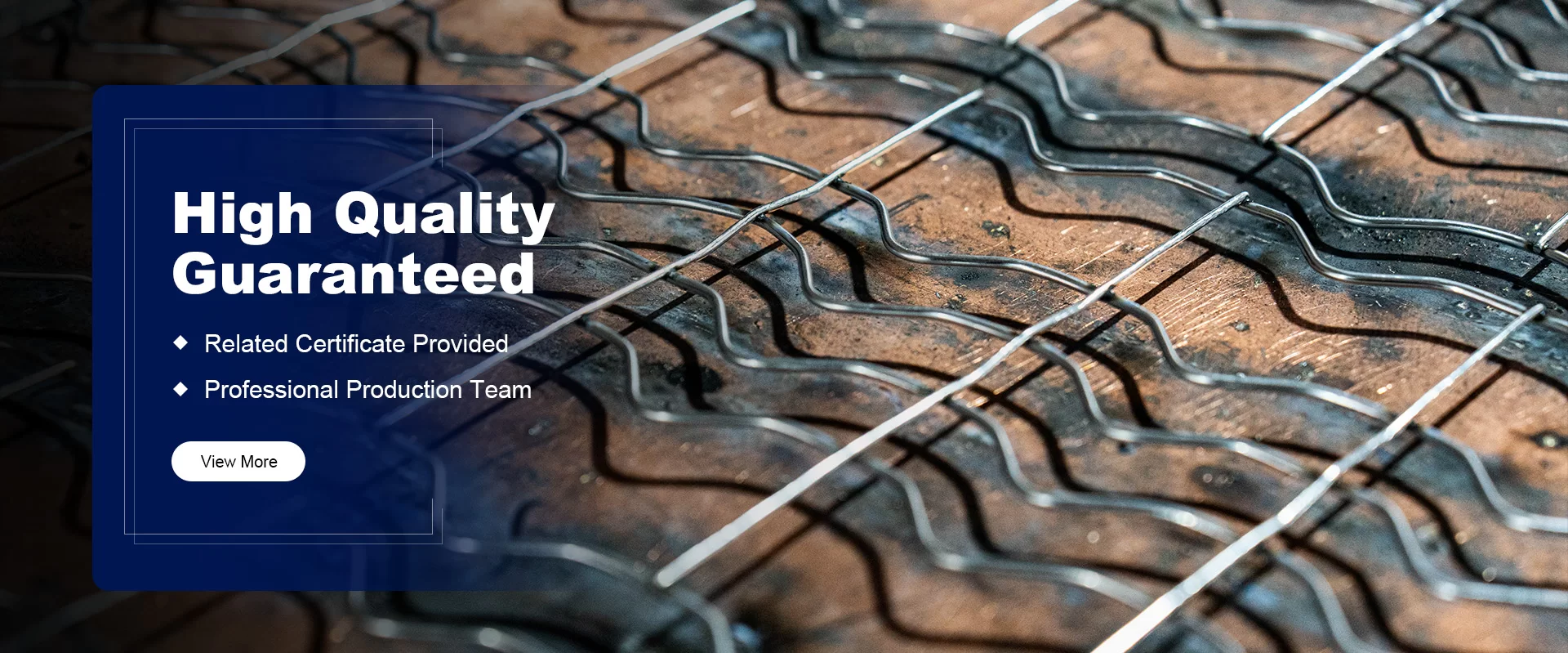
One particularly expressive form is Crimped Woven Mesh, where wires are pre-shaped with a repeating undulation before weaving. This process locks each intersection, creating a fabric with exceptional dimensional stability and a distinctive three-dimensional texture. Originally developed for heavy-duty screening in mining and aggregate sorting, crimped mesh has become a favorite among architects who want depth and shadow play in façade treatments. The crimp frequency, amplitude, and wire gauge can all be tuned to achieve a specific visual rhythm while preserving the mesh's load-bearing capacity.
Quality Standards That Bridge Two Worlds
The most critical factor in any metal mesh installation is the adherence to recognized standards. Industrial buyers reference ASTM, ISO, and national standards for mesh specifications. Architectural specifiers are beginning to do the same. Manufacturers that provide detailed test reports for tensile strength, bending resistance, and coating thickness offer a distinct advantage. These reports, generated by calibrated testing equipment, give both the engineer and the architect confidence that the material will perform as designed over its intended lifespan.
For the global market—spanning the Americas, Europe, Africa, and the Middle East—compliance with international standards is essential. Mesh produced in facilities with complete testing suites, including tensile testers, bending machines, and galvanized layer detectors, can be certified to meet the most stringent requirements. This certification is not just a technical formality; it is the foundation upon which trust is built between material suppliers, design firms, and building owners.
Looking Ahead: The Future of Woven Metal in Architecture
As building codes become more performance-oriented and architects continue to seek materials that combine function with expression, the role of precision woven metal mesh will only grow. The industry is seeing advancements in coating technologies, hybrid weaves that combine different wire materials, and digitally driven design tools that allow architects to specify custom weave patterns with confidence. These developments are being driven not by decorative trends alone, but by the same engineering rigor that has long characterized industrial mesh production.
The convergence of industrial and architectural applications offers a compelling lesson: when materials are held to the highest standards of quality and consistency, their potential extends far beyond their original purpose. Precision woven metal mesh, whether used in a chemical filter or a curtain wall, is a testament to the enduring value of thoughtful engineering.