



Introduction
Drywall stud screws are mechanically fastened components integral to the construction of interior non-load bearing walls and ceilings. Positioned within the building materials supply chain between steel manufacturing and interior finishing, these screws provide the crucial connection between drywall (gypsum board) and metal or wood framing. Their primary function is to securely attach drywall panels to studs, creating a stable surface for finishing. Core performance characteristics encompass shear strength, tensile strength, corrosion resistance, and embedding capability into various substrate materials. The increasing demand for faster, more efficient construction techniques and stringent building codes focusing on structural integrity and fire resistance have driven refinements in drywall screw design and manufacturing. A key industry pain point revolves around inconsistent screw performance leading to drywall cracking, screw pull-out, and ultimately, potential structural failures necessitating costly rework. Ensuring reliable fastening is critical for maintaining building code compliance and long-term durability.
Material Science & Manufacturing
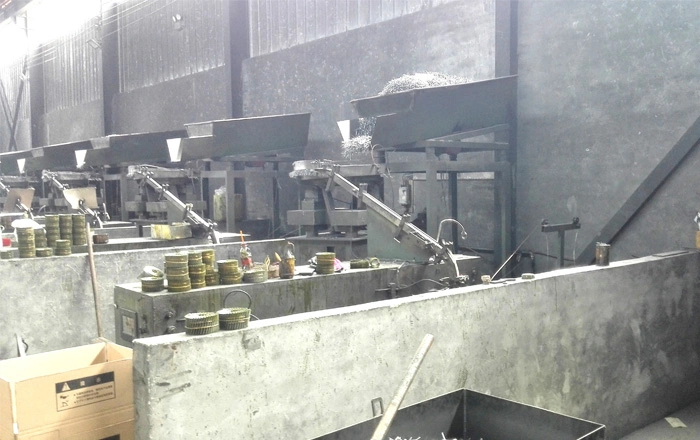
Drywall stud screws are typically manufactured from carbon steel, specifically grades compliant with industry standards (detailed in the footer). The raw material’s composition significantly impacts the screw’s performance. Common steel grades include C1018, C1022, and occasionally higher carbon alloys for enhanced strength. Phosphating is a crucial pre-treatment process applied to the steel wire prior to screw forming. This forms a zinc phosphate coating that improves corrosion resistance and provides a better surface for paint adhesion. The manufacturing process begins with cold heading, where the steel wire is fed into a heading machine which forms the screw head. Critical parameters during cold heading include die angle, feed rate, and impact force. Improper control of these parameters can lead to defects like incomplete head formation or material cracking. Following heading, the screw body is rolled to form the threads. Thread rolling is preferred over cutting as it maintains the grain structure of the steel, enhancing its strength. Subsequent processes include point forming (creating the sharp tip for penetration), thread rolling, heat treatment (to achieve desired hardness and ductility – typically Rockwell C 32-38), phosphating, and finally, coating. Coating options include zinc plating, polymer coating, or a combination for optimized corrosion protection. Quality control throughout the entire process involves dimensional checks, hardness testing, coating thickness measurement, and periodic destructive testing to verify tensile and shear strength.
Performance & Engineering
The performance of drywall stud screws is governed by several engineering principles. Shear strength, the ability to resist forces acting parallel to the screw’s axis, is critical for preventing drywall slippage. Tensile strength, the resistance to forces acting perpendicular to the screw’s axis, is vital to prevent screw pull-out. The screw’s thread geometry – thread pitch, root radius, and flank angle – are designed to maximize holding power in both wood and metal studs. The point geometry (sharp, blunt, or self-drilling) influences the ease of penetration and embedding performance. Environmental resistance is a significant concern. Corrosion, particularly in humid environments, can weaken the screw and lead to failure. Therefore, coatings are crucial. Finite Element Analysis (FEA) is frequently employed during the design process to model stress distribution within the screw and the surrounding materials under various loading conditions. This helps optimize screw geometry and material selection. Compliance with building codes (IBC, IRC) dictates minimum performance requirements for drywall screws, including shear strength, tensile strength, and coating specifications. The interaction between screw spacing and drywall thickness is also a key engineering consideration. Insufficient screw spacing can lead to drywall deflection and cracking, while excessive spacing may not provide adequate support.
Technical Specifications
| Diameter (inches) | Length (inches) | Head Type | Material Grade |
|---|---|---|---|
| 0.080 | 1 1/4 | Bugle | C1018 Carbon Steel |
| 0.080 | 1 5/8 | Bugle | C1018 Carbon Steel |
| 0.080 | 2 1/2 | Bugle | C1018 Carbon Steel |
| 0.113 | 1 1/4 | Bugle | C1022 Carbon Steel |
| 0.113 | 1 5/8 | Bugle | C1022 Carbon Steel |
| 0.113 | 2 1/2 | Bugle | C1022 Carbon Steel |
Failure Mode & Maintenance
Common failure modes for drywall stud screws include stripping of the screw head, screw pull-out, shear failure, and corrosion. Stripping occurs when the driver bit loses engagement with the screw head, often due to excessive torque or a worn driver bit. Screw pull-out results from insufficient embedding depth or weak substrate material. Shear failure happens when the screw’s shank breaks under lateral load, often due to overdriving or using an undersized screw for the application. Corrosion, particularly in environments with high humidity, can lead to weakening of the screw material and eventual failure. Fatigue cracking can also occur over time due to cyclic loading. Maintenance is generally limited to inspection for signs of corrosion or stripping. If corrosion is detected, replacement is recommended. If screws are stripped, attempting to use a larger driver bit or a screw extractor might be possible, but replacement is generally the more reliable solution. Preventative measures include using the correct screw type and size for the application, avoiding overdriving, and ensuring proper substrate preparation. Periodic inspections of drywall installations, particularly in areas prone to moisture, can help identify and address potential issues before they lead to significant failures. Proper storage of screws in a dry environment is also critical to prevent corrosion.
Industry FAQ
Q: What is the difference between Type A and Type B drywall screws?
A: Type A drywall screws are generally used for wood framing, featuring a coarser thread for better grip in wood fibers. Type B drywall screws are designed for metal studs, with a sharper point and finer threads optimized for penetrating and holding in metal. Using the incorrect type can significantly reduce holding power and lead to failure.
Q: How does the coating affect the performance of drywall screws?
A: The coating’s primary function is corrosion resistance. Zinc plating offers basic protection, while polymer coatings (like ceramic or acrylic) provide superior resistance, particularly in high-humidity environments. The coating thickness is also critical; a thicker coating generally provides better protection but can affect screw embedding performance.
Q: What is the recommended screw spacing for drywall installation?
A: Recommended screw spacing depends on the drywall thickness and stud spacing. For 1/2-inch drywall on 16-inch centers, a common spacing is 12 inches vertically. For 5/8-inch drywall, 16-inch vertical spacing is generally sufficient. Closer spacing is recommended for areas with higher stress or seismic activity.
Q: What causes drywall screws to strip easily?
A: Stripping is usually caused by excessive torque, a worn or incorrect driver bit, or using a screw with a damaged head. Ensuring proper torque control on the screw gun and using high-quality driver bits are essential preventative measures. Also, avoid applying excessive downward pressure during screw installation.
Q: What is the impact of screw embedment depth on drywall performance?
A: Proper embedment depth is crucial for maximizing holding power. Screws should be driven flush with the drywall surface without breaking the paper facing. Overdriving can damage the paper and reduce holding capacity, while underdriving leaves the screw protruding and vulnerable to damage.
Conclusion
Drywall stud screws, while seemingly simple fasteners, are critical components in modern construction. Their performance is dictated by a complex interplay of material science, manufacturing precision, and engineering principles. Selecting the appropriate screw type, ensuring proper installation techniques, and understanding potential failure modes are essential for achieving long-term structural integrity and preventing costly rework. The continued development of improved coatings and screw designs focused on enhancing corrosion resistance and holding power will further optimize drywall system performance.
Looking ahead, the industry is likely to see a greater emphasis on sustainable materials and manufacturing processes for drywall screws. The exploration of alternative materials to carbon steel, coupled with advancements in coating technologies that minimize environmental impact, will be key areas of focus. Furthermore, the integration of smart fastening technologies—such as screws equipped with sensors to monitor stress levels—could provide valuable data for proactive maintenance and structural health monitoring.