




Introduction
Hard concrete nails are specialized fasteners designed for direct insertion into concrete, brick, and other masonry materials. Unlike traditional nails intended for wood, these fasteners are engineered to withstand the compressive forces exerted during installation and provide substantial holding power within the masonry matrix. Their technical position within the construction supply chain is as a critical component in fastening applications where traditional mechanical anchors are unsuitable or less efficient – think securing furring strips, electrical boxes, or thin sheet materials to concrete substrates. Core performance characteristics center on shear strength, tensile strength (pull-out resistance), and resistance to environmental degradation within alkaline concrete environments. The increasing demand for faster, less disruptive construction methods has driven advancements in hardened alloy compositions and specialized nail geometries to optimize penetration and holding capacity. A primary industry pain point revolves around inconsistent concrete quality and the resultant variability in holding power, requiring careful fastener selection based on the specific concrete mix design and application requirements.
Material Science & Manufacturing
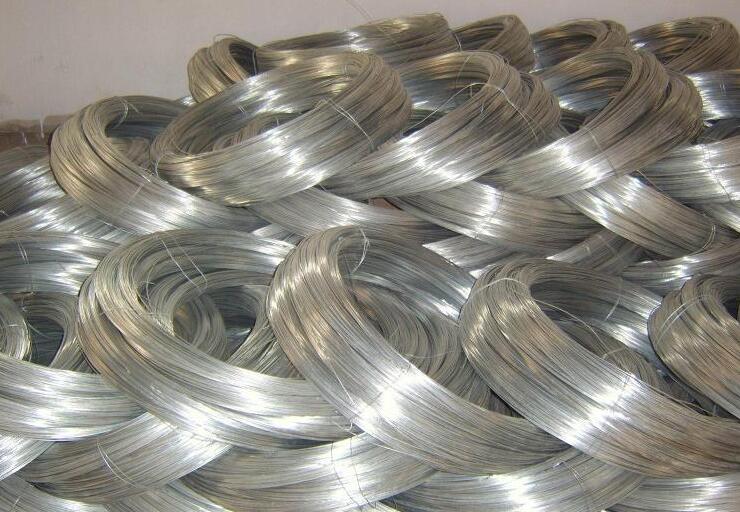
The manufacturing of hard concrete nails begins with the selection of high-carbon steel wire, typically AISI 1045 or 1050 steel, chosen for its high tensile strength and hardenability. The wire undergoes a cold drawing process to achieve the desired diameter and surface finish. This process work-hardens the steel, increasing its yield strength. Crucially, the chemical composition of the steel is tightly controlled, focusing on carbon content (0.45-0.55%), manganese (0.6-0.9%), silicon (0.15-0.35%), and phosphorus/sulfur levels (kept to a minimum to enhance ductility and weldability if required). The nail point is then hardened through a process of case hardening, often involving carburization followed by quenching and tempering. This creates a hard, wear-resistant outer layer while maintaining a tougher, more ductile core. The point geometry is critical: a diamond or chiseled point configuration is common, optimized for initial penetration and displacement of concrete aggregate. Surface treatments, such as bright zinc plating or hot-dip galvanization, are applied to provide corrosion resistance. Quality control measures at each stage include tensile testing of the wire, hardness testing of the finished nails (typically Rockwell C 55-60), and microscopic examination of the case-hardened layer. Parameter control during heat treatment – specifically, temperature and quenching medium – is paramount to achieving the desired balance of hardness and toughness.
Performance & Engineering
The performance of hard concrete nails is governed by complex mechanical interactions between the nail, the concrete matrix, and the applied load. Shear strength is dependent on the frictional force developed between the nail shank and the concrete aggregate, as well as the degree of concrete compression around the nail. Tensile strength (pull-out resistance) relies on a combination of mechanical interlock (the nail’s surface engaging with aggregate particles) and adhesion between the nail surface and the cement paste. Engineering analyses typically employ finite element modeling (FEM) to simulate load distribution and predict failure mechanisms. Concrete compressive strength is a primary variable; higher strength concrete generally provides greater holding power. Nail spacing and edge distances are also critical; closer spacing reduces the effective concrete volume available to resist pull-out, while insufficient edge distance can lead to concrete spalling. Corrosion resistance is a significant performance factor, particularly in exposed applications. Galvanization or other protective coatings mitigate corrosion, but long-term performance depends on the coating’s integrity and the environmental conditions. Compliance requirements, such as those outlined in ICC-ES AC318 (for structural applications) and relevant building codes, dictate minimum performance standards for nail strength, durability, and allowable stress values. Fatigue performance, under repeated loading, needs consideration in certain applications and requires specific testing to determine load limits.
Technical Specifications
| Nail Diameter (mm) | Nail Length (mm) | Head Type | Minimum Shear Strength (MPa) | Minimum Tensile Strength (MPa) | Coating |
|---|---|---|---|---|---|
| 2.1 | 30 | Flat Head | 150 | 80 | Bright Zinc Plating |
| 2.5 | 40 | Countersunk Head | 200 | 120 | Hot-Dip Galvanization |
| 2.8 | 50 | Flat Head | 250 | 150 | Hot-Dip Galvanization |
| 3.1 | 60 | Countersunk Head | 300 | 180 | Hot-Dip Galvanization |
| 3.4 | 75 | Flat Head | 350 | 220 | Hot-Dip Galvanization |
| 3.8 | 90 | Countersunk Head | 400 | 250 | Hot-Dip Galvanization |
Failure Mode & Maintenance
Hard concrete nails are susceptible to several failure modes. Shear failure occurs when the force applied exceeds the frictional capacity between the nail and the concrete, resulting in the nail shearing off at or near the concrete surface. Tensile failure (pull-out) happens when the nail loses its mechanical interlock with the concrete, being extracted from the hole. Concrete cracking is a common failure, especially near edges or with excessive nail spacing, compromising the holding power. Corrosion can significantly reduce nail strength over time, particularly in marine environments or areas exposed to de-icing salts. Fatigue cracking can occur under cyclic loading, initiating at stress concentrations around the nail head or point. Maintenance typically focuses on preventative measures: ensuring proper nail selection for the concrete type and application, using appropriate nail spacing, and applying protective coatings to mitigate corrosion. Regular inspection of installed nails in critical applications can identify signs of corrosion or concrete deterioration. If failure is observed, nails should be replaced with appropriately sized and specified fasteners. Repairing cracked concrete surrounding the nail location may be necessary to restore structural integrity. Avoid overdriving nails, which can crush the surrounding concrete and reduce holding power. Selecting nails with corrosion resistant coatings appropriate for the environmental exposure conditions is a key preventative measure.
Industry FAQ
Q: What is the optimal concrete compressive strength for maximizing holding power with these nails?
A: Generally, higher compressive strength concrete provides superior holding power. However, excessively high strength concrete can be brittle and prone to cracking. A range of 25-40 MPa (3600-5800 psi) is typically considered optimal for most applications. Testing is crucial with unique concrete mixes.
Q: How does the nail coating affect long-term performance in coastal environments?
A: Hot-dip galvanization offers significantly better corrosion resistance than bright zinc plating in coastal environments. However, even galvanization can degrade over time due to salt spray. Consider epoxy or ceramic coatings for maximum protection in severe marine exposures.
Q: What is the recommended nail spacing to avoid concrete spalling?
A: A minimum edge distance of at least 2.5 times the nail diameter is generally recommended. Nail spacing should be at least 3 times the nail diameter to prevent overlapping stress concentrations and concrete cracking. These are general guidelines; specific project requirements should dictate the final spacing.
Q: Can these nails be used in pre-cast concrete?
A: Yes, but the pre-cast concrete’s density and aggregate composition significantly affect holding power. The concrete must be adequately cured before nail installation. Testing is crucial to ensure sufficient pull-out and shear resistance in pre-cast applications.
Q: What is the difference between a diamond point and a chiseled point nail, and when would I use each?
A: A diamond point is generally preferred for softer concrete or brick, providing easier initial penetration. A chiseled point is more suitable for harder, denser concrete, where more aggressive displacement of aggregate is required for optimal bite. The choice depends on the material being fastened.
Conclusion
Hard concrete nails represent a cost-effective and efficient fastening solution for a wide range of masonry applications. Their performance is fundamentally linked to material science, manufacturing precision, and correct application techniques. Understanding the interplay between nail properties, concrete characteristics, and environmental factors is vital for ensuring long-term structural integrity.
Future advancements in hard concrete nail technology will likely focus on developing more corrosion-resistant coatings, optimizing nail geometries for enhanced holding power in low-strength concrete, and integrating smart features – such as embedded sensors – for real-time monitoring of load and structural health. Proper selection and installation, guided by relevant standards and best practices, remain paramount to maximizing the benefits of this essential fastening technology.