



Introduction
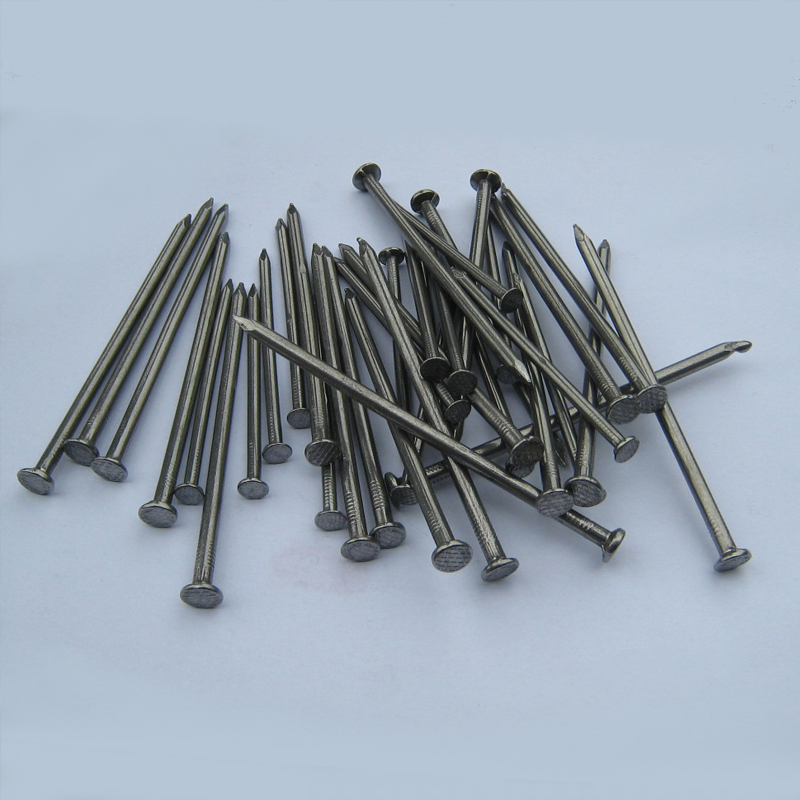
Lead nails for concrete represent a specialized fastening solution employed in applications demanding high corrosion resistance and, historically, lead’s inherent workability. While the use of lead is increasingly restricted due to environmental and health concerns, understanding its properties and applications remains crucial for legacy structures and specific niche requirements. These nails are primarily utilized in situations where conventional steel fasteners are susceptible to degradation from alkaline concrete environments or exposure to corrosive elements. This guide provides an in-depth analysis of lead nails for concrete, encompassing material science, manufacturing processes, performance characteristics, failure modes, maintenance protocols, and relevant industry standards. The primary pain point addressed is the balancing act between achieving secure fastening, mitigating corrosion, and adhering to evolving environmental regulations. Lead nails offer a degree of ductility absent in many other materials, which allows them to conform to minor irregularities in concrete without fracturing, a critical feature in demanding applications. Understanding the limitations of lead, however, is paramount, particularly concerning its toxicity and mechanical strength compared to modern alternatives.
Material Science & Manufacturing
The primary material component of lead nails is, unsurprisingly, lead (Pb). However, pure lead is too soft for most structural applications. Therefore, lead nails are commonly manufactured as alloys, typically with antimony (Sb), tin (Sn), or arsenic (As) – the latter being largely phased out due to toxicity concerns. Antimony imparts increased hardness and tensile strength, while tin improves corrosion resistance and workability. The typical composition ranges from 90-98% lead with 2-10% alloy additions. Manufacturing begins with the smelting and refining of lead ore, followed by alloy creation through controlled melting and mixing. The molten alloy is then fed into nail-forming machines, utilizing a process of heading (cold or hot forging) and pointing to achieve the desired nail shape. Key parameters during manufacturing include temperature control to prevent oxidation and segregation of alloy components, precise control of forging pressure to ensure dimensional accuracy and prevent cracking, and surface treatment, often involving passivation or coating with a thin layer of a corrosion-inhibiting compound. The lead alloy’s relatively low melting point (around 327°C) simplifies the forming process but necessitates careful temperature management to avoid grain growth and embrittlement. The metallurgical structure is characterized by a fine-grained microstructure, ideally with evenly distributed alloy elements. Lead’s high density (11.34 g/cm³) influences its performance, contributing to both its corrosion resistance (forming a passive oxide layer) and its weight, a consideration in structural design.
Performance & Engineering
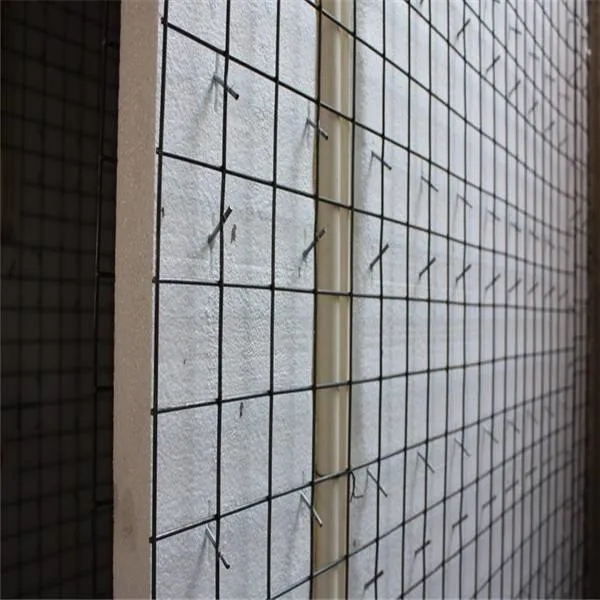
The performance of lead nails in concrete is dictated by a complex interplay of factors, including the concrete’s composition (alkalinity, moisture content), the nail’s geometry (diameter, length, shank type), and the applied load (static, dynamic). Lead’s ductility allows it to withstand some degree of deformation without fracture, making it less prone to brittle failure compared to steel nails. However, its lower tensile strength and yield strength limit its load-carrying capacity. Force analysis reveals that the primary failure mechanism is typically pull-out resistance, governed by the frictional force between the nail shank and the concrete matrix, and the shear strength of the concrete around the nail. Environmental resistance is a key advantage. Lead forms a passive oxide layer upon exposure to air, providing excellent corrosion protection in alkaline concrete environments. However, exposure to acids or sulfates can compromise this protective layer. Compliance requirements are increasingly stringent due to lead's toxicity. Regulations such as REACH (Registration, Evaluation, Authorisation and Restriction of Chemicals) in Europe and similar legislation globally restrict the use of lead in many applications. Engineering considerations include galvanic corrosion. When lead nails are used in conjunction with dissimilar metals (e.g., steel reinforcing bars), a galvanic couple can form, accelerating corrosion of the less noble metal (typically steel). Proper insulation or the use of compatible materials is crucial to mitigate this risk. Furthermore, the creep behavior of lead at elevated temperatures must be considered in applications where temperature fluctuations are significant.
Technical Specifications
| Parameter | Unit | Typical Value (Antimony-Lead Alloy – 95%Pb, 5%Sb) | Testing Standard |
|---|---|---|---|
| Tensile Strength | MPa | 15-25 | ASTM F1667 |
| Yield Strength | MPa | 8-12 | ASTM F1667 |
| Elongation at Break | % | 20-30 | ASTM F1667 |
| Hardness (Brinell) | HB | 5-8 | ASTM E10 |
| Density | g/cm³ | 11.3 - 11.5 | ASTM E933 |
| Corrosion Rate (in concrete) | mm/year | <0.01 | ASTM G102 (adapted) |
Failure Mode & Maintenance
Lead nails are susceptible to several failure modes. Creep, the time-dependent deformation under sustained load, is a significant concern, particularly at elevated temperatures. This can lead to loosening of the fastener and eventual failure. Fatigue cracking can occur under cyclic loading, initiated by microscopic defects or stress concentrations. Corrosion, while generally slow in alkaline concrete, can be accelerated by exposure to acidic environments or the presence of chlorides. Oxidation of the lead alloy can also lead to surface degradation. Delamination of the concrete surrounding the nail can reduce pull-out resistance and compromise the connection. Maintenance typically involves visual inspection for signs of corrosion, loosening, or deformation. If corrosion is detected, the nail should be replaced with a corrosion-resistant alternative. In cases of creep-induced loosening, re-tightening is not feasible due to the material’s properties; replacement is the recommended solution. Preventative measures include ensuring proper concrete curing, minimizing exposure to corrosive substances, and utilizing appropriate coatings or sealants to protect the nail from the environment. Regular inspections, especially in exposed or harsh environments, are crucial for identifying and addressing potential failure modes before they compromise structural integrity. In legacy structures, lead nails may exhibit signs of lead degradation, prompting the need for careful assessment and potential remediation according to environmental regulations.
Industry FAQ
Q: What are the primary reasons to still consider lead nails in modern construction?
A: While largely phased out, lead nails remain relevant in specific restoration projects involving historical structures where maintaining original materials is paramount. Their corrosion resistance in alkaline concrete environments and their ductility are key advantages in these cases. However, full compliance with environmental regulations and careful risk assessment are essential.
Q: How does the concrete mix design affect the performance of lead nails?
A: The concrete’s alkalinity and moisture content are critical. Highly alkaline concrete promotes passivation of the lead surface, enhancing corrosion resistance. However, excessive moisture can accelerate corrosion in the presence of chlorides or sulfates. The concrete’s compressive strength also influences pull-out resistance.
Q: What are the alternatives to lead nails for corrosion-resistant fastening in concrete?
A: Stainless steel nails (grades 304, 316) are the most common alternative, offering excellent corrosion resistance. Epoxy-coated steel nails provide a cost-effective option for moderate corrosion environments. Fiber-reinforced polymer (FRP) nails offer superior corrosion resistance but are generally more expensive.
Q: What safety precautions must be taken when handling lead nails?
A: Lead is a toxic metal. Appropriate personal protective equipment (PPE), including gloves, respirators, and eye protection, must be worn during handling and installation. Proper ventilation is essential to minimize lead dust inhalation. Waste materials must be disposed of according to hazardous waste regulations.
Q: How do galvanic corrosion concerns affect the use of lead nails with steel reinforcement?
A: Lead is more noble than steel, creating a galvanic couple when in contact. This accelerates corrosion of the steel. To mitigate this, insulate the lead nails from the steel reinforcement using non-conductive materials or employ sacrificial anodes to protect the steel.
Conclusion
Lead nails for concrete, while facing increasing scrutiny due to environmental concerns, retain a niche role in specific applications demanding high corrosion resistance and compatibility with alkaline concrete environments. Their ductility provides an advantage in applications where minor irregularities in the substrate are present. However, understanding their limitations – lower strength compared to modern materials, creep susceptibility, and the inherent toxicity of lead – is crucial for informed decision-making.
The future of lead nails hinges on the development of effective lead mitigation strategies and the continued advancement of corrosion-resistant alternatives. Compliance with increasingly stringent environmental regulations will be a key driver. Ongoing research into novel alloys and surface treatments may offer opportunities to enhance the performance and reduce the environmental impact of lead-based fasteners, though complete replacement with safer and more sustainable materials remains the ultimate objective.