



Introduction
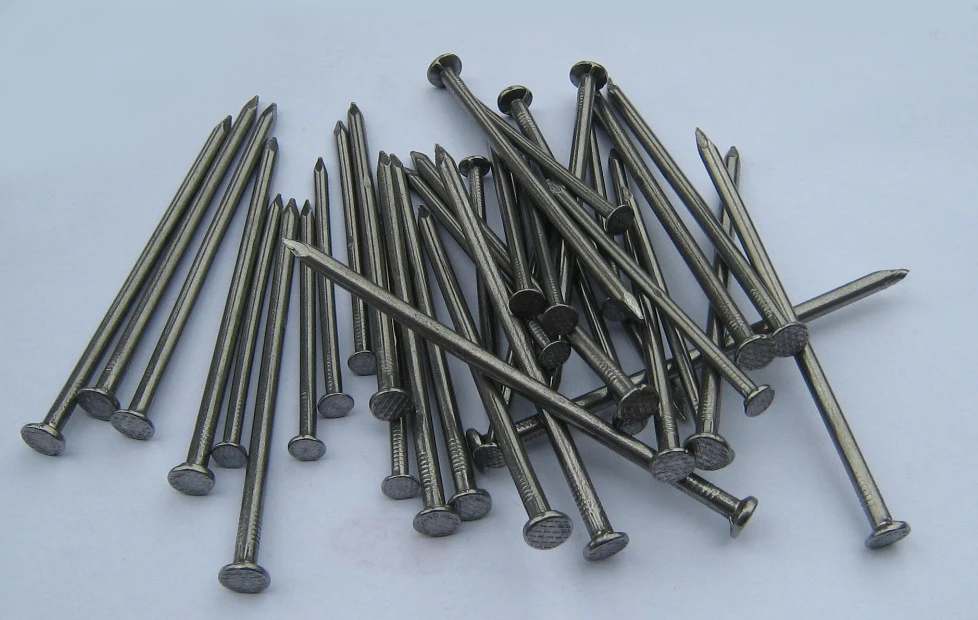
Nails, fundamental fasteners in construction and woodworking, are categorized by material, size, and intended application. Their technical position within the building materials supply chain is foundational – preceding and enabling the installation of numerous other components like wood framing, sheathing, roofing, and finishing materials. Modern nail manufacturing emphasizes precise dimensional control and material composition to ensure predictable performance. Core performance characteristics include shear strength, tensile strength, bending resistance, and corrosion resistance, all of which directly impact the structural integrity and longevity of assembled structures. The industry currently faces challenges in balancing cost-effectiveness with increasingly stringent building codes regarding structural performance and environmental sustainability, necessitating advancements in material science and manufacturing processes. Specifically, concerns around embodied carbon in steel production are driving research into alternative materials and coatings.
Material Science & Manufacturing
The predominant material for nail production is carbon steel, typically low-carbon steel (e.g., SAE 1008) selected for its ductility and formability. The chemical composition is crucial; controlled levels of manganese, phosphorus, and sulfur impact weldability and brittleness. Stainless steel nails (e.g., 304, 316) are employed in corrosive environments, offering significantly enhanced durability but at a higher cost. Aluminum nails are used for specific applications where corrosion with certain materials is a concern. Manufacturing begins with wire drawing, reducing the steel wire diameter to the required gauge. This process induces work hardening, increasing tensile strength but also reducing ductility. Nails are then formed through a cold-heading process, using high-speed machinery to impact and shape the wire. Critical parameters include heading speed, die geometry, and lubrication. Accurate die design is paramount to achieving consistent head size and shape, impacting driving performance and holding power. Post-heading, nails undergo a polishing and coating process. Common coatings include galvanization (zinc coating for corrosion protection – hot-dip galvanizing provides a thicker, more durable coating than electrogalvanizing), phosphate coating (enhancing paint adhesion and corrosion resistance), and polymer coatings (offering color and improved corrosion resistance). Quality control involves rigorous dimensional checks, hardness testing (Rockwell hardness scale), and coating thickness measurements. Material certifications from steel suppliers are vital to verify chemical composition compliance.
Performance & Engineering
The performance of a nail is governed by its ability to resist applied forces – primarily shear and tensile forces. Shear strength, the resistance to forces acting parallel to the nail shank, is critical for resisting racking forces in framed structures. Tensile strength, the resistance to forces pulling directly on the nail, is important for resisting pull-out. Bending resistance is also significant, preventing the nail from bending over under load. Engineering calculations, governed by building codes (e.g., IBC, Eurocode 5), determine the required nail size, spacing, and penetration depth for specific load conditions. Factors of safety are applied to account for material variability and construction tolerances. Environmental resistance is paramount; corrosion weakens the nail, reducing its load-carrying capacity. Galvanization, as mentioned previously, is a primary method of corrosion protection. Furthermore, the interaction between nail material and the substrate material (e.g., wood type, treated lumber) impacts corrosion rates. Electrochemical corrosion can occur when dissimilar metals are in contact in the presence of an electrolyte (moisture). Nail withdrawal resistance is also a key performance parameter, dependent on nail diameter, shank design (smooth vs. ring shank), and wood density. Ring shank nails provide significantly higher withdrawal resistance due to the increased surface area and mechanical interlock with the wood fibers. Compliance with standards like ASTM F166 ensures minimum performance requirements are met.
Technical Specifications
| Nail Diameter (Gauge) | Nail Length (inches) | Shear Strength (psi) | Tensile Strength (psi) |
|---|---|---|---|
| 6d (0.113 inch) | 2.0 inches | 650 | 800 |
| 8d (0.131 inch) | 2.5 inches | 800 | 1000 |
| 10d (0.148 inch) | 3.0 inches | 1000 | 1200 |
| 16d (0.196 inch) | 3.5 inches | 1400 | 1600 |
| Stainless Steel 8d | 2.5 inches | 900 | 1100 |
| Galvanized 10d | 3.0 inches | 1000 | 1200 |
Failure Mode & Maintenance
Nails are susceptible to several failure modes. Fatigue cracking can occur under cyclical loading, especially in structures subject to wind or seismic forces. This initiates at stress concentration points, often near the nail head or shank bends. Corrosion, as previously discussed, weakens the nail material, leading to reduced load-carrying capacity and eventual fracture. Electrochemical corrosion is particularly aggressive in the presence of treated lumber. Bending failure occurs when the nail exceeds its bending resistance, typically due to excessive lateral forces. Pull-out failure occurs when the nail is unable to resist tensile forces and is extracted from the substrate. Delamination of the wood around the nail shank can also contribute to pull-out failure. Maintenance primarily focuses on preventative measures. Using appropriately coated nails for the environment is crucial. Regular inspections of structures can identify signs of corrosion or fatigue cracking. Applying protective coatings to the nail heads can mitigate corrosion. Replacing corroded or damaged nails is essential to maintain structural integrity. In high-humidity environments, ensuring adequate ventilation can reduce corrosion rates. Avoid overdriving nails, as this can damage the wood fibers and reduce holding power.
Industry FAQ
Q: What is the difference between hot-dip galvanization and electrogalvanization in terms of corrosion protection for nails?
A: Hot-dip galvanization provides a thicker, more robust zinc coating compared to electrogalvanization. This is achieved by immersing the nails in molten zinc, resulting in a metallurgical bond. Hot-dip galvanized nails offer significantly superior corrosion resistance, especially in harsh environments. Electrogalvanization applies a thinner coating through an electroplating process, offering adequate protection for less demanding applications but being more prone to corrosion over time.
Q: How does wood moisture content affect the holding power of nails?
A: Higher wood moisture content generally reduces nail holding power. Wet wood is weaker and more prone to deformation, reducing the mechanical interlock between the nail and the wood fibers. As wood dries, it shrinks, potentially loosening the nail. Kiln-dried lumber offers better nail holding power than green lumber. Proper acclimation of lumber to the service environment is crucial.
Q: What is the significance of nail shank design (smooth vs. ring shank)?
A: Ring shank nails possess a series of rings along the shank, significantly increasing their withdrawal resistance. These rings create a mechanical interlock with the wood fibers, requiring more force to pull the nail out. Smooth shank nails offer less holding power and are suitable for applications where withdrawal resistance is not critical. Ring shank nails are typically preferred for structural applications.
Q: How do different types of wood (e.g., softwood vs. hardwood) affect nail holding power?
A: Hardwoods generally offer greater nail holding power than softwoods due to their higher density and tighter grain structure. Hardwoods require more force to drive nails into them but provide a stronger mechanical interlock. Softwoods are easier to nail but provide less holding power. Nail size and spacing must be adjusted based on the wood species.
Q: What are the implications of using stainless steel nails versus galvanized nails in coastal environments?
A: Coastal environments are highly corrosive due to salt spray. While galvanized nails offer some protection, stainless steel nails are significantly more resistant to corrosion in saltwater environments. Stainless steel nails are the preferred choice for applications where long-term durability and corrosion resistance are critical, despite their higher cost. The specific grade of stainless steel (e.g., 316) influences its corrosion resistance.
Conclusion
Nails, despite their seemingly simple construction, are critical structural elements requiring careful consideration of material science, manufacturing processes, and performance characteristics. The selection of the appropriate nail type – based on material, size, coating, and shank design – is paramount to ensuring the longevity and safety of constructed structures. Understanding the potential failure modes, such as corrosion and fatigue cracking, and implementing preventative maintenance measures are equally important.
Future trends in nail technology will likely focus on developing more sustainable materials and coatings, reducing embodied carbon, and enhancing corrosion resistance. Advancements in fastener design, such as specialized shank geometries, will further improve holding power and reduce the risk of failure. Furthermore, the integration of smart fasteners with embedded sensors for structural health monitoring represents a potential area for innovation.