



Integrating China Catalyst Mesh Belts into high-temperature sintering and chemical processing lines has revolutionized thermal material transport. Modern industrial thermal processing demands absolute precision, structural integrity, and uniform heat distribution across every processing stage. As metallurgical industries push for higher energy efficiency and tighter quality tolerances, the interaction between sintered porous media and continuous transport systems has become a central focal point for process engineers worldwide.
Metallurgy and High-Temperature Endurance in Sintered Media Transport
The processing of advanced porous metals and catalytic substrates requires thermal environments that frequently exceed 1000°C. Under these severe conditions, conventional transport mechanisms suffer from accelerated thermal fatigue, warping, and micro-structural degradation. Achieving operational consistency necessitates combining high-grade heat-resistant alloys with advanced weave geometries.
High-tensile stainless steel alloys and nickel-chromium formulations serve as the primary defensive barrier against oxidation and carburization. When configured into precision-engineered mesh systems, these materials permit uniform gas flow and rapid thermal transfer during crucial sintering phases. The open-mesh geometry ensures that purge gases and heat circulate unimpeded around the workload, eliminating hot spots and preventing incomplete sintering across complex component cross-sections.
Conveyor Mechanical Engineering: Stability and Motion Control
Dynamic movement within continuous sintering furnaces introduces mechanical challenges such as belt tracking deviation, thermal expansion distortion, and longitudinal sag. Simple friction-driven belts often exhibit slip and lateral drifting under variable thermal loads, leading to catastrophic jam-ups and expensive furnace downtime.
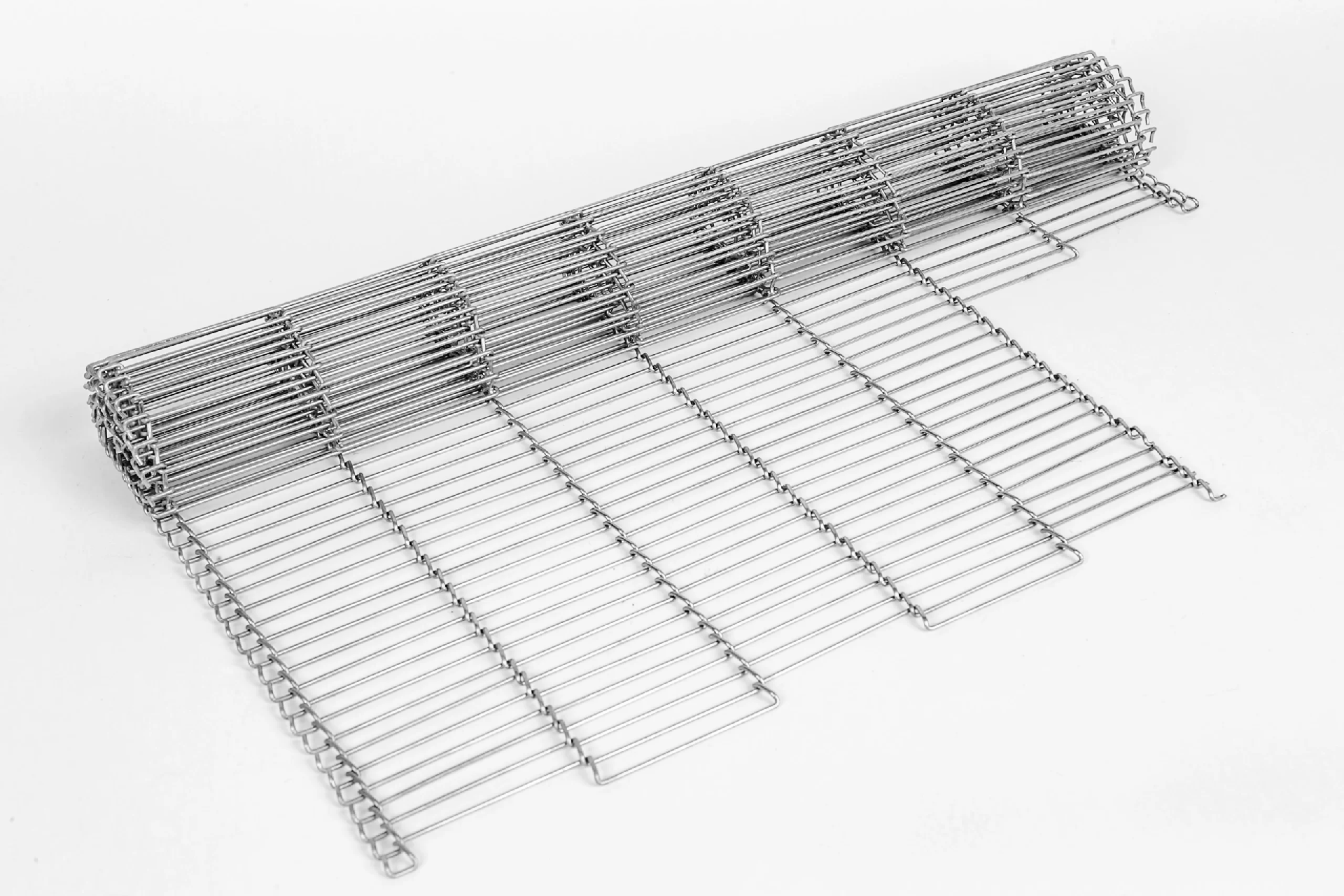
To overcome these stability barriers, modern thermal processing plants utilize positively guided, chain-driven configurations. When processing loose sintered particulates, small component batches, or inclined thermal reaction beds, implementing a Chain type baffle mesh belt provides vital barrier retention, preventing material displacement while maintaining precise timing and uninhibited gas permeability across the entire heat treatment zone.
The synergy between lateral support rods and precision-machined drive sprockets shifts mechanical strain away from the wire mesh matrix directly onto the load-bearing chains. This architectural approach extends component operating lifespans and guarantees predictable retention times through quenching, annealing, and sintering zones.
Strategic Supply Chain Integration for Industrial Sintering Facilities
Selecting transport components for extreme thermal processing is more than a routine replacement decision; it is a strategic capital investment. Production planners must evaluate full lifecycle costs, factoring in maintenance frequency, energy consumption, and product defect rates. Partnering with a premium manufacturer or advanced supplier capable of customizing mesh density, wire gauge, and alloy composition ensures that conveyor systems seamlessly align with exact furnace specifications.
As industrial manufacturing shifts toward Industry 4.0 automation, continuous monitoring and precision material handling will remain the cornerstones of operational excellence. Upgrading core transport infrastructure allows facilities to maximize furnace throughput, reduce planned downtime, and achieve strict compliance with global quality and safety standards.