



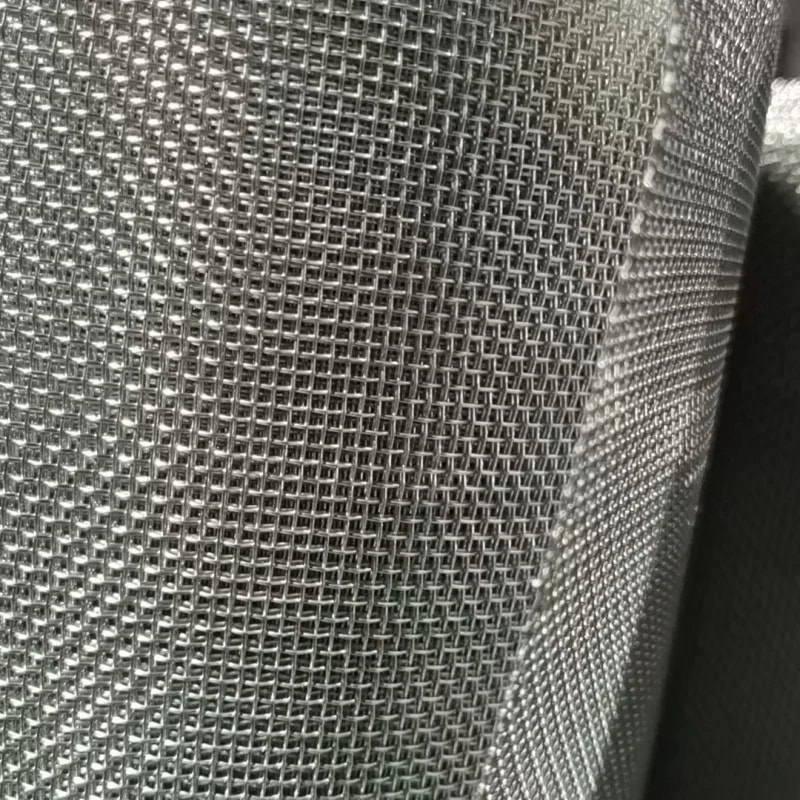
Every China Filtering Mesh Supplier faces the ultimate technical challenge: maintaining absolute structural integrity under extreme fluid pressure. In the contemporary industrial landscape, particularly within sectors such as petrochemical refining, pharmaceutical synthesis, and advanced aerospace manufacturing, fluid filtration systems are pushed to their absolute physical and thermodynamic limits. The efficacy of sintered mesh—a highly complex, multi-layered filtration medium—relies entirely on the microscopic precision of its foundational materials. When dealing with highly viscous fluids or aggressive chemical compounds, a filtration system is only as strong as its weakest microscopic aperture.
The Physics of High-Performance Sintered Filtration
Sintered mesh represents a significant leap forward in filtration engineering. It is meticulously engineered by fusing multiple layers of woven wire cloth through a vacuum sintering process in high-temperature furnaces. This thermal bonding creates a unified, monolithic structure capable of withstanding intense mechanical stress, backwashing pressures, and severe temperature fluctuations while maintaining an exact micron rating. However, chemical engineers and plant operators frequently encounter systemic issues such as unpredictable pressure drops, uneven flow distribution, and premature filter blinding.
Extensive failure analysis in industrial settings reveals that these operational bottlenecks are rarely the fault of the sintering process itself. Instead, they almost always trace back to inconsistencies in the base wire diameter used in the woven layers before sintering. When analyzing the premium industrial filtration units currently for sale in the global marketplace, performance data consistently indicates that systems utilizing ultra-fine wire with the tightest possible dimensional tolerances significantly outperform standard market variants. A deviation of just a few microns in wire diameter can fundamentally disrupt the geometric uniformity of the mesh pores, altering the Reynolds number of the fluid flow, accelerating localized wear, and eventually leading to catastrophic systemic contamination.
Material Science: The Critical Role of Ultra-Fine Stainless Steel
To achieve the necessary precision required by modern fluid dynamics, the filtration industry is increasingly turning to highly specialized ultra-fine stainless steel wire, typically ranging from 0.025 mm to 0.08 mm in diameter. Premium manufacturers who supply this critical raw material must draw this wire under meticulously controlled clean-room-like conditions to achieve a staggering manufacturing tolerance of ±0.001 mm. The metallurgical choices at this stage are absolutely critical to the survival of the final product.
Austenitic stainless steel grades, specifically AISI 304L, 316, and 316L, are universally favored by top-tier suppliers. These specific grades are selected not just for their exceptional resistance to chemical corrosion and oxidation, but for their ability to maintain remarkably stable mechanical properties after the intense thermal cycles of the sintering process. For instance, a high-quality 0.05 mm 316L ultra-fine wire must retain a precise tensile strength of 680–980 N/mm² and an elongation rate of 20–30% to ensure it does not become brittle when subjected to pressure surges.
The Complex Journey from Wire Rod to Precision Mesh
Global raw material suppliers understand that the manufacturing journey from a raw wire rod to a finished ultra-fine filament is fraught with technical challenges. The process involves dozens, sometimes hundreds, of successive cold drawing passes through precision diamond dies. This demanding process must be carefully managed to eliminate work hardening through precise intermediate annealing. This preserves the material's ductility, which is essential because the wire must endure the extreme physical stress of being woven into complex twill or Dutch weaves before the layers are ever introduced to the sintering furnace.
Addressing the Complexities of Specialized Filter Components
As industrial filtration requirements become more specialized and spatial constraints become tighter, the design of end-stage components requires equally stringent material standards. For instance, consider the extreme operational environment of polymer extrusion machinery. The performance and longevity of a high-pressure stainless steel filter cap used in these systems depend entirely on the tensile strength and chemical resistance of its constituent ultra-fine wire. If the base material lacks the necessary structural integrity, the mesh will literally fracture under the extreme viscosity and sheer force of the molten polymer melt, leading to costly production downtime and equipment damage.
Evaluating the Global Supply Chain for Advanced Materials
Ultimately, the reliability of advanced filtration technologies is built from the ground up, starting at the wire drawing facility. Engineers and procurement specialists must look beyond the surface of the finished sintered plate and evaluate the capabilities of the primary wire producers. By specifying high-quality, precision-drawn ultra-fine stainless steel wire from an advanced supplier, structural engineers can eliminate microscopic vulnerabilities. This rigorous approach to material selection is the only way to ensure that industrial filtration systems deliver continuous, safe, and high-performance operation in the most demanding environments imaginable.