



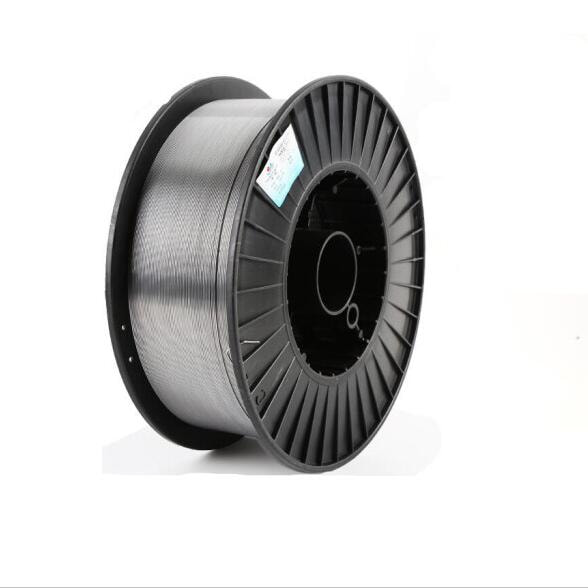
Every top-tier welding wire manufacturer understands that joining microscopic materials to heavy-duty industrial frames requires absolute precision. In the highly specialized realm of industrial filtration, sintered wire mesh has fundamentally revolutionized how engineers handle fluid dynamics in high-pressure and high-temperature environments. From aerospace hydraulic systems to petrochemical processing plants and pharmaceutical manufacturing, the ability of a filtration unit to maintain its strict micron-level accuracy under extreme operational stress is of paramount importance. However, the true structural strength and longevity of a sintered mesh filter do not merely lie in the initial vacuum sintering process of the mesh itself. Rather, the ultimate reliability of the entire filtration system is determined by the metallurgical integrity of its structural boundaries, flanges, and internal support frameworks.
Understanding the Mechanics of Sintered Mesh
To fully appreciate the engineering challenges involved, one must first understand the complex architecture of sintered wire mesh. Sintered mesh is typically created by layering multiple sheets of woven metal wire cloth and pressing them together in a high-temperature vacuum furnace. This advanced thermal process permanently bonds the intersecting wires, transforming a delicate, flexible mesh into a robust, porous, and highly stable material. A standard five-layer sintered mesh configuration includes a protective outer layer, a precise filter control layer, a dispersion layer to distribute fluid flow, and two heavy-duty reinforcing layers.
This composite, multi-layered structure ensures that the primary filtration media does not deform, tear, or collapse when subjected to massive fluid pressure—a common and catastrophic failure point in traditional single-layer wire screens. The mechanical shock resistance and thermal stability of sintered mesh allow it to operate continuously in environments that would destroy conventional filters within hours. Yet, despite this remarkable internal strength, these mesh cylinders and discs must eventually be integrated into larger industrial systems. They must be permanently attached to solid metal housings, heavy flanges, and rigid structural supports. It is exactly at these intersection points that mechanical and metallurgical failures most frequently occur.
The Threat of Vibration, Pulsation, and Fatigue
In a live industrial environment, fluid dynamics are rarely static. Pumps create continuous, aggressive pulsations, sending shockwaves of pressure against the filter assembly. When these pulsating forces interact with the filter, the joint where the highly porous sintered mesh meets the solid metal frame experiences severe and localized mechanical fatigue. If the joining process introduces any structural weakness, or if the filler material lacks adequate tensile strength and ductility, the constant flexing will inevitably cause micro-fractures. Once a micro-fracture forms, the high-pressure fluid will exploit it, leading to a catastrophic bypass failure where unfiltered, contaminated fluid escapes through the cracks, potentially ruining downstream machinery or compromising an entire batch of chemical products.
Managing Thermal Distortion and the Heat-Affected Zone (HAZ)
Perhaps the most significant challenge in the fabrication of high-end filtration systems is managing heat input during the final assembly phase. Sintered mesh, due to its thin wire diameter and high surface area, is incredibly susceptible to thermal distortion and degradation in the Heat-Affected Zone (HAZ). When excessive heat is applied to join the mesh to a heavy flange, the microscopic pores of the mesh adjacent to the joint can melt or warp, completely ruining its specific filtration rating. Furthermore, rapid heating and cooling cycles can induce severe residual stress and micro-cracking in the joint itself.
To mitigate these risks, fabrication engineers employ advanced, low-heat-input joining techniques such as precision Tungsten Inert Gas (TIG) and highly controlled Metal Inert Gas (MIG) processes. But the technique alone is insufficient; the process is entirely dependent on the metallurgical quality of the filler metal used. The chemistry of the consumable must perfectly match the base metal to ensure a seamless transition of mechanical properties, yield strength, and, crucially, corrosion resistance.
Supply Chain Solutions: The Role of Premium Consumables
To achieve flawless, invisible, and structurally impenetrable integration, global fabrication facilities must rely on high-quality providers for their consumable materials. For instance, selecting the exact stainless steel welding rod types is a highly technical, data-driven decision that dictates the lifespan of the filter in highly corrosive acidic or basic chemical environments. Premium consumables, especially those engineered to meet international advanced standards (such as ABS, CE, and TUV), ensure a stable electrical arc, eliminate impurities, and produce virtually zero spatter.
Advanced suppliers and premium manufacturers within the industrial supply chain have developed sophisticated wires with highly controlled chemical compositions. These specific alloys are designed to lower the melting point slightly and significantly improve the fluidity of the molten metal. This enhanced fluidity allows for a faster travel speed during the joining process, which drastically minimizes the total heat input and preserves the delicate, micron-level structure of the sintered mesh. By integrating superior, rigorously tested materials from a trusted, high-capacity supply chain—one capable of producing tens of thousands of tons of standardized product annually—manufacturers of sintered mesh filters can definitively guarantee that their products will endure the harshest industrial conditions without succumbing to joint fatigue or thermal degradation.