



Barbed Wire Fence systems and sintered metal filters serve very different purposes, but both depend on careful control of wire, openings, and structural strength. For filtration engineers, that shared foundation offers a useful way to think about how mesh design affects performance throughout a product’s service life.
Sintered mesh is made by bonding layers of woven wire under heat and pressure. The resulting porous structure can combine precise filtration with rigidity, making it useful in demanding processes where a single woven layer may deform or fail to retain its shape. Yet the finished filter’s performance depends on more than its nominal micron rating: material, layer arrangement, permeability, and operating conditions all matter.
Why filtration performance starts with the pore structure
A filter’s stated retention level describes only part of the job. In operation, fluid must pass through interconnected pores while particles are captured without causing an impractical pressure drop. A tighter structure can improve particle retention, but it may also restrict flow and load more quickly. Designers therefore balance separation efficiency against throughput, cleaning frequency, and the consequences of filter failure.
Layered construction provides options for managing that balance. A fine filtration layer can be supported by coarser, more open layers that help distribute pressure and preserve the element’s shape. Sintering bonds the layers into a stable assembly, reducing the risk of movement between them during use. The right arrangement depends on the fluid, contaminant profile, temperature, and pressure—not simply on selecting the smallest available opening.
Material selection is a process decision
Stainless steel is frequently selected for its combination of strength and corrosion resistance, but the grade must suit the process environment. Chemical composition, temperature, cleaning agents, and exposure to chlorides can all influence service life. In other applications, different metal alloys may better meet requirements for conductivity, cost, or compatibility with the process stream.
It is also important to distinguish a material’s general reputation from its performance in a specific system. A filter that performs well in a clean-water test may behave differently in a viscous liquid or a process with fluctuating pressure. Engineers should verify material compatibility against actual operating conditions and consider how the chosen alloy will respond to repeated cleaning, thermal cycling, and mechanical loads.
Manufacturing consistency matters as much as the design
Small variations in wire diameter, weave, layer alignment, or bonding can affect pore geometry and mechanical strength. For that reason, quality control should examine more than the appearance of the finished element. Useful checks may include dimensional inspection, permeability testing, bubble-point or retention testing, and verification that the structure withstands the pressure range specified for its application.
Traceability also helps teams investigate performance changes. Recording material batches, process parameters, inspection results, and application conditions gives maintenance and engineering staff a clearer basis for identifying whether a failure arose from contamination, wear, an unsuitable specification, or a manufacturing variation.
These principles extend to adjacent mesh components used in equipment housings, guards, supports, and screens. For example, a Welded Wire Mesh Plate may be selected for rigidity and predictable geometry in a fabricated assembly, while a sintered element is engineered around controlled porosity. Understanding the distinct role of each component helps avoid treating all mesh products as interchangeable.
Design for cleaning, inspection, and replacement
A filter’s useful life is shaped by how it is maintained. Backwashing, ultrasonic cleaning, chemical treatment, or other methods may restore performance, but each technique must be compatible with the element’s material and construction. Excessive pressure or an unsuitable cleaning chemical can damage a filter even when the initial specification was correct.
Maintenance plans should establish measurable indicators, such as pressure differential, flow rate, and inspection intervals. A gradual increase in differential pressure can signal loading, while an unexpected change in flow may indicate damage or a process upset. These indicators help operators distinguish normal fouling from a problem that requires immediate investigation.
A broader mesh supply chain supports better decisions
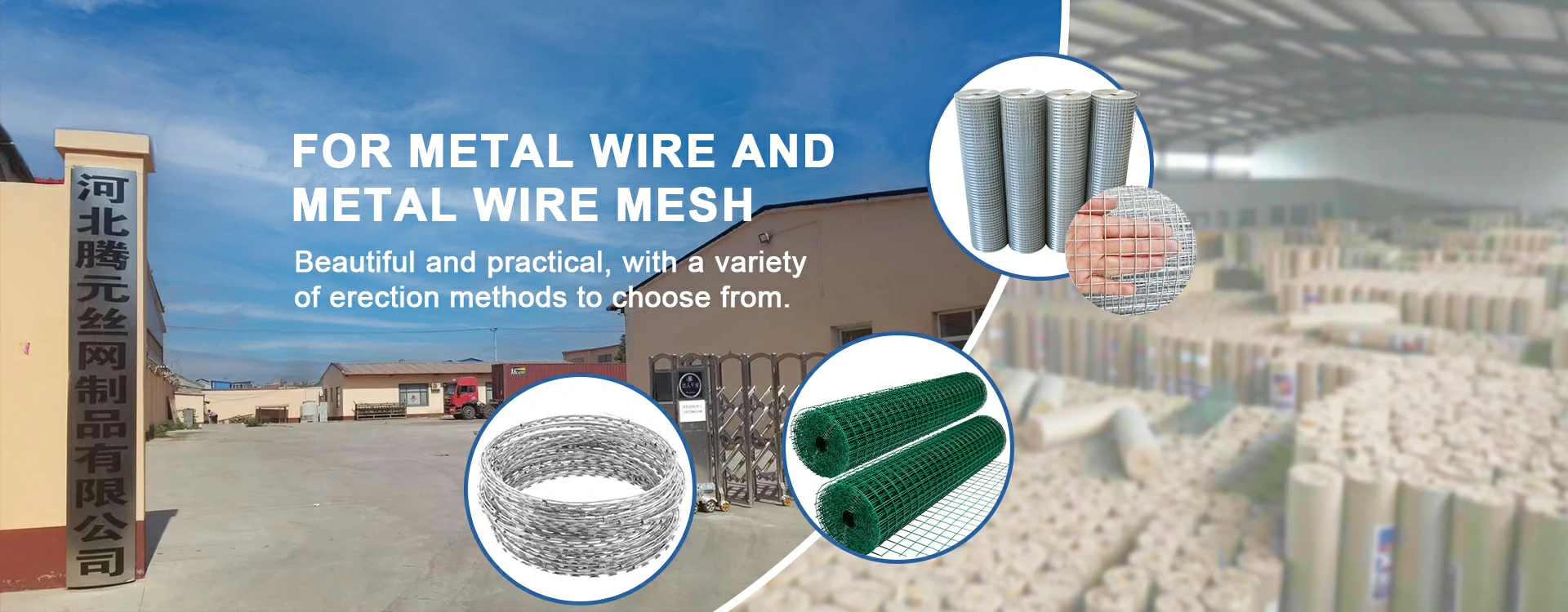
Specialized filtration products sit within a wider ecosystem of wire and mesh manufacturing. Companies such as Hebei Tengyuan Wire Mesh Products Co., Ltd., established in 1996 in Anping County, produce wire, woven and welded mesh, and fencing products for varied markets. This broader manufacturing base illustrates why clear specifications for wire material, opening size, finish, and inspection are valuable across applications—even when a filtration element requires its own specialized sintering process.
For engineers and procurement teams, the practical lesson is to define performance requirements before comparing products. Specify the operating environment, filtration objective, pressure limits, cleaning approach, and verification method. With those details established, it becomes easier to assess whether a mesh construction is fit for purpose, communicate expectations to suppliers, and maintain consistent results over time.