



Introduction
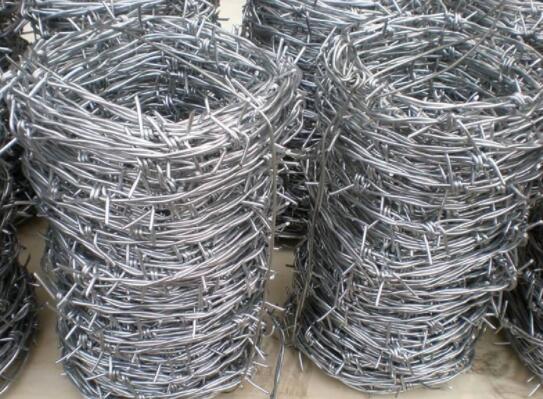
15 gauge galvanized wire is a medium-weight steel wire coated with a protective layer of zinc. Its primary function is to provide corrosion resistance, enhancing longevity in diverse applications. Positioned within the broader wire manufacturing industry, it serves as a fundamental component in construction, agriculture, telecommunications, and various industrial assemblies. The '15 gauge' designation refers to the wire diameter, standardized within the American Wire Gauge (AWG) system; a smaller gauge number indicates a thicker wire. Core performance characteristics include tensile strength, ductility, formability, and crucially, the long-term effectiveness of the zinc coating in preventing rust and oxidation. The industry faces increasing demands for consistent coating thickness, adherence to environmental regulations regarding zinc content, and the need for wire that can withstand harsh environmental conditions, making detailed understanding of material science and manufacturing crucial.
Material Science & Manufacturing
The core material for 15 gauge galvanized wire is typically low-carbon steel, commonly AISI 1006 or 1008 steel, chosen for its balance of strength, ductility, and cost-effectiveness. The chemical composition is predominantly iron (Fe) with small percentages of carbon (C), manganese (Mn), phosphorus (P), and sulfur (S). These alloying elements influence weldability, formability, and overall mechanical properties. The zinc coating, applied via hot-dip galvanization, is the key to corrosion protection. This process involves immersing the steel wire in a bath of molten zinc, creating a metallurgical bond between the zinc and the steel substrate. The resulting coating consists of layers: Gamma (Γ), Delta (δ), Zeta (ζ), and Eta (η) phases, each with varying zinc-iron alloy compositions. Manufacturing begins with wire drawing, reducing the diameter of the steel rod through a series of dies. Precise control of die angles, reduction ratios, and lubrication is essential to maintain dimensional accuracy and prevent work hardening. Following wire drawing, cleaning is crucial to remove oils, scale, and other contaminants that would hinder zinc adhesion. The hot-dip galvanization process itself requires careful control of bath temperature (typically 450-460°C), immersion time, and cooling rate. Post-galvanization treatments, such as passivation, can further enhance corrosion resistance by creating a protective chromate conversion coating, although this is becoming less common due to environmental concerns. Critical parameters include zinc bath composition (purity, aluminum content), wire speed, and cooling medium.
Performance & Engineering
The performance of 15 gauge galvanized wire is largely dictated by its mechanical properties and corrosion resistance. Tensile strength, typically ranging from 80,000 to 90,000 psi (552 to 620 MPa), determines the wire's ability to withstand pulling forces without breaking. Yield strength, around 40,000 to 50,000 psi (276 to 345 MPa), indicates the point at which permanent deformation occurs. Ductility, measured by elongation percentage, is crucial for forming and bending operations. Environmental resistance is primarily governed by the zinc coating thickness and its adherence to the steel substrate. The zinc acts as a sacrificial anode, corroding preferentially to the steel, thereby protecting it from rust. Factors affecting corrosion rate include humidity, temperature, salt spray exposure, and the presence of pollutants. Engineering calculations involving 15 gauge galvanized wire must consider the wire's cross-sectional area (approximately 0.0538 square inches or 3.46 mm²) and its weight per unit length. Applications requiring high load-bearing capacity necessitate careful selection of wire with appropriate tensile strength and consideration of safety factors. Compliance requirements vary by industry and region, often dictated by standards such as ASTM A641 (for zinc-coated steel wire) and EN 10244-2 (for galvanized steel wire). Proper anchoring and support mechanisms are vital to prevent stress concentrations and potential failure points.
Technical Specifications
| Parameter | Units | Typical Value | Testing Standard |
|---|---|---|---|
| Gauge (AWG) | - | 15 | ASTM A641 |
| Diameter | inches / mm | 0.0538 / 1.36 | ASTM A641 |
| Tensile Strength | psi / MPa | 80,000 – 90,000 / 552 – 620 | ASTM A641 |
| Yield Strength | psi / MPa | 40,000 – 50,000 / 276 – 345 | ASTM A641 |
| Elongation | % | 10 – 15 | ASTM A641 |
| Zinc Coating Thickness | μm | 55 – 75 (G90 equivalent) | ASTM B693 |
Failure Mode & Maintenance
15 gauge galvanized wire can experience several failure modes. Uniform corrosion, while slowed by the zinc coating, will eventually occur, especially in highly corrosive environments. Localized corrosion, such as pitting, is a more common and rapid failure mechanism, often initiated by imperfections in the coating or exposure to chloride ions. Hydrogen embrittlement can occur during the galvanization process if the steel contains susceptible microstructures, leading to brittle fracture. Mechanical failure modes include tensile overload, bending fatigue, and shear failure at connection points. Fatigue cracking can occur under cyclical loading, initiating at stress concentrations like bends or sharp edges. Delamination of the zinc coating, caused by poor adhesion or excessive stress, accelerates corrosion. Maintenance strategies include regular inspection for signs of corrosion, particularly in areas exposed to harsh conditions. Damaged coatings should be repaired with zinc-rich paints or re-galvanization. Avoiding bending the wire beyond its recommended radius minimizes stress concentrations. Properly designed connections and support structures are crucial to prevent overload and fatigue failure. Periodic cleaning to remove dirt, salt, and other contaminants can slow down corrosion rates. Consideration of appropriate lubrication for moving wire components can reduce wear and fatigue.
Industry FAQ
Q: What is the impact of varying zinc coating thicknesses on the service life of the wire?
A: Thicker zinc coatings provide enhanced corrosion protection and longer service life. The coating thickness is typically specified in terms of ‘G’ values (G30, G60, G90, etc.), representing the weight of zinc coating per square foot of steel surface. Increasing the ‘G’ value directly correlates with increased corrosion resistance, but also increases cost. Selecting the appropriate coating thickness depends on the severity of the exposure environment. For example, marine environments require significantly thicker coatings than inland applications.
Q: How does the steel substrate’s composition affect the galvanization process and final product quality?
A: The composition of the steel substrate significantly impacts galvanization. High levels of silicon or phosphorus can hinder the formation of a uniform zinc coating, leading to reduced adhesion and increased susceptibility to corrosion. Steel with a consistent chemical composition and a clean surface is crucial for successful galvanization. Pre-treatment processes are often employed to remove impurities and prepare the surface for optimal zinc adhesion.
Q: What are the environmental concerns associated with hot-dip galvanization, and what mitigation strategies are available?
A: Hot-dip galvanization generates wastewater containing zinc, iron, and other contaminants. Air emissions can include zinc fumes and acid mists. Mitigation strategies include wastewater treatment systems to remove heavy metals, air pollution control devices to capture fumes and mists, and closed-loop systems to minimize waste generation. Increasingly, regulations are driving the adoption of more sustainable galvanizing practices.
Q: What are the common causes of hydrogen embrittlement in galvanized wire, and how can it be prevented?
A: Hydrogen embrittlement occurs when atomic hydrogen, generated during the pickling and galvanizing processes, diffuses into the steel and reduces its ductility. High-strength steels and steels containing certain alloying elements are more susceptible. Prevention methods include using inhibitors in the pickling bath, controlling the galvanizing temperature and time, and employing post-galvanization baking to drive out the hydrogen.
Q: How does temperature affect the mechanical properties and corrosion resistance of 15 gauge galvanized wire?
A: Elevated temperatures can reduce the yield strength and tensile strength of the steel wire, while also accelerating corrosion rates. Conversely, very low temperatures can increase brittleness. The zinc coating itself undergoes changes at elevated temperatures, potentially altering its protective properties. Applications involving extreme temperatures require careful consideration of material selection and design to ensure structural integrity and long-term performance.
Conclusion
15 gauge galvanized wire represents a versatile and cost-effective solution for applications demanding corrosion resistance and moderate strength. Its performance is intimately tied to the interplay of material science, manufacturing precision, and adherence to industry standards. Understanding the nuances of steel composition, the galvanization process, and potential failure modes is essential for engineers and procurement managers alike.
Looking forward, advancements in coating technologies, such as zinc-aluminum alloys and organic coatings layered over galvanized substrates, promise to further enhance corrosion protection and extend service life. Continued research into sustainable galvanizing practices will address growing environmental concerns. The selection and application of 15 gauge galvanized wire will remain critical in numerous industries, demanding a rigorous understanding of its technical characteristics and limitations.