



Introduction
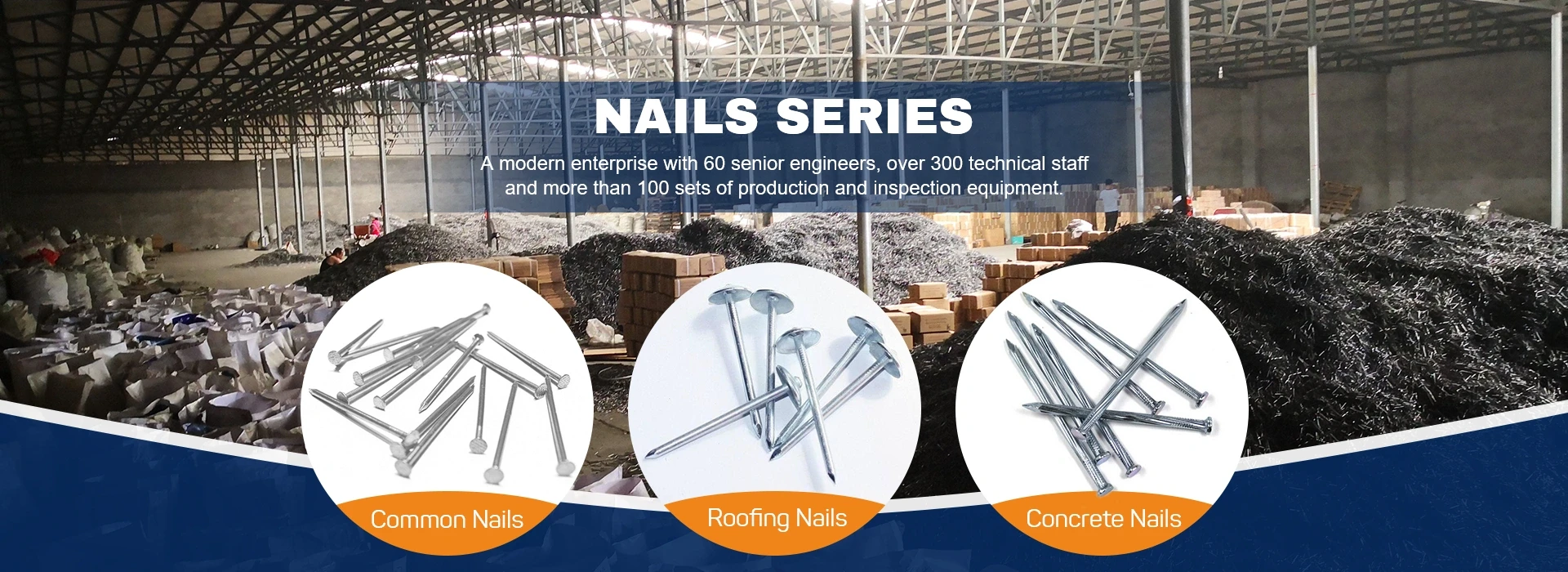
The 20d common nail is a fundamental fastening element in the construction and woodworking industries. Designated as a ‘common’ nail, its design features a thick shank, broad head, and diamond point, optimized for general carpentry, framing, and structural applications. The ‘20d’ designation refers to a penny size, historically indicating the nail's length; a 20d nail is approximately 3.5 inches long. Its primary function is to provide shear and tensile strength by resisting withdrawal forces and preventing movement between connected materials. Within the broader fastener market, 20d common nails represent a balance between holding power and ease of installation, making them a staple for numerous construction tasks. Core performance characteristics center on its shear strength, bending resistance, and withdrawal capacity, all heavily influenced by the nail’s material composition and manufacturing process. This guide provides a comprehensive technical overview of 20d common nails, covering material science, manufacturing processes, performance parameters, potential failure modes, and relevant industry standards.
Material Science & Manufacturing
20d common nails are predominantly manufactured from high-carbon steel, typically AISI 1045 or equivalent. This steel grade offers a good combination of strength, ductility, and hardenability, essential for nail performance. The steel composition includes iron, carbon (0.45-0.55%), manganese (0.60-0.90%), silicon (0.15-0.30%), phosphorus (0.040% max) and sulfur (0.050% max). The carbon content is critical; higher carbon content increases strength but reduces ductility, potentially leading to brittle failure. Manganese enhances strength and hardenability. Manufacturing commences with wire drawing, where steel rods are pulled through a series of dies to achieve the desired nail diameter. The wire is then cut to length. The nail head is formed through a process called heading, where the wire end is compressed under high pressure, creating the characteristic broad head. The diamond point is formed by a subsequent pointing operation. Surface treatment, typically galvanization, is applied to enhance corrosion resistance. Galvanization involves immersing the nails in a molten zinc bath, creating a protective zinc coating. The thickness of the zinc coating is critical and categorized according to standards (see section 7). Process parameter control during heading is crucial to avoid defects like head splits or incomplete formation. Wire quality is monitored for consistency in diameter and chemical composition, ensuring uniform nail properties. Heat treatment processes, like annealing, may be implemented to refine the material’s microstructure and improve ductility.
Performance & Engineering
The performance of a 20d common nail is fundamentally governed by its ability to withstand shear and tensile forces. Shear strength, the resistance to forces acting parallel to the nail shank, is critical in framing applications where nails are subjected to lateral loads. Tensile strength, the resistance to forces acting perpendicular to the nail shank, determines its withdrawal resistance. Engineering calculations for nail connection strength rely on established formulas that incorporate nail diameter, length, wood density, and angle of shear. Environmental resistance is a significant performance factor. Exposure to moisture, corrosive chemicals, and temperature fluctuations can lead to corrosion and degradation of the nail, reducing its strength. Galvanization provides a barrier against corrosion, but its effectiveness is limited in highly corrosive environments. The nail’s performance is also impacted by the properties of the materials being joined. Hardwoods require greater insertion force and may necessitate pre-drilling to prevent nail bending or splitting. Compliance requirements, as outlined in building codes (see section 7), specify minimum nail size, spacing, and penetration depth for various structural applications. Specifically, the International Building Code (IBC) and local amendments dictate allowable shear and withdrawal values for different wood species and nail types. Force analysis reveals that the bending moment at the nail point is highest during insertion, and controlling this bending moment is crucial to prevent nail failure. The diamond point is engineered to minimize this stress concentration and facilitate penetration.
Technical Specifications
| Parameter | Typical Value (Imperial) | Typical Value (Metric) | Test Standard |
|---|---|---|---|
| Nominal Length | 3.5 inches | 88.9 mm | ASTM F1572 |
| Shank Diameter | 0.160 inches | 4.06 mm | ASTM F1572 |
| Head Diameter | 0.450 inches | 11.43 mm | ASTM F1572 |
| Head Thickness | 0.090 inches | 2.29 mm | ASTM F1572 |
| Shear Strength (minimum) | 600 lbs | 2670 N | ASTM F1572 |
| Withdrawal Strength (minimum) | 200 lbs | 890 N | ASTM F1572 |
| Zinc Coating Thickness (Hot-Dip Galvanized) | 0.0020 inches | 0.051 mm | ASTM A153 |
Failure Mode & Maintenance
20d common nails are susceptible to several failure modes in practical applications. Fatigue cracking can occur under cyclic loading, particularly in structures subjected to wind or seismic forces. This is initiated by micro-cracks at the nail point or head, propagating over time. Bending failure occurs when the nail exceeds its elastic limit during insertion or under load, resulting in permanent deformation or breakage. Withdrawal failure occurs when the tensile force exceeds the nail's holding power, causing it to pull out of the wood. Corrosion is a significant contributor to failure, weakening the nail and reducing its shear and tensile strength. Hydrogen embrittlement, a phenomenon where hydrogen atoms diffuse into the steel lattice, can exacerbate corrosion-induced failure. Delamination of the zinc coating, caused by physical damage or chemical attack, exposes the underlying steel to corrosion. Maintenance strategies focus on preventing corrosion and addressing early signs of failure. Periodic inspection of nail connections in exposed structures is recommended. Protective coatings, such as paints or sealants, can be applied to prevent moisture intrusion and corrosion. If corrosion is detected, the affected nails should be replaced with corrosion-resistant alternatives, such as stainless steel nails. Proper nail driving technique is essential to minimize bending and ensure adequate penetration. Avoid overdriving nails, which can weaken the wood and reduce holding power. Proper storage of nails in a dry environment is crucial to prevent rust formation.
Industry FAQ
Q: What is the difference between a 20d common nail and a 20d box nail?
A: While both are 20d nails, a box nail is thinner in shank diameter and is designed for use with thinner wood, typically in box construction or interior trim. The common nail, with its thicker shank, is intended for heavier-duty applications like framing and structural work. Box nails generally offer less holding power than common nails.
Q: How does the wood species affect the holding power of a 20d common nail?
A: Hardwoods require significantly more force to penetrate than softwoods, which can lead to nail bending or splitting. The holding power also varies based on the wood's density and grain orientation. Nails driven parallel to the grain have lower withdrawal resistance than those driven perpendicular to the grain. Pre-drilling is often necessary when using 20d common nails in hardwoods.
Q: What level of galvanization is sufficient for exterior applications?
A: For exterior applications, a hot-dip galvanized coating meeting ASTM A153 standards is recommended. The coating thickness should be at least 0.0020 inches (0.051 mm) to provide adequate corrosion protection. In highly corrosive environments, such as coastal areas, a heavier coating or alternative corrosion-resistant materials like stainless steel should be considered.
Q: Are there alternative materials to steel for 20d common nails?
A: Yes, aluminum and stainless steel are alternatives. Aluminum nails are lightweight and corrosion-resistant but have lower shear strength. Stainless steel nails offer excellent corrosion resistance and strength but are significantly more expensive. Plastic or polymer nails are also available for specialized applications where corrosion is a primary concern.
Q: How does the angle of nail insertion affect shear strength?
A: The angle of nail insertion significantly impacts shear strength. Nails driven at an angle experience a greater shear force component, increasing their resistance to lateral loads. However, excessively angled nails can also increase the risk of splitting the wood. Building codes specify maximum allowable angles for nail insertion based on the application.
Conclusion
The 20d common nail remains a cornerstone fastener in construction, offering a cost-effective and reliable solution for a wide range of applications. Its performance is intricately linked to its material composition, manufacturing process, and proper installation. Understanding the material science, particularly the role of carbon content in steel and the principles of galvanization, is crucial for selecting nails appropriate for specific environments.
Continued advancements in fastener technology are leading to the development of improved corrosion-resistant coatings and high-strength alloy nails. Adherence to industry standards, such as those defined by ASTM and ICC, ensures that 20d common nails meet minimum performance requirements for structural integrity and safety. Future research will likely focus on optimizing nail designs for enhanced holding power and reducing the risk of failure in challenging conditions, as well as exploring sustainable material alternatives.