



Introduction
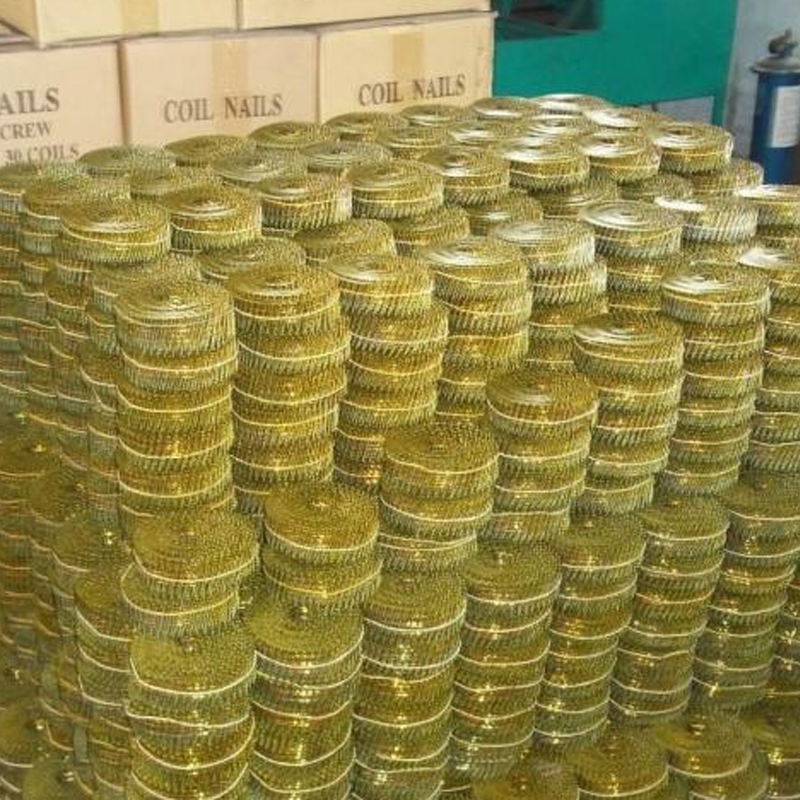
Coil roofing nails 1 1/4" represent a significant fastening solution within the roofing industry, specifically designed for high-speed application in pneumatic nailing guns. These nails are distinguished by their collated format – wound onto coils for continuous feeding – enabling efficient installation across a broad range of roofing materials, including asphalt shingles, wood shakes, and composite roofing systems. Their technical position within the building materials supply chain is as a crucial component of the roofing envelope, responsible for securing the roofing material to the structural substrate. Core performance characteristics center on shear strength, holding power, corrosion resistance, and consistent penetration depth. The industry faces persistent challenges related to nail shank breakage during application, inconsistent head seating leading to potential leaks, and long-term corrosion impacting roof lifespan. Proper nail selection and application techniques are paramount to mitigating these issues and ensuring durable, weather-resistant roofing systems. This guide provides an in-depth technical analysis of coil roofing nails 1 1/4", covering materials, manufacturing, performance, failure modes, and relevant industry standards.
Material Science & Manufacturing
Coil roofing nails 1 1/4" are predominantly manufactured from high-carbon steel, typically SAE 1074 or equivalent. This steel alloy is chosen for its balance of hardness, tensile strength, and ductility, enabling it to withstand the stresses of driving and resist bending. The steel wire undergoes a drawing process to achieve the desired nail shank diameter (typically 0.092" for 1 1/4" nails). Critical material properties include a Rockwell hardness (C scale) of 55-65, a yield strength exceeding 800 MPa, and a tensile strength exceeding 1000 MPa. The nail head is typically formed from the same steel, ensuring consistent material properties throughout the fastener. Manufacturing involves cold heading, where the wire is fed into a heading die and shaped into the nail head using significant pressure. Parameter control during heading is crucial to ensure consistent head diameter, cupping, and concentricity. Following heading, the nails undergo a collation process, where they are mechanically joined using plastic or wire collations. The collation material must be compatible with the nail finish and pneumatic nailing gun feed system. Finally, a protective coating is applied – typically electrogalvanization or hot-dip galvanization – to enhance corrosion resistance. The galvanization process adheres to ASTM A646 standards, controlling zinc coating thickness and adhesion. Quality control includes dimensional checks, hardness testing, and coating thickness verification to ensure adherence to industry specifications.
Performance & Engineering
The performance of coil roofing nails 1 1/4" is dictated by several key engineering principles. Shear strength is paramount, as the nail must resist lateral forces exerted by wind uplift and thermal expansion/contraction. Finite Element Analysis (FEA) is often employed to optimize nail shank geometry and head design for maximum shear resistance. Withdrawal resistance, or holding power, depends on the nail’s shank diameter, length, and the density of the substrate material. Penetration depth must be sufficient to secure the roofing material without penetrating excessively into the underlying structure, potentially damaging it. The angle of nail penetration is also critical; optimal angles (typically 15-20 degrees) maximize holding power and minimize the risk of bending or breakage. Environmental resistance is a major consideration. Exposure to moisture, UV radiation, and temperature fluctuations can accelerate corrosion, reducing nail strength and leading to premature failure. Protective coatings are engineered to mitigate these effects. Compliance requirements vary by region and application. Building codes often specify minimum nail size, spacing, and corrosion resistance levels for different roofing materials and wind zones. The International Building Code (IBC) and local amendments provide detailed guidelines. The nail’s performance is also affected by the nailing gun’s air pressure and magazine feed mechanism. Consistent air pressure and proper magazine adjustment are essential for achieving optimal nail seating and penetration depth.
Technical Specifications
| Parameter | Specification | Test Method | Typical Value |
|---|---|---|---|
| Nail Length | 1 1/4 inch (31.75 mm) | Dimensional Measurement | 31.75 mm ± 0.25 mm |
| Shank Diameter | 0.092 inch (2.34 mm) | Dimensional Measurement | 2.34 mm ± 0.02 mm |
| Head Diameter | 0.250 inch (6.35 mm) | Dimensional Measurement | 6.35 mm ± 0.10 mm |
| Coating Type | Electrogalvanized / Hot-Dip Galvanized | ASTM A646 | Zinc Coating Thickness: 20-30 μm (Electrogalvanized), 50-80 μm (Hot-Dip Galvanized) |
| Shear Strength | Minimum 150 lbs (667 N) | ASTM F1667 | 200-250 lbs (890-1112 N) |
| Tensile Strength | Minimum 600 lbs (2670 N) | ASTM F1667 | 700-800 lbs (3114-3559 N) |
Failure Mode & Maintenance
Coil roofing nails 1 1/4" can exhibit several failure modes in service. Shank breakage is a common issue, often resulting from excessive driving force, nail imperfections, or substrate hardness. Fatigue cracking can occur due to repeated cyclical loading from wind and thermal expansion. Corrosion is a significant long-term concern, particularly in marine or industrial environments. Corrosion products weaken the nail shank and reduce its holding power. Delamination of the protective coating accelerates corrosion. Head separation, where the head detaches from the shank, is less common but can occur due to manufacturing defects or excessive shear stress. Maintenance is generally limited to periodic visual inspection of the roof for signs of nail corrosion or displacement. Evidence of rust staining or loose shingles indicates potential nail failure. Preventative maintenance involves ensuring proper nail gun operation and using the appropriate nail size and type for the roofing material. Applying a sealant around nail penetrations can further enhance weather resistance, although this is not a substitute for proper nail installation and corrosion protection. Addressing underlying moisture issues within the building envelope is crucial to prevent accelerated nail corrosion.
Industry FAQ
Q: What is the difference between electrogalvanized and hot-dip galvanized nails, and which is better for coastal environments?
A: Electrogalvanization provides a thinner, more uniform zinc coating, offering moderate corrosion resistance suitable for inland applications. Hot-dip galvanization results in a thicker, more robust zinc coating, providing superior corrosion protection, especially in harsh environments like coastal regions where salt spray accelerates corrosion. For coastal applications, hot-dip galvanized nails are strongly recommended.
Q: What air pressure should be used when operating a pneumatic nail gun with 1 1/4" coil roofing nails?
A: Recommended air pressure typically ranges from 70-120 PSI, depending on the nail gun model and roofing material. Refer to the nail gun manufacturer’s specifications for precise pressure recommendations. Excessive pressure can lead to shank breakage or over-driven nails, while insufficient pressure can result in incomplete seating.
Q: What is the impact of substrate material on the holding power of these nails?
A: Holding power is directly related to substrate density. Nails driven into hardwood substrates (e.g., plywood, OSB) will exhibit significantly higher withdrawal resistance compared to those driven into softer substrates like softwood or aged wood. Proper substrate preparation and ensuring the substrate is structurally sound are crucial for maximizing nail holding power.
Q: How does nail collation type (plastic vs. wire) affect performance?
A: While both plastic and wire collations are common, wire collations generally offer greater durability and resistance to breakage during high-speed nailing. Plastic collations can become brittle in cold weather and may be prone to cracking, leading to nail jams. However, plastic collations are generally less expensive.
Q: What are the implications of using nails with inconsistent head seating?
A: Inconsistent head seating creates gaps between the roofing material and the substrate, allowing moisture intrusion. This can lead to wood rot, mold growth, and ultimately, roof failure. Proper nail gun adjustment and consistent air pressure are essential for achieving consistent head seating. Visually inspecting a representative sample of nails after installation is recommended.
Conclusion
Coil roofing nails 1 1/4" are critical fasteners in the construction industry, demanding careful consideration of material science, manufacturing processes, and performance characteristics. Their effectiveness relies heavily on the selection of appropriate steel alloys, robust protective coatings, and precise manufacturing controls to ensure consistent quality and reliability. The long-term performance and durability of roofing systems are directly influenced by the quality of these nails and their proper installation.
Future developments in coil roofing nail technology are likely to focus on enhancing corrosion resistance through advanced coating materials, optimizing nail shank geometry for improved shear strength, and integrating sensors for real-time monitoring of nail performance during installation. Furthermore, advancements in pneumatic nailing gun technology will contribute to more consistent and efficient nail driving, minimizing the risk of failure and maximizing roof longevity.