



Introduction
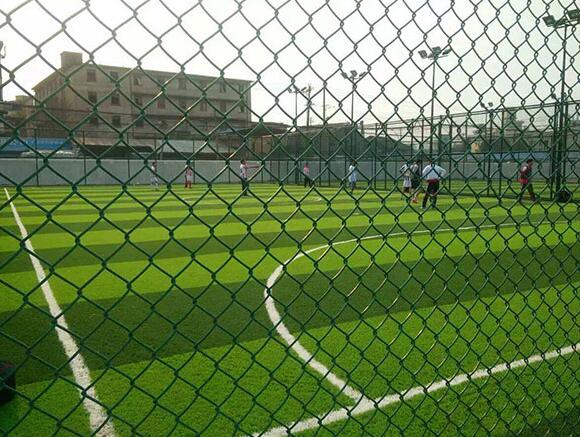
Galvanized cyclone wire, also known as cyclone fencing or chain-link fencing, is a woven mesh wire fabric used primarily for perimeter security and containment. Positioned within the broader wire product manufacturing industry, it serves as a cost-effective and robust solution for agricultural fencing, industrial security, residential boundaries, and public area enclosures. The core performance characteristics of galvanized cyclone wire are dictated by its material composition, wire gauge, mesh size, galvanization process, and tensile strength. It offers a balance of visibility, ventilation, and security, making it a prevalent choice in applications where complete obstruction is undesirable or unnecessary. Its effectiveness relies heavily on the quality of the galvanization process and the subsequent wire manipulation during weaving. The industry continually faces challenges related to corrosion resistance in varying environmental conditions, particularly in coastal or industrial areas with high salinity or pollutant concentrations.
Material Science & Manufacturing
The primary raw material for galvanized cyclone wire is low-carbon steel wire, typically ranging from 12 to 16 gauge, although heavier gauges are used for high-security applications. The steel’s composition influences its ductility and weldability, critical factors during fabrication. The steel wire undergoes a hot-dip galvanization process, immersing it in a molten zinc bath to create a protective zinc coating. The zinc acts as a sacrificial anode, corroding preferentially to the steel and preventing rust. The thickness of the zinc coating is a key determinant of corrosion resistance, measured in grams per square meter (gsm). Typical coating weights range from 60gsm to 275gsm, adhering to specified standards. The manufacturing process begins with wire drawing, reducing the steel’s diameter to the desired gauge. Following galvanization, the wire is twisted, forming intermediate wires. These are then woven into the characteristic diamond-pattern mesh using automated weaving looms. Precise control of loom speed, tension, and weaving pattern is crucial to maintaining mesh uniformity and structural integrity. Post-weaving, the wire is often subject to further treatment, such as plastic coating (PVC or polyethylene) for enhanced aesthetics, increased corrosion resistance, and color options. Parameter control during galvanization – bath temperature, zinc purity, immersion time, and cooling rate – is paramount to ensure a consistent, adherent zinc coating free of defects like spangling or uneven coverage. The quality of the steel itself, specifically its carbon content and the presence of trace elements, directly impacts the efficiency of the galvanization process and the final product’s performance.
Performance & Engineering
The performance of galvanized cyclone wire is fundamentally governed by its tensile strength and resistance to deformation. Force analysis reveals that the mesh distributes loads across multiple wire intersections, enhancing its overall robustness. The wire’s yield strength (the point at which permanent deformation occurs) is a critical engineering parameter. Environmental resistance is paramount, particularly concerning corrosion. Chloride ions, prevalent in marine environments, accelerate zinc corrosion, necessitating higher galvanization weights or supplementary coatings like PVC. UV exposure degrades PVC coatings over time, reducing their protective effectiveness and leading to embrittlement. Cyclic loading, caused by wind or impacts, induces fatigue in the wire. The number of load cycles a wire can withstand before failure is a crucial consideration in design. Compliance requirements vary depending on the application. For security fencing, standards like ASTM A392 address minimum wire gauge, mesh size, and coating requirements. For agricultural fencing, standards prioritize animal containment and impact resistance. Functional implementation often involves anchoring the fence to posts, typically steel or timber. Proper post spacing and depth are vital to maintaining fence integrity. Tension wires, running along the top and bottom of the fence, prevent sagging and provide additional support. The selection of appropriate fasteners (tension bars, brace bands, and ties) is essential to avoid galvanic corrosion between dissimilar metals.
Technical Specifications
| Parameter | Unit | Typical Value | Testing Standard |
|---|---|---|---|
| Wire Diameter | mm | 2.0 – 4.0 | ASTM A392 |
| Mesh Size | mm | 50x50, 60x60, 75x75 | BS EN 10218-2 |
| Zinc Coating Weight | gsm | 60 – 275 | ASTM A646 |
| Tensile Strength | MPa | 380 – 550 | ISO 6892-1 |
| Elongation | % | 12 – 20 | ASTM E8 |
| PVC Coating Thickness (if applicable) | μm | 0.5 – 1.0 | ASTM D7753 |
Failure Mode & Maintenance
Galvanized cyclone wire is susceptible to several failure modes. Corrosion is the most prevalent, especially in aggressive environments. Chloride-induced pitting corrosion weakens the wire, leading to localized failures. Over time, the zinc coating depletes, exposing the steel to rust. Fatigue cracking occurs due to cyclic loading, particularly at wire intersections. Repeated bending and stretching weaken the material, eventually leading to fracture. Delamination of the PVC coating (if present) reduces corrosion protection and aesthetic appeal. Degradation of the PVC coating from UV exposure causes embrittlement and cracking. Mechanical damage, such as cuts or abrasions, compromises the wire’s integrity. Maintenance involves regular inspection for signs of corrosion, damage, or sagging. Damaged sections should be repaired promptly using appropriate fasteners and wire connectors. Re-tensioning the wire periodically prevents sagging and maintains fence integrity. For coastal areas or industrial environments, applying a supplementary corrosion inhibitor or considering a heavier zinc coating is recommended. Periodic cleaning to remove dirt and debris improves the longevity of the coating. Addressing vegetation growth around the fence line prevents damage and maintains visibility. In cases of severe corrosion or widespread damage, complete fence replacement may be necessary.
Industry FAQ
Q: What is the difference between Class 1 and Class 3 galvanization, and how does it affect the wire’s lifespan?
A: Class 1 galvanization typically provides a zinc coating weight of around 60-80 gsm, suitable for relatively mild environments. Class 3 galvanization offers a significantly higher coating weight, around 245-275 gsm, providing substantially improved corrosion resistance and a longer lifespan, particularly in coastal or industrial areas. The increased zinc layer provides greater sacrificial protection.
Q: Can galvanized cyclone wire be welded without compromising the galvanization?
A: Welding galvanized wire is challenging. The heat of welding melts the zinc, potentially reducing its protective properties in the weld area. Special welding techniques and post-weld zinc-rich coatings are required to restore corrosion resistance. It's generally preferred to mechanically connect sections rather than welding.
Q: What is the impact of different mesh sizes on the fence’s security level?
A: Smaller mesh sizes (e.g., 50x50mm) provide a higher level of security, making it more difficult to climb or cut through the fence. Larger mesh sizes (e.g., 75x75mm) are less secure but offer better visibility and airflow, making them suitable for agricultural or recreational applications.
Q: How does the gauge of the wire affect the overall strength and cost of the fencing?
A: A lower gauge number indicates a thicker wire, resulting in higher tensile strength and greater resistance to cutting and bending. However, thicker wire is more expensive. The appropriate gauge depends on the intended application and security requirements. Heavier gauges are necessary for high-security applications.
Q: What are the advantages and disadvantages of PVC-coated galvanized cyclone wire compared to uncoated wire?
A: PVC coating offers enhanced corrosion resistance, improved aesthetics (color options), and a softer feel. However, it adds to the cost, and the PVC coating can degrade over time due to UV exposure, requiring eventual replacement. Uncoated galvanized wire is more cost-effective but offers less corrosion protection and a less visually appealing appearance.
Conclusion
Galvanized cyclone wire remains a widely utilized fencing solution due to its cost-effectiveness, durability, and versatility. Its performance is intrinsically linked to the quality of the galvanization process, wire gauge, and mesh configuration. Understanding the material science, manufacturing processes, and potential failure modes is crucial for selecting the appropriate wire for specific applications and ensuring long-term functionality. The selection process must consider the environmental conditions, security requirements, and lifecycle cost.
Future advancements in wire manufacturing and coating technologies will likely focus on enhancing corrosion resistance, improving UV stability of PVC coatings, and developing more sustainable galvanization processes. Further research into alternative coating materials and advanced wire weaving techniques may also contribute to the development of higher-performance, longer-lasting cyclone wire fencing systems. Proper installation and maintenance remain key factors in maximizing the lifespan and effectiveness of this widely used fencing material.