


Introduction
Galvanized loop ties, also known as figure-eight ties, are fastening devices utilized extensively in construction, particularly in concrete formwork systems and HVAC ductwork support. These ties provide a secure, temporary connection allowing for efficient assembly and disassembly of structures. Positioned within the industry as a cost-effective and robust alternative to welding or permanent fasteners, galvanized loop ties offer significant advantages in applications demanding repeated use and adjustable positioning. Their core performance characteristics center around tensile strength, corrosion resistance (derived from the galvanization process), and ease of installation. The increasing demand for modular construction and prefabrication is driving greater adoption of these ties, alongside strict requirements for worker safety and durability in demanding environments.
Material Science & Manufacturing
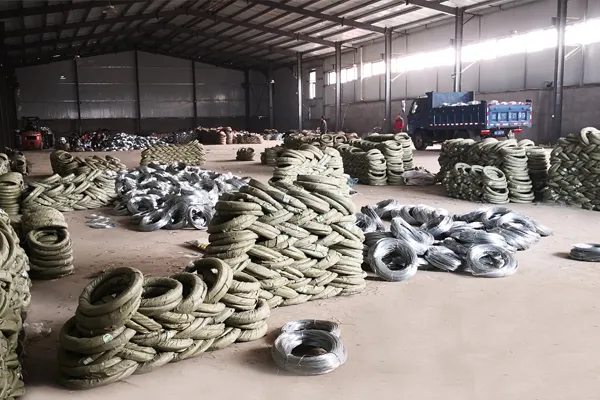
The primary material for galvanized loop ties is typically low-carbon steel, specifically AISI 1018 or equivalent, selected for its ductility and weldability. The steel wire undergoes a cold-drawing process to achieve the desired diameter and tensile strength. This process work-hardens the material, increasing its yield strength but potentially reducing its ductility if not carefully controlled. The crucial step is hot-dip galvanization, where the steel wire is immersed in a molten zinc bath. This process forms a metallurgical bond, creating a protective zinc coating that prevents corrosion through sacrificial protection – the zinc corrodes preferentially, protecting the underlying steel. The thickness of the zinc coating is critical, typically ranging from 50 to 80 microns to meet industry standards. Manufacturing involves bending the galvanized wire into the characteristic loop shape. Precision bending is paramount to ensure consistent loop geometry and tie strength. Quality control checks at this stage include dimensional accuracy, visual inspection for coating defects (e.g., blisters, non-uniformity), and periodic testing of zinc coating thickness using methods such as magnetic induction. Key parameter control focuses on maintaining consistent zinc bath temperature, steel wire cleanliness, and bending machine tolerances.
Performance & Engineering
The performance of galvanized loop ties is fundamentally governed by their tensile strength and resistance to environmental degradation. Force analysis involves considering both static and dynamic loads. Static loads arise from the weight of the supported structure, while dynamic loads can include wind, vibration, and accidental impacts. The loop geometry concentrates stress at the bending points, making fatigue resistance a critical design consideration. Engineering calculations must account for a safety factor, typically between 3:1 and 5:1, depending on the application’s criticality and the potential for overload. Corrosion resistance is dictated by the zinc coating's integrity and thickness. Chloride exposure, particularly in marine environments, accelerates corrosion, necessitating thicker zinc coatings or supplementary protective measures like passivation. Compliance requirements often dictate specific testing protocols, such as salt spray testing (ASTM B117) and tensile testing (ASTM A370). The effective working load limit (WLL) must be clearly marked on the tie and strictly adhered to during installation. Furthermore, the loop’s internal radius must be sufficient to prevent stress concentrations that could initiate cracking. Improper installation, such as over-tightening or using incompatible materials, can significantly reduce performance and compromise structural integrity.
Technical Specifications
| Diameter (mm) | Tensile Strength (kN) | Zinc Coating Thickness (µm) | Working Load Limit (kg) |
|---|---|---|---|
| 3.2 | 4.5 | 60 | 450 |
| 4.0 | 6.5 | 70 | 650 |
| 5.0 | 8.5 | 80 | 850 |
| 6.0 | 10.0 | 75 | 1000 |
| 8.0 | 13.0 | 80 | 1300 |
| 10.0 | 16.0 | 70 | 1600 |
Failure Mode & Maintenance
Common failure modes for galvanized loop ties include fatigue cracking at the bend radius, zinc coating degradation leading to corrosion of the underlying steel, and overstress resulting in immediate fracture. Fatigue cracking is often initiated by stress concentrations caused by improper bending or pre-existing defects in the wire. Corrosion, particularly galvanic corrosion when in contact with dissimilar metals, weakens the tie and reduces its load-bearing capacity. Hydrogen embrittlement, a phenomenon occurring during the galvanization process, can also contribute to premature failure by reducing the steel's ductility. Maintenance typically involves regular visual inspection for signs of corrosion (rusting, white rust), cracks, or deformation. Ties exhibiting significant corrosion or damage should be immediately replaced. Best practices include storing ties in a dry environment to prevent corrosion during storage, avoiding contact with corrosive materials during use, and ensuring proper installation techniques are followed. Periodic re-galvanization is not typically practical for these ties due to the cost and complexity. Preventing overloading and proper handling are crucial for extending service life. Failure analysis often involves microscopic examination of fracture surfaces to identify the root cause of failure, such as fatigue striations or evidence of corrosion.
Industry FAQ
Q: What is the typical service life of a galvanized loop tie in a coastal environment?
A: In a highly corrosive coastal environment with significant chloride exposure, the service life of a standard galvanized loop tie can be reduced to as little as 6-12 months. This is due to accelerated corrosion of the zinc coating. Using ties with thicker zinc coatings (e.g., exceeding 80 microns) or considering alternative materials like stainless steel can significantly extend service life in such environments. Regular inspection is critical.
Q: How does the bending radius of the loop affect the tie’s strength?
A: A smaller bending radius creates a higher stress concentration, reducing the tie’s fatigue resistance and overall tensile strength. Larger radii are preferable from an engineering perspective, however, practical considerations often dictate a compromise. Manufacturers typically optimize the bending radius to balance strength and functionality.
Q: What is the impact of using loop ties with dissimilar metals in a concrete structure?
A: Contact with dissimilar metals, such as aluminum or copper, can lead to galvanic corrosion, where one metal corrodes preferentially to protect the other. This is especially problematic in concrete, which contains conductive electrolytes. Avoid direct contact between galvanized loop ties and dissimilar metals. If unavoidable, use insulating materials to prevent galvanic interaction.
Q: Are there any specific installation guidelines to maximize the performance of these ties?
A: Yes. Avoid over-tightening the ties, as this can create stress concentrations and reduce fatigue life. Ensure the tie is properly seated within the formwork or support structure. Use appropriate tools for installation and avoid damaging the zinc coating during the process. Do not weld directly to the galvanized surface, as this can compromise the coating's protective properties.
Q: What standards govern the quality control of galvanized loop ties?
A: Quality control is typically governed by standards such as ASTM A370 for mechanical properties, ASTM B117 for salt spray corrosion resistance, and ISO 1461 for hot-dip galvanizing. Manufacturers should provide certificates of compliance demonstrating adherence to these standards.
Conclusion
Galvanized loop ties represent a vital component in numerous construction and industrial applications, providing a reliable and cost-effective fastening solution. Their performance is intrinsically linked to material selection, manufacturing precision, and the integrity of the galvanization process. Understanding the potential failure modes – fatigue, corrosion, and overload – is crucial for ensuring safe and durable installations.
Continued advancements in coating technologies, such as duplex systems (e.g., galvanizing combined with powder coating), offer potential for further enhancing corrosion resistance and extending the service life of these ties. Focus on improved quality control measures throughout the manufacturing process, alongside adherence to relevant industry standards, will remain paramount for maintaining the integrity and reliability of galvanized loop ties in demanding environments.