



Introduction
Galvanized ring shank coil nails are a crucial fastening solution in a broad spectrum of construction and industrial applications, particularly within framing, roofing, sheathing, and pallet manufacturing. These nails are characterized by their helical ring shank, which significantly enhances withdrawal resistance compared to smooth shank nails. The galvanization process provides corrosion protection, extending the lifespan of the fastener in environments susceptible to moisture and weathering. Positioned within the fastening supply chain, these nails represent a cost-effective and efficient alternative to screws and adhesives in many applications. Core performance characteristics include shear strength, tensile strength, and bending strength, all dictated by the nail's material composition and manufacturing processes. The ring shank geometry, combined with the zinc coating, addresses key industry pain points regarding fastener holding power and long-term durability in challenging conditions.
Material Science & Manufacturing
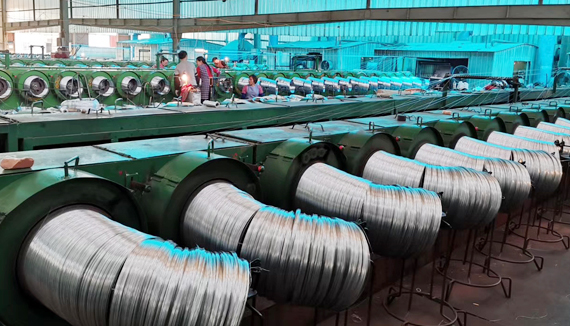
The primary raw material for galvanized ring shank coil nails is typically low-carbon steel wire, commonly AISI/SAE 1008 or 1010, chosen for its ductility and weldability. The steel contains approximately 0.08-0.10% carbon, with trace amounts of manganese, phosphorus, and sulfur. The manufacturing process begins with wire drawing, reducing the diameter of the steel wire to the desired nail gauge. This is followed by a heading process, where the wire is cut and formed into the nail head. Crucially, the ring shank is formed using a rotary clinching machine. This machine imparts a helical twist to the nail shank, creating the interlocking rings. Parameter control during clinching—specifically, the speed of rotation, clinching pressure, and die angle—is vital to ensure consistent ring geometry and adequate shear strength. Subsequently, the nails undergo galvanization. The most common method is hot-dip galvanizing, where the nails are immersed in a bath of molten zinc (typically 98% pure). This results in a metallurgical bond between the zinc coating and the steel substrate, providing cathodic protection. Galvanization thickness is meticulously controlled, typically ranging from G30 to G90 (grams of zinc per square meter) according to ASTM A153 specifications. Quality control includes monitoring zinc bath composition, temperature, and immersion time. The final step is coil winding, where the nails are collated into coils for use in pneumatic nail guns.
Performance & Engineering
The performance of galvanized ring shank coil nails is fundamentally governed by mechanical properties and environmental resistance. Shear strength, determined by ASTM F1792, is a critical parameter, typically ranging from 60,000 to 80,000 PSI for common nail sizes. Tensile strength, while less critical for holding power, influences the nail's resistance to breakage during driving. The ring shank contributes significantly to withdrawal resistance through mechanical interlocking with the wood fibers. Finite element analysis (FEA) is often employed to optimize ring geometry for maximum holding power and to predict stress distribution under load. Environmental resistance is primarily provided by the galvanization coating. The zinc coating acts as a sacrificial anode, corroding preferentially to protect the underlying steel. However, the longevity of the coating depends on the environment. In marine or industrial environments with high chloride concentrations, the galvanization layer can degrade more rapidly. Compliance requirements include adherence to industry standards such as ICC-ES AC085 for fastener systems, and relevant building codes regarding nail spacing and penetration depth. Corrosion resistance is often evaluated using salt spray testing (ASTM B117) to assess the duration of protection before red rust appears. Furthermore, the nail’s driving performance is impacted by the head’s dimensions and the consistency of the shank diameter, parameters optimized for efficient feeding in coil nailers.
Technical Specifications
| Nail Diameter (Gauge) | Nail Length (inches) | Shank Type | Coating Type & Thickness |
|---|---|---|---|
| 6d (0.113 inch) | 2.0 inches | Ring Shank | Hot-Dip Galvanized, G60 (2.3 g/m²) |
| 8d (0.131 inch) | 2.5 inches | Ring Shank | Hot-Dip Galvanized, G60 (2.3 g/m²) |
| 10d (0.148 inch) | 3.0 inches | Ring Shank | Hot-Dip Galvanized, G90 (3.4 g/m²) |
| 12d (0.162 inch) | 3.5 inches | Ring Shank | Hot-Dip Galvanized, G90 (3.4 g/m²) |
| 16d (0.196 inch) | 3.5 inches | Ring Shank | Hot-Dip Galvanized, G90 (3.4 g/m²) |
| Variable | Variable | Ring Shank | Electro-Galvanized, G30 (1.2 g/m²) - for indoor applications |
Failure Mode & Maintenance
Galvanized ring shank coil nails can fail through several mechanisms. Hydrogen embrittlement, a consequence of the galvanizing process, can reduce ductility and increase susceptibility to cracking, particularly in high-strength steel wires. This is mitigated by post-galvanizing heat treatment. Corrosion is a primary failure mode, particularly in aggressive environments. While galvanization provides significant protection, chloride ions can penetrate the coating, leading to localized corrosion (pitting) and eventual nail failure. Mechanical failure can occur due to excessive loads causing shear failure at the shank or bending failure at the nail head. Fatigue cracking can also develop under cyclical loading, especially in applications subject to vibration. Delamination of the zinc coating, due to poor adhesion, can accelerate corrosion. Maintenance, while limited for installed nails, focuses on preventing further corrosion. Applying a sealant or coating over the nail head in particularly harsh environments can provide additional protection. Regular inspection for signs of corrosion (red rust) is recommended, and corroded nails should be replaced. Proper storage of unused nails in a dry environment is crucial to prevent pre-installation corrosion.
Industry FAQ
Q: What is the difference between ring shank and smooth shank nails, and when should each be used?
A: Ring shank nails offer significantly higher withdrawal resistance (typically 2x-3x) compared to smooth shank nails due to the mechanical interlocking of the rings with the wood fibers. Ring shank nails are preferred in applications where holding power is paramount, such as roofing, siding, and framing subject to uplift forces. Smooth shank nails are generally suitable for applications where withdrawal resistance is less critical, such as interior trim or temporary construction.
Q: How does the thickness of the galvanization coating affect the lifespan of the nails?
A: The thicker the galvanization coating, the longer the nails will resist corrosion. G60 (2.3 g/m²) is a standard coating for general outdoor use, while G90 (3.4 g/m²) provides enhanced corrosion protection for more severe environments, such as coastal areas or industrial settings. Electro-galvanization (G30) is suitable for indoor applications with minimal moisture exposure.
Q: What are the limitations of using galvanized nails in contact with treated lumber?
A: Copper-based wood preservatives (e.g., ACQ, CA) can corrode galvanized steel, reducing its lifespan. To mitigate this, it's recommended to use stainless steel or ceramic-coated fasteners when in direct contact with treated lumber. Alternatively, a corrosion-inhibiting coating can be applied to the nails before installation.
Q: How do I determine the appropriate nail size and gauge for my application?
A: Nail size and gauge are determined by the thickness of the materials being fastened. Thicker materials require longer and thicker nails. Building codes often specify minimum nail size and spacing requirements for specific applications. Consulting engineering specifications or a fastener expert is recommended for critical applications.
Q: What causes "nail pop" and how can it be prevented?
A: “Nail pop” refers to the nails working their way out of the wood over time. This can be caused by wood shrinkage, improper nail driving, or insufficient nail penetration. Using ring shank nails significantly reduces nail pop. Ensure the nail gun is properly adjusted to drive the nail to the correct depth without damaging the wood. Always follow recommended nail spacing guidelines.
Conclusion
Galvanized ring shank coil nails represent a robust and reliable fastening solution, engineered to provide superior holding power and corrosion resistance. The interplay between material science – specifically the selection of low-carbon steel and the application of hot-dip galvanization – and manufacturing precision – centered on the ring shank formation process – defines the performance characteristics of these fasteners. Understanding the potential failure modes, such as hydrogen embrittlement and corrosion, and implementing preventative measures, such as appropriate material selection for treated lumber and proper storage, are crucial for maximizing lifespan and ensuring structural integrity.
Looking forward, advancements in coating technologies, such as the development of zinc-nickel alloys, promise even greater corrosion protection. Furthermore, ongoing refinements in ring shank geometry, informed by advanced modeling techniques, will continue to optimize withdrawal resistance. As building codes evolve to prioritize sustainable construction practices, the durability and long-term performance of galvanized ring shank coil nails will remain a critical factor in ensuring the longevity and resilience of structures across a wide range of applications.