



Introduction
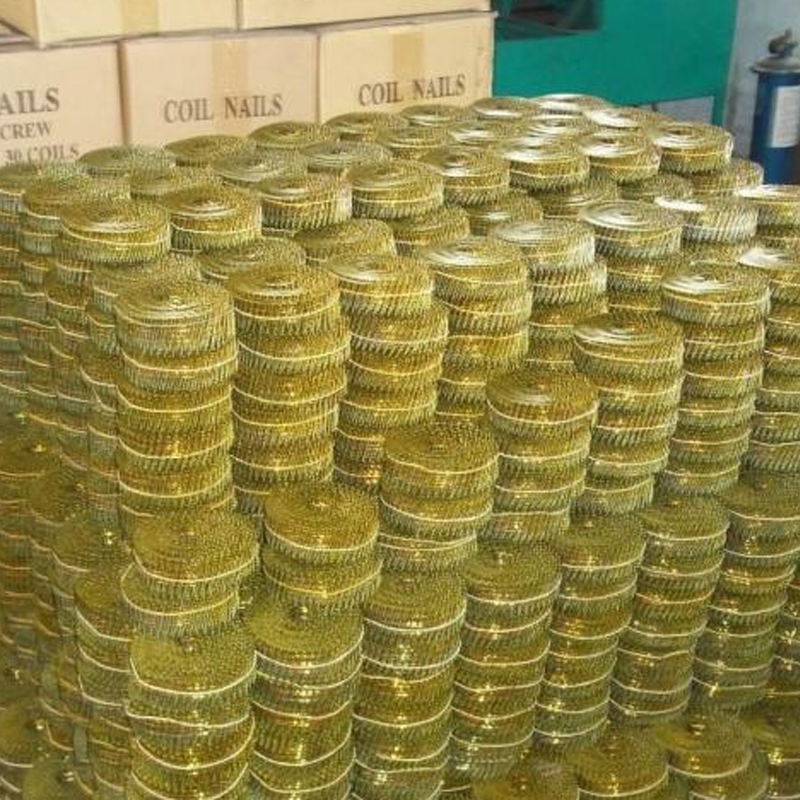
Roofing coil nails, supplied in boxes typically containing several collated strips, represent a critical fastening solution in the roofing industry. These nails are designed for use with pneumatic nail guns, specifically coil nailers, offering a rapid and efficient method for securing roofing materials such as asphalt shingles, underlayment, and roofing felt to wood substrates. Unlike traditional hand-driven nails, coil nails offer consistent depth of drive and minimize labor costs, substantially increasing productivity in large-scale roofing projects. Their manufacturing process focuses on precise collation and consistent shank dimensions to ensure reliable performance and minimize misfires. The industry chain positions coil nails as a consumable component directly impacting roof integrity, requiring rigorous quality control and adherence to building codes. Core performance characteristics include holding power, shear strength, corrosion resistance, and compatibility with various roofing materials and nail gun types.
Material Science & Manufacturing
Roofing coil nails are predominantly manufactured from carbon steel, specifically SAE 1008 or similar low-carbon steel alloys. This material choice balances cost-effectiveness with sufficient tensile strength for roofing applications. However, premium coil nails utilize stainless steel (typically 304 or 316) or are coated with galvanization, epoxy, or a polymer coating to enhance corrosion resistance, particularly in harsh coastal environments or where chemical exposure is anticipated. The manufacturing process begins with wire drawing, reducing the steel diameter to the required nail shank size. This is followed by heading, where the nail head is formed through a cold forging process. Precise die design and control of forging pressure are critical to ensure consistent head diameter and shape. Following heading, the nails undergo shank pointing, creating the sharp tip necessary for penetration. The most critical step is collation – the process of joining the nails into a continuous strip using plastic or paper collating tape. Consistent nail spacing and tape strength are vital to prevent misfeeds during use. Quality control includes dimensional checks, hardness testing (Rockwell C scale), and coating thickness verification. The polymer coatings are often applied using a dipping or spraying process, followed by curing to ensure adhesion and durability. Manufacturing tolerances are typically +/- 0.005 inches for shank diameter and +/- 0.010 inches for nail length.
Performance & Engineering
The performance of roofing coil nails is fundamentally governed by principles of shear stress and tensile strength. The nail shank must withstand significant shear forces imposed by wind uplift and thermal expansion/contraction of the roofing materials. The head diameter plays a critical role in distributing load and preventing pull-through. Engineering analysis often utilizes finite element analysis (FEA) to model stress distribution under various loading conditions, optimizing nail geometry for maximum holding power. Corrosion resistance is paramount, as rust weakens the nail and compromises the roof’s integrity. Galvanization provides sacrificial protection, while epoxy and polymer coatings create a barrier against moisture and chemical attack. Environmental resistance also encompasses UV degradation of the coating and resistance to temperature fluctuations. Compliance with building codes, such as those established by the International Building Code (IBC) and local jurisdictions, dictates minimum nail gauge, length, and spacing requirements based on wind speed and roof slope. Nail penetration depth is also a critical parameter; insufficient penetration reduces holding power, while excessive penetration can damage the substrate. Proper nail gun calibration and operator technique are essential to achieve optimal performance. The angle of nail penetration relative to the wood grain influences shear strength, with angles approaching 90 degrees generally providing the strongest hold.
Technical Specifications
| Nail Length (inches) | Nail Gauge (AWG) | Head Diameter (inches) | Shank Material |
|---|---|---|---|
| 1.25 | 8 | 0.140 | Carbon Steel (1008) |
| 1.50 | 8 | 0.140 | Carbon Steel (1008) |
| 1.75 | 8 | 0.140 | Carbon Steel (1008) |
| 2.00 | 8 | 0.140 | Carbon Steel (1008) |
| 1.25 | 9 | 0.120 | Stainless Steel (304) |
| 1.50 | 9 | 0.120 | Stainless Steel (304) |
Failure Mode & Maintenance
Roofing coil nails are susceptible to several failure modes in practical applications. Fatigue cracking can occur due to cyclical loading from wind gusts and temperature fluctuations, particularly in areas prone to high stress concentrations around the nail head. Corrosion, as previously discussed, weakens the nail shank, leading to reduced holding power and eventual failure. Shear failure occurs when the shear stress exceeds the material’s shear strength, causing the nail to break or pull through the substrate. Pull-through failure is often a result of insufficient nail length or weak wood substrate. Delamination of the coating, especially with epoxy or polymer coatings, can expose the underlying steel to corrosion. Oxidation occurs over time, gradually degrading the steel's properties. Maintenance primarily involves preventative measures – using appropriately coated nails for the environment and ensuring proper nail gun calibration. Regular roof inspections are crucial to identify signs of nail failure, such as loose shingles or corrosion. If failures are detected, individual nails should be replaced using nails of the same gauge and length, driven to the correct depth. Preventative coating applications to existing nails are generally impractical. Long-term prevention also relies on proper roof ventilation to minimize moisture buildup and reduce the risk of corrosion.
Industry FAQ
Q: What gauge nail should I use for asphalt shingles on a typical residential roof?
A: For standard asphalt shingles on a wood deck, an 8-gauge coil nail is generally recommended. However, local building codes may specify different requirements based on wind speed and roof slope. Always consult local codes and shingle manufacturer specifications to determine the appropriate nail gauge.
Q: What is the benefit of using stainless steel coil nails versus galvanized nails?
A: Stainless steel nails offer superior corrosion resistance compared to galvanized nails, especially in coastal environments or areas with high humidity or chemical exposure. While more expensive, stainless steel nails provide a longer service life and reduce the risk of premature roof failure due to corrosion.
Q: How does the nail shank length impact holding power?
A: Longer nail shanks generally provide greater holding power, as they penetrate deeper into the substrate. However, excessive length can damage the wood or create a pathway for water intrusion. The optimal shank length depends on the thickness of the roofing material and the underlying substrate.
Q: What causes misfires with coil nailers, and how can they be prevented?
A: Misfires can be caused by several factors, including low air pressure, damaged or worn nailer components, incorrect nail collation, or debris in the nailer magazine. Ensure proper air pressure, inspect the nailer for damage, use properly collated nails, and keep the magazine clean to prevent misfires.
Q: How does the type of coating affect the longevity of coil nails?
A: The type of coating significantly impacts the longevity of coil nails. Galvanization provides sacrificial protection, epoxy coatings create a barrier against moisture, and polymer coatings offer UV resistance. The choice of coating should be based on the environmental conditions and the expected service life of the roof.
Conclusion
Roofing coil nails represent a sophisticated fastening solution demanding careful consideration of material science, manufacturing precision, and engineering principles. The selection of appropriate nail gauge, length, and coating is critical to ensuring long-term roof integrity and compliance with building codes. Understanding the potential failure modes and implementing preventative maintenance measures are essential for maximizing roof lifespan and minimizing costly repairs.
The future of roofing coil nail technology will likely focus on advancements in coating materials, offering even greater corrosion resistance and durability. Furthermore, the development of “smart” nails with integrated sensors for monitoring stress and corrosion levels could revolutionize roof maintenance and provide early warning of potential failures. Optimized nail geometries through advanced FEA modeling will also contribute to enhanced holding power and reduced material usage.