



Introduction
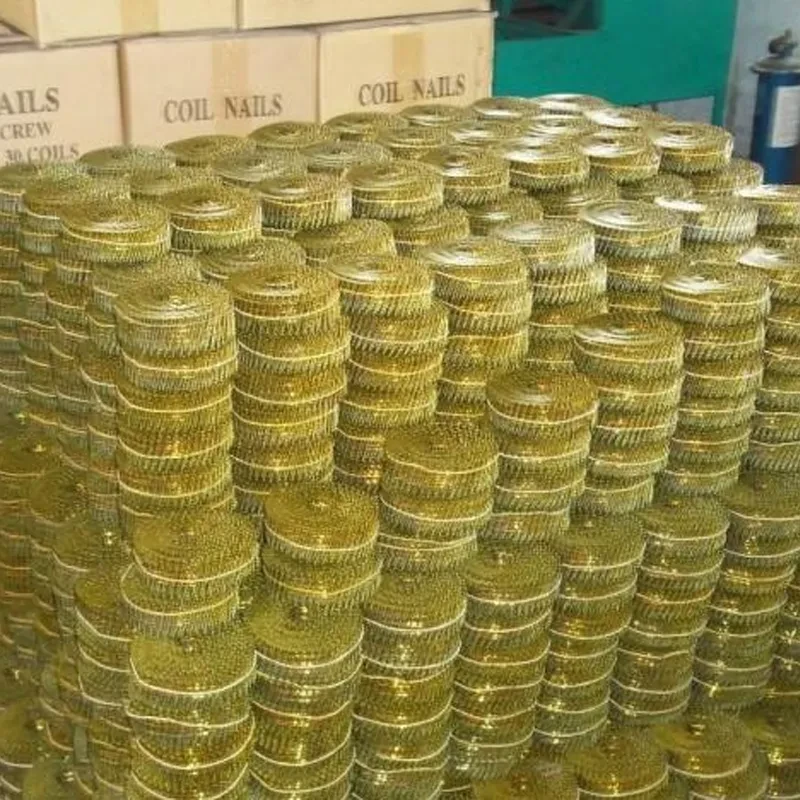
Spiral siding nails are a specialized fastening solution employed extensively in the construction industry for the secure installation of various siding materials, including wood, fiber cement, and engineered wood products. Distinguished by their uniquely twisted shank, these nails offer enhanced holding power compared to conventional smooth-shank nails, minimizing the risk of siding pull-through and improving long-term structural integrity. Their technical position lies within the broader category of specialized fasteners, bridging the gap between traditional nailing methods and more complex mechanical fastening systems. Core performance characteristics include superior shear strength, corrosion resistance (dependent on coating), and optimized shank design for reduced splitting of siding materials. The industry faces consistent challenges concerning long-term siding security, particularly in regions prone to high winds and extreme weather, making reliable fastener performance paramount. This guide provides an in-depth examination of spiral siding nails, covering material science, manufacturing processes, performance engineering, potential failure modes, and relevant industry standards.
Material Science & Manufacturing
Spiral siding nails are typically manufactured from high-carbon steel, specifically SAE 1049 or 1050, chosen for their superior tensile strength and hardness. The steel undergoes a cold-heading process to form the nail shape, followed by a crucial twisting operation that creates the spiral shank. This twisting process work-hardens the steel, further increasing its strength and resistance to deformation. Raw material composition is critical; impurities like sulfur and phosphorus must be carefully controlled to prevent brittleness and ensure weldability (in cases where collated nails are banded). Coating materials are equally important, with options including hot-dip galvanization (ASTM A153), electroplating with zinc or zinc-nickel alloys (ASTM B633), and increasingly, polymer coatings for enhanced corrosion protection. Manufacturing parameter control focuses on maintaining precise twist pitch and diameter along the nail shank, as variations can significantly affect holding power. Quality control involves rigorous testing of tensile strength, shear strength, and coating thickness. The head of the nail is typically formed using an upset forging process, ensuring a consistent and robust bearing surface. Annealing may be employed post-forming to reduce brittleness and improve ductility, especially for larger diameter nails.
Performance & Engineering
The performance of spiral siding nails hinges on their ability to resist withdrawal and shear forces. The spiral shank creates a mechanical interlock with the siding material and framing members, increasing resistance to pull-through compared to smooth nails. Force analysis reveals that the twisting action distributes stress more evenly along the shank, minimizing localized stress concentrations that could lead to bending or fracture. Environmental resistance is a critical consideration, particularly in coastal environments or areas with high humidity. Corrosion protection through galvanization or polymer coatings is essential to prevent degradation of the steel and maintain long-term holding power. Compliance requirements are dictated by building codes and industry standards, such as those established by the International Code Council (ICC) and American Wood Council (AWC). Engineering calculations for siding installations must account for wind loads, snow loads, and seismic activity, selecting nail size and spacing accordingly. The nail’s shear strength is determined through standardized testing methods (ASTM F1667), ensuring it can withstand lateral forces. The angle of the spiral impacts performance; a tighter spiral generally provides greater holding power but may increase the risk of splitting brittle siding materials. Proper nail penetration depth is also crucial; insufficient penetration reduces holding power, while excessive penetration can weaken the framing member.
Technical Specifications
| Nail Diameter (Gauge) | Nail Length (inches) | Shank Type | Coating Type |
|---|---|---|---|
| 6d (0.113 inch) | 2.0 inches | Spiral | Hot-Dip Galvanized (ASTM A153) |
| 8d (0.131 inch) | 2.5 inches | Spiral | Electro-Galvanized (ASTM B633) |
| 10d (0.148 inch) | 3.0 inches | Spiral | Zinc-Nickel Alloy Plating |
| 12d (0.162 inch) | 3.5 inches | Spiral | Polymer Coating (e.g., Epoxy) |
| 6d (0.113 inch) | 1.5 inches | Spiral | Stainless Steel (Type 304) |
| 8d (0.131 inch) | 2.0 inches | Spiral | Hot-Dip Galvanized (ASTM A153) with Ceramic Topcoat |
Failure Mode & Maintenance
Spiral siding nails are susceptible to several failure modes. Corrosion is a primary concern, leading to gradual weakening of the nail and eventual failure. This is particularly pronounced in environments with high salt concentrations or exposure to acidic rainwater. Fatigue cracking can occur under cyclical loading, such as from wind gusts, especially if the nails are subjected to bending stress. Splitting of the siding material, especially with brittle materials like fiber cement, can reduce holding power and create pathways for water ingress. Withdrawal failure occurs when the nail loses its mechanical interlock with the siding and framing, often due to insufficient penetration or degradation of the wood. Shear failure results from excessive lateral forces exceeding the nail’s shear strength. Maintenance involves periodic inspection of siding installations, particularly after severe weather events. Replacing corroded or damaged nails is crucial to prevent progressive failure. Proper painting or sealing of the siding can help protect the nails from corrosion. Avoiding excessive nailing pressure during installation can minimize splitting of the siding material. Utilizing nails with appropriate corrosion resistance for the specific environment is also vital. Regularly check for signs of nail pop, indicating a loss of holding power, and address promptly.
Industry FAQ
Q: What is the advantage of a spiral shank nail over a smooth shank nail in terms of holding power?
A: The spiral shank creates a mechanical interlock with the wood fibers, increasing resistance to withdrawal and shear forces. This interlock distributes stress more evenly along the shank, reducing the likelihood of pull-through compared to a smooth shank nail, which relies solely on friction.
Q: How does the coating type affect the lifespan of a spiral siding nail?
A: Coating type is crucial for corrosion resistance. Hot-dip galvanization provides a robust barrier against corrosion, while electroplating offers a more economical option. Polymer coatings, such as epoxy, provide superior protection, especially in harsh environments. Stainless steel nails offer the highest level of corrosion resistance but are also the most expensive.
Q: What nail gauge and length should be used for fiber cement siding?
A: Fiber cement siding typically requires a heavier gauge nail to prevent splitting. An 8d or 10d spiral siding nail, with a length appropriate for the siding thickness and framing depth (typically 2.5 to 3.0 inches), is generally recommended. Pre-drilling may be necessary to prevent cracking.
Q: What are the implications of using nails that are too short for the application?
A: Nails that are too short will not achieve sufficient penetration into the framing members, resulting in reduced holding power and increased risk of siding pull-through. This compromises the structural integrity of the siding installation and can lead to premature failure.
Q: How do I determine the appropriate nail spacing for a given wind load?
A: Appropriate nail spacing is determined by engineering calculations that consider wind loads, siding material properties, and local building codes. Consulting with a structural engineer or referencing manufacturer's recommendations based on tested performance is essential. Building codes often provide guidelines for nail spacing based on design wind speeds.
Conclusion
Spiral siding nails represent a significant advancement in fastening technology for exterior siding applications. Their unique spiral shank design delivers superior holding power and resistance to withdrawal, enhancing the long-term durability and performance of siding installations. Careful consideration of material science, manufacturing processes, and coating selection is critical to ensuring optimal corrosion resistance and longevity.
Proper installation techniques, adherence to building codes, and routine maintenance are essential for maximizing the lifespan and effectiveness of these fasteners. As building codes evolve and material science progresses, ongoing research and development will continue to refine spiral siding nail technology, addressing emerging challenges and improving performance in demanding environments.