



Introduction
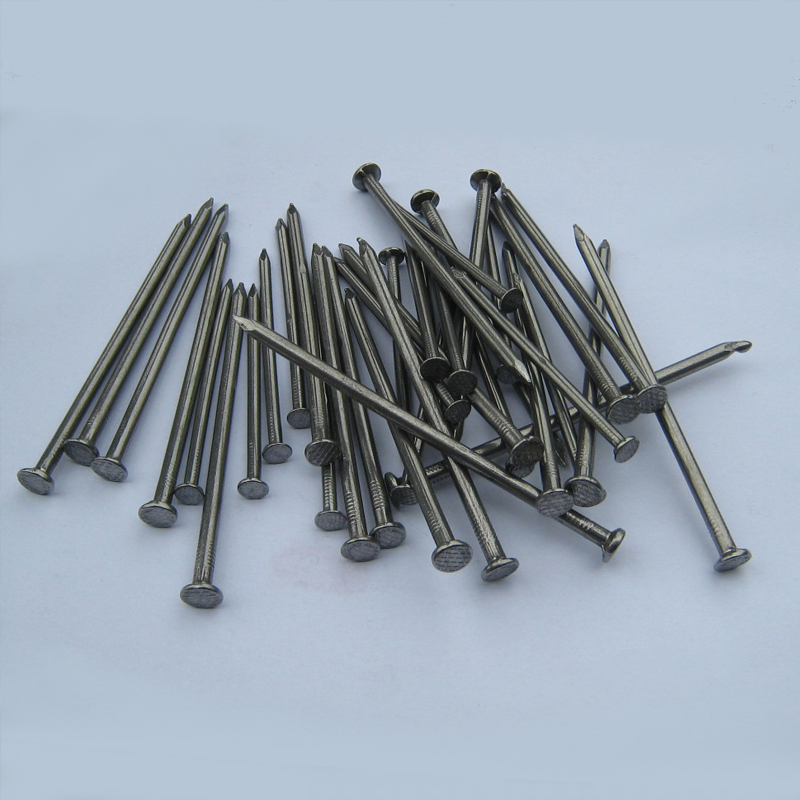
Stainless ring shank roofing nails are a specialized fastening solution employed in roofing applications, designed for superior holding power and corrosion resistance compared to conventional steel nails. Positioned within the building materials supply chain, these nails serve as a critical component in securing roofing materials – shingles, shakes, and tiles – to the roof deck. Their ring shank design, featuring a series of annular ridges, dramatically increases pull-through resistance by creating substantial friction between the nail and the wood substrate. The utilization of stainless steel alloys addresses the prevalent issue of corrosion in outdoor environments, particularly when exposed to varying climatic conditions and chemically treated lumber. Core performance characteristics center around shear strength, tensile strength, corrosion resistance (measured through salt spray testing), and consistent shank diameter for reliable pneumatic nail gun operation.
Material Science & Manufacturing
The primary material for stainless ring shank roofing nails is typically Type 304 or Type 316 stainless steel. Type 304, comprising 18% chromium and 8% nickel, provides excellent corrosion resistance in most atmospheric environments. Type 316, containing 16% chromium, 10% nickel, and 2-3% molybdenum, offers enhanced resistance to chloride corrosion, making it ideal for coastal regions or applications involving treated lumber. Raw material sourcing focuses on certified mills adhering to stringent chemical composition standards. Manufacturing commences with cold heading of stainless steel wire, a process that work-hardens the material, increasing its tensile strength. The ring shank is formed through a specialized rolling process, carefully controlling the depth, spacing, and radial compression of the rings to optimize pull-through resistance. Subsequent processes include shank pointing to create a sharp, consistent point for easy penetration and, frequently, a coating of resin or polymer to reduce friction during installation and further enhance corrosion protection. Quality control involves dimensional checks (shank diameter, head diameter, point sharpness), hardness testing (Rockwell C scale), and microscopic examination of the ring shank formation to ensure uniformity. Parameter control during cold heading is critical: precise die alignment, consistent feed rate, and controlled lubrication prevent material defects like cracking or folding.
Performance & Engineering
The performance of stainless ring shank roofing nails is governed by principles of mechanical engineering and material science. Shear strength, the nail's resistance to lateral forces, is primarily determined by the shank diameter and the steel’s yield strength. Tensile strength, resistance to pulling forces, is influenced by the shank’s cross-sectional area and the degree of cold working during manufacturing. The ring shank significantly enhances pull-through resistance through friction. Finite element analysis (FEA) is often employed to optimize ring geometry – height, width, and spacing – to maximize this friction without compromising shank strength. Environmental resistance is crucial; long-term exposure to UV radiation, temperature cycles, and moisture can induce corrosion. Stainless steel’s passive chromium oxide layer provides inherent protection, but chloride ions (from salt spray or treated lumber) can compromise this layer, leading to pitting corrosion. Galvanic corrosion, occurring when dissimilar metals are in contact, is minimized by using fully stainless steel components. Compliance requirements include adherence to building codes (IBC, IRC) specifying nail size, spacing, and penetration depth for various roofing materials and wind load conditions. Nail driving systems, particularly pneumatic nailers, demand consistent nail geometry and head strength to prevent misfires or nail bending during high-speed operation. Wind uplift resistance is a primary engineering consideration, dictating nail density and placement patterns to ensure roof integrity during extreme weather events.
Technical Specifications
| Diameter (inches) | Length (inches) | Shank Type | Head Type |
|---|---|---|---|
| 0.099 | 1.25 | Ring Shank | Flat Head |
| 0.099 | 1.50 | Ring Shank | Flat Head |
| 0.099 | 2.00 | Ring Shank | Flat Head |
| 0.113 | 1.50 | Ring Shank | Flat Head |
| 0.113 | 2.00 | Ring Shank | Flat Head |
| 0.120 | 2.50 | Ring Shank | Flat Head |
Failure Mode & Maintenance
Stainless ring shank roofing nails, despite their corrosion resistance, are susceptible to several failure modes. Fatigue cracking can occur under cyclical loading from wind and thermal expansion/contraction, initiating at stress concentrations around the ring shank or nail head. Hydrogen embrittlement, induced by exposure to acidic environments or electrochemical processes, can reduce ductility and promote brittle fracture. Pitting corrosion, particularly in chloride-rich environments, weakens the shank and reduces its load-bearing capacity. Shear failure, exceeding the nail’s shear strength, is common in high-wind events. Pull-through failure occurs when the friction between the ring shank and the wood substrate is insufficient to resist uplift forces. Delamination of the wood substrate itself, often due to moisture intrusion, can also create the appearance of nail failure. Maintenance, while typically limited, involves periodic visual inspection of the roof for loose or corroded nails. Replacing damaged or corroded nails with new stainless steel fasteners is crucial to prevent further deterioration. Pre-drilling, particularly in hardwoods, minimizes splitting and maximizes nail holding power. Proper nail gun settings – air pressure, driving depth – are essential to prevent bending or under-driving, which compromises performance. Avoid using dissimilar metals in direct contact with stainless steel nails to mitigate galvanic corrosion risks.
Industry FAQ
Q: What is the difference between Type 304 and Type 316 stainless steel for roofing nails?
A: Type 304 offers excellent general corrosion resistance and is suitable for most inland applications. Type 316 provides superior resistance to chloride corrosion, making it the preferred choice for coastal regions, areas exposed to de-icing salts, or when used with chemically treated lumber. The addition of molybdenum in Type 316 significantly enhances its pitting resistance.
Q: How does the ring shank design improve holding power compared to smooth shank nails?
A: The ring shank creates significantly greater friction between the nail and the wood fibers. This friction resists pull-through forces, which are a primary cause of roofing failure during wind uplift. Smooth shank nails rely primarily on friction from the shank surface, which is substantially less than that provided by the annular rings.
Q: What is the typical lifespan of a stainless ring shank roofing nail?
A: With proper installation and in a moderately corrosive environment, a stainless ring shank roofing nail can have a lifespan exceeding 50 years. However, lifespan is highly dependent on environmental factors, the grade of stainless steel used, and the type of wood it is installed into.
Q: Are stainless steel roofing nails compatible with all types of roofing materials?
A: Stainless steel roofing nails are compatible with most common roofing materials, including asphalt shingles, wood shakes, and cedar shingles. However, compatibility should be verified with the roofing material manufacturer, as certain materials may require specialized fasteners.
Q: What impact does nail gun air pressure have on the performance of stainless ring shank nails?
A: Incorrect air pressure can lead to several issues. Too low of pressure can result in under-driven nails, reducing holding power. Too high of pressure can bend or damage the nail, compromising its integrity. Following the nail gun manufacturer’s recommendations and performing test drives are critical.
Conclusion
Stainless ring shank roofing nails represent a robust and long-lasting fastening solution for roofing applications. The combination of stainless steel alloys and the ring shank design delivers superior corrosion resistance and holding power, crucial for maintaining roof integrity under varying environmental conditions. Selecting the appropriate grade of stainless steel (304 or 316) based on the specific exposure environment is paramount for maximizing service life.
Future developments may focus on advanced coating technologies to further enhance corrosion protection and reduce installation friction. Research into novel ring shank geometries optimized for different wood species and roofing materials could also improve pull-through resistance. The increasing adoption of sustainable building practices will likely drive demand for durable, long-lasting fasteners like stainless ring shank nails, reducing the need for frequent replacements and minimizing waste.