



Introduction
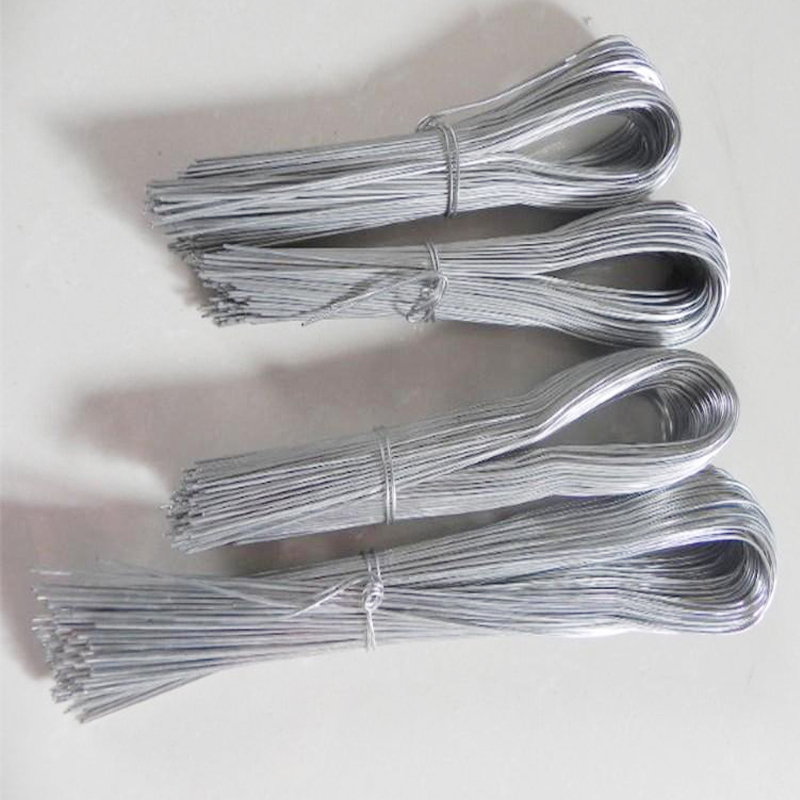
Stainless steel wire loop ties are a critical fastening solution employed across diverse industrial applications, including electrical wiring, plumbing, HVAC systems, and general-purpose bundling. They offer a robust, corrosion-resistant alternative to plastic ties or other metallic fasteners. Their primary function is to securely consolidate cables, wires, pipes, or other cylindrical objects, providing both mechanical support and organizational order. Technically positioned as a cold-formed fastener, these ties leverage the ductility of stainless steel to create a closed loop capable of withstanding significant tensile stress and environmental exposure. Core performance characteristics encompass tensile strength, loop shear resistance, corrosion resistance (dependent on alloy grade), and ease of installation. A key industry pain point lies in maintaining consistent clamping force over the product lifecycle, preventing loosening due to vibration or thermal cycling, and ensuring long-term reliability in harsh environments.
Material Science & Manufacturing
The foundational material for stainless steel wire loop ties is typically 304 or 316 stainless steel. 304 stainless steel, an austenitic alloy, provides excellent corrosion resistance in a wide range of atmospheric environments. Its composition is approximately 18% chromium and 8% nickel, imparting its passivating characteristics. 316 stainless steel, also austenitic, includes molybdenum (2-3%), further enhancing corrosion resistance, particularly against chloride attack in marine or industrial environments. Raw material is sourced as cold-drawn wire, ensuring precise dimensions and a smooth surface finish. Manufacturing proceeds via a cold forming process, typically using progressive die stamping. Wire is fed into a series of dies that bend and shape it into the characteristic loop configuration. Critical parameters include die geometry, feed rate, and lubrication. Insufficient lubrication leads to galling and increased tool wear, while improper die geometry results in dimensional inaccuracies. Post-forming, the ties may undergo passivation treatment – typically employing citric or nitric acid – to enhance the chromium oxide passive layer and further improve corrosion resistance. Quality control checks involve dimensional inspection, tensile testing (per ASTM A370), and salt spray testing (per ASTM B117) to verify conformance to specifications. The microstructure is predominantly austenitic, with a grain size influenced by the degree of cold work. Recrystallization can occur at elevated temperatures, impacting mechanical properties.
Performance & Engineering
Performance of stainless steel wire loop ties is governed by several key engineering principles. Force analysis centers on the tensile strength of the wire and the shear strength of the loop. The loop's geometry – particularly the radius of the bend – concentrates stress, making it a potential failure initiation site. Finite Element Analysis (FEA) is often employed to optimize loop design and predict stress distribution under load. Environmental resistance is crucial, especially in applications involving temperature fluctuations, humidity, or corrosive agents. The passive chromium oxide layer protects the underlying steel, but can be compromised by chlorides, sulfates, or strong acids. Galvanic corrosion can also occur if the tie is in contact with dissimilar metals in the presence of an electrolyte. Compliance requirements vary depending on the application. For electrical applications, RoHS compliance (Restriction of Hazardous Substances) is essential, limiting the use of substances like lead, mercury, and cadmium. UL certification may be required to demonstrate compliance with safety standards. The clamp load, or the force exerted by the tie on the bundled objects, must be sufficient to prevent slippage or movement during operation. This load is determined by the wire diameter, loop tension, and the coefficient of friction between the tie and the materials being bundled. Fatigue resistance is critical in applications subject to vibration. Repeated bending and straightening can lead to fatigue cracking, especially at the loop bend.
Technical Specifications
| Material Grade | Wire Diameter (mm) | Loop Tensile Strength (N) | Minimum Loop Shear Strength (N) |
|---|---|---|---|
| 304 Stainless Steel | 1.2 | 250 | 180 |
| 304 Stainless Steel | 1.5 | 400 | 300 |
| 316 Stainless Steel | 1.2 | 270 | 200 |
| 316 Stainless Steel | 1.5 | 450 | 330 |
| 316 Stainless Steel | 2.0 | 700 | 500 |
| 304 Stainless Steel | 2.0 | 600 | 420 |
Failure Mode & Maintenance
Common failure modes for stainless steel wire loop ties include stress corrosion cracking (SCC), particularly in chloride-rich environments; fatigue cracking due to cyclic loading; and mechanical failure due to exceeding the tensile or shear strength. SCC initiates at surface defects or stress concentrations, leading to rapid propagation of cracks through the material. Fatigue cracking typically begins at the bend radius of the loop, where stresses are highest. Mechanical failure occurs when the load exceeds the material’s ultimate strength, resulting in immediate fracture. Oxidation at high temperatures can also lead to material degradation over extended periods. Maintenance is generally minimal, but periodic inspection is recommended in critical applications. Visually inspect the ties for signs of corrosion, cracking, or deformation. Replace any ties exhibiting these defects. For applications exposed to severe environments, consider applying a protective coating (e.g., PTFE) to further enhance corrosion resistance. Ensure proper installation – avoid over-tightening, which can pre-stress the material and accelerate fatigue failure. Regularly check the clamp load to ensure it remains within the specified range. In cases of suspected SCC, remove the tie and analyze the fracture surface to confirm the failure mechanism.
Industry FAQ
Q: What is the impact of cold work on the mechanical properties of stainless steel wire loop ties?
A: Cold work, inherent in the wire drawing and forming processes, increases the yield strength and tensile strength of the stainless steel, but simultaneously reduces its ductility. This means the ties are stronger but less capable of undergoing plastic deformation before failure. Excessive cold work can lead to strain hardening and increased susceptibility to stress corrosion cracking. Proper annealing may be used to restore ductility, but this is less common in high-volume production.
Q: How does the choice between 304 and 316 stainless steel affect long-term performance in marine applications?
A: In marine environments, characterized by high chloride concentrations, 316 stainless steel is significantly superior to 304. The addition of molybdenum in 316 provides enhanced resistance to pitting corrosion and crevice corrosion, both common failure mechanisms in saltwater. While 304 may perform adequately in some marine applications, 316 offers a longer service life and reduced risk of premature failure.
Q: What is the significance of passivation treatment after forming?
A: Passivation is a crucial step in enhancing corrosion resistance. It involves treating the stainless steel with an oxidizing agent (typically citric or nitric acid) to remove free iron from the surface and promote the formation of a thicker, more stable chromium oxide passive layer. This layer acts as a barrier, preventing the underlying steel from corroding. Proper passivation is essential for maximizing the service life of the ties, particularly in corrosive environments.
Q: What are the implications of using stainless steel wire loop ties in conjunction with aluminum components?
A: When stainless steel is in contact with aluminum in the presence of an electrolyte (e.g., moisture), galvanic corrosion can occur. Stainless steel is more noble (less reactive) than aluminum, causing the aluminum to corrode preferentially. To mitigate this, consider using an insulating barrier between the two metals, applying a protective coating to the aluminum, or selecting a stainless steel alloy with a more similar electrochemical potential to aluminum.
Q: How can I determine the appropriate wire diameter for a specific application?
A: Determining the appropriate wire diameter involves considering the tensile load, shear load, environmental conditions, and desired safety factor. Calculate the maximum expected load based on the weight of the bundled objects and any external forces acting on them. Select a wire diameter that provides a sufficient safety factor (typically 2:1 or higher) to prevent failure. Consult the manufacturer's specifications for tensile and shear strength data for different wire diameters.
Conclusion
Stainless steel wire loop ties represent a reliable and cost-effective fastening solution for a wide array of industrial applications. Their inherent corrosion resistance, combined with adequate mechanical strength, ensures long-term performance even in harsh environments. Understanding the nuances of material selection (304 vs. 316), manufacturing processes, and potential failure modes is crucial for optimizing tie performance and preventing premature failures. Careful consideration of application-specific requirements, including load, environmental exposure, and compliance standards, is paramount in selecting the appropriate tie for the task.
Future development trends may focus on enhancing the corrosion resistance of stainless steel alloys through advanced surface treatments and exploring the use of duplex stainless steels, which offer superior strength and corrosion resistance. Improvements in cold forming techniques can lead to tighter dimensional tolerances and reduced manufacturing costs. Furthermore, the integration of smart sensors within the ties could provide real-time monitoring of clamp load and environmental conditions, enabling predictive maintenance and improving overall system reliability.