



Introduction
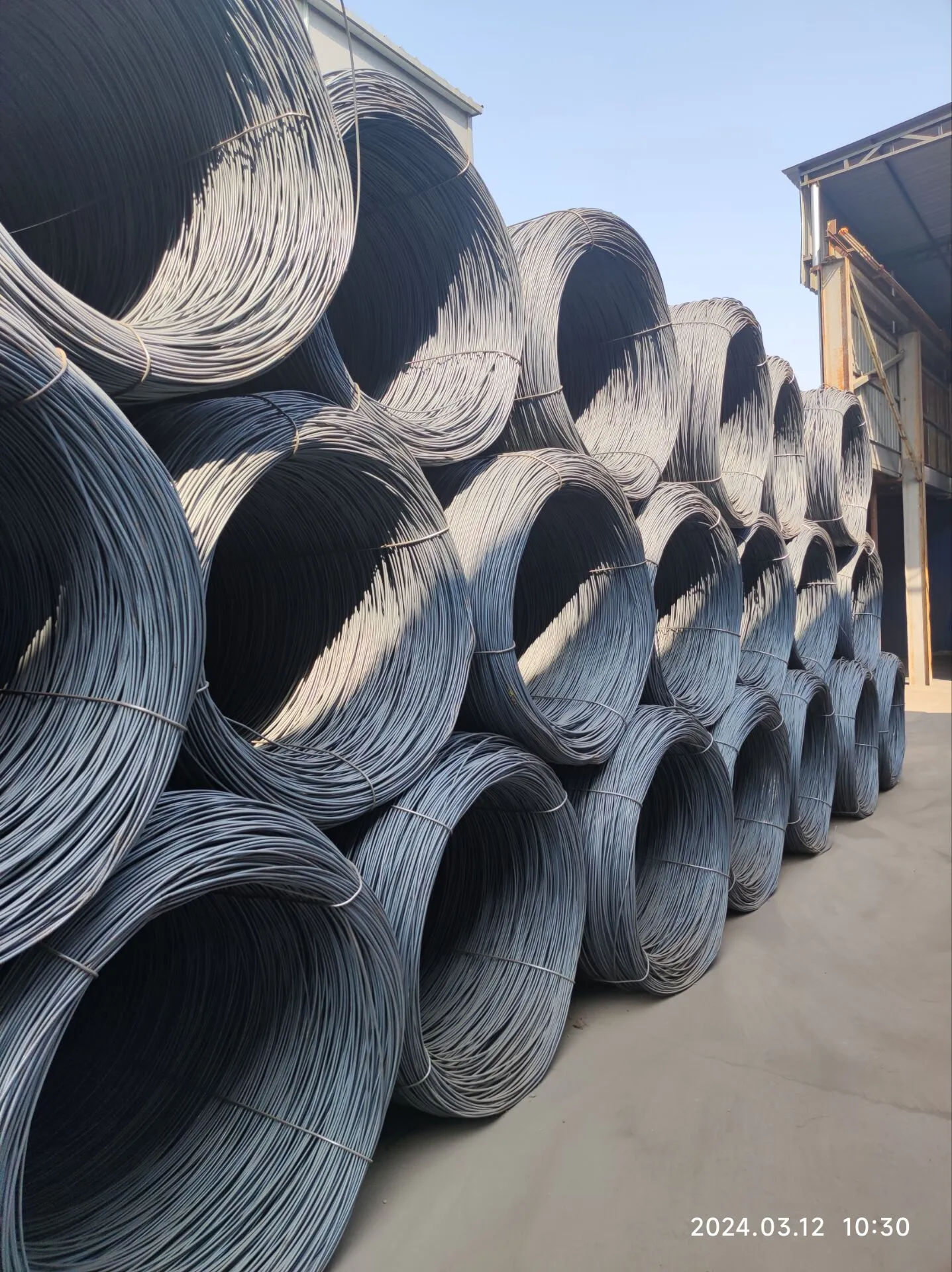
Tie wire, a seemingly simple component, represents a critical fastening solution across diverse industrial applications. Typically manufactured from low-carbon steel, galvanized steel, stainless steel, or aluminum, tie wire facilitates bundling, securing, and supporting materials in construction, agriculture, packaging, and manufacturing. Its primary function is to provide temporary or permanent binding, enabling efficient assembly and structural integrity. The material selection is dictated by the end-use environment and required corrosion resistance. Compared to more sophisticated fastening methods like welding or bolting, tie wire offers cost-effectiveness and rapid installation, though with limitations in load-bearing capacity and long-term durability. Understanding the specific material properties, manufacturing processes, and failure modes of tie wire is crucial for engineers and procurement specialists to ensure optimal performance and prevent costly failures.
Material Science & Manufacturing
The core material of tie wire significantly influences its performance characteristics. Low-carbon steel (typically SAE 1008) is the most common due to its ductility and weldability. Galvanization, involving a zinc coating, provides enhanced corrosion resistance, critical for outdoor applications. Stainless steel (grades 304 and 316) offers superior corrosion protection, especially in harsh chemical environments, albeit at a higher cost. Aluminum alloys (e.g., 6061) are employed where lightweight and non-magnetic properties are essential. The manufacturing process typically begins with wire drawing, reducing the diameter of the raw material through a series of dies. This process work-hardens the wire, increasing its tensile strength. Annealing may follow to restore ductility for easier manipulation. For galvanized wire, the process involves hot-dip galvanization, immersing the steel wire in molten zinc. Quality control during wire drawing is vital, ensuring consistent diameter and minimizing surface defects. Galvanization thickness is meticulously controlled to meet specific coating standards. The chemical composition of the metal is verified through spectroscopic analysis to confirm adherence to established alloy specifications. Proper surface preparation prior to galvanization – including pickling and fluxing – is critical for optimal coating adhesion and longevity.
Performance & Engineering
The performance of tie wire is fundamentally governed by its tensile strength, elongation, and resistance to environmental degradation. Tensile strength, measured in MPa or psi, dictates the load the wire can withstand before fracturing. Elongation, expressed as a percentage, indicates the wire's ductility and ability to deform before breaking. Engineering applications necessitate calculating the required wire diameter based on the anticipated tensile load, applying a safety factor to account for dynamic forces and potential corrosion. For example, in reinforced concrete construction, tie wire secures rebar cages, resisting tensile stresses during concrete pouring and curing. The performance is further impacted by the wire's bending fatigue resistance; repeated bending can lead to localized stress concentrations and premature failure. Corrosion is a major concern, particularly in marine or chemically aggressive environments. Galvanic corrosion, occurring when dissimilar metals are in contact, must be mitigated through proper material selection or isolation techniques. Finite element analysis (FEA) can be employed to model stress distributions within the wire and predict its performance under complex loading conditions. Compliance with relevant building codes and industry standards (e.g., ASTM A641 for zinc-coated steel wire) is paramount to ensure structural integrity and safety.
Technical Specifications
| Parameter | Low-Carbon Steel | Galvanized Steel | Stainless Steel (304) | Aluminum Alloy (6061) |
|---|---|---|---|---|
| Tensile Strength (MPa) | 400-550 | 400-500 | 500-700 | 275-350 |
| Elongation (%) | 15-25 | 10-20 | 30-40 | 20-30 |
| Diameter (mm) | 0.8-3.2 | 0.8-3.2 | 0.8-3.2 | 1.0-4.0 |
| Zinc Coating Thickness (µm) | N/A | 50-150 | N/A | N/A |
| Corrosion Resistance | Low | Moderate | High | Moderate |
| Typical Applications | General bundling, temporary fastening | Outdoor construction, agricultural ties | Chemical processing, marine environments | Lightweight applications, non-magnetic requirements |
Failure Mode & Maintenance
Tie wire failure manifests in several forms. The most common is tensile overload, resulting in brittle fracture when the applied load exceeds the wire's ultimate tensile strength. Fatigue cracking can occur under cyclic loading, initiating at stress concentrations such as bends or surface defects. Corrosion, particularly in the absence of adequate protective coatings, leads to pitting and weakening of the wire, reducing its load-bearing capacity. Galvanic corrosion, as mentioned, accelerates deterioration when dissimilar metals are in contact. Hydrogen embrittlement, a phenomenon observed in high-strength steels exposed to hydrogen-containing environments, can cause premature cracking. Delamination of the zinc coating in galvanized wire compromises its corrosion resistance. Maintenance primarily focuses on preventative measures. Regular inspection for signs of corrosion, cracking, or deformation is critical. In corrosive environments, periodic re-galvanization or replacement of the wire is recommended. Avoid excessive bending or twisting, which can induce stress concentrations. Proper storage in a dry environment prevents premature corrosion. For critical applications, consider using corrosion inhibitors or protective coatings to extend the wire's lifespan. When replacing tie wire, ensure the new wire meets or exceeds the original specifications.
Industry FAQ
Q: What is the primary difference in performance between galvanized steel and stainless steel tie wire in a coastal environment?
A: In a coastal environment, galvanized steel offers moderate corrosion resistance due to the zinc coating, protecting the underlying steel from atmospheric corrosion. However, the zinc coating is sacrificial and will eventually corrode, especially in the presence of salt spray. Stainless steel (specifically 316 grade) provides significantly superior corrosion resistance due to its inherent chromium content, forming a passive oxide layer that protects against chloride attack. While more expensive upfront, stainless steel tie wire offers a substantially longer service life in harsh marine conditions, reducing maintenance and replacement costs.
Q: How does the wire drawing process affect the ductility of low-carbon steel tie wire?
A: Wire drawing is a cold-working process that increases the tensile strength of the steel but simultaneously reduces its ductility. This is because the process introduces dislocations into the metal’s crystalline structure, hindering its ability to deform plastically. Therefore, after wire drawing, an annealing process is often employed to restore some of the lost ductility, making the wire easier to bend and tie without fracturing.
Q: What safety factor should be applied when selecting tie wire for securing rebar cages in concrete structures?
A: A safety factor of at least 2.0, and often 3.0, is recommended when selecting tie wire for rebar cages. This accounts for dynamic loads during concrete pouring, potential corrosion over the structure’s lifespan, and uncertainties in the actual load distribution. The safety factor is applied to the calculated tensile load based on the rebar size, spacing, and concrete weight. Local building codes may specify stricter safety factor requirements.
Q: What is hydrogen embrittlement and how does it relate to tie wire failure?
A: Hydrogen embrittlement is a phenomenon where hydrogen atoms diffuse into the metal lattice, reducing its ductility and increasing its susceptibility to cracking, particularly under tensile stress. It can occur during manufacturing processes like electroplating or pickling, or in service environments with exposure to hydrogen-containing substances. High-strength steels are particularly vulnerable. Preventative measures include using appropriate coatings to prevent hydrogen absorption and avoiding exposure to hydrogen-rich environments.
Q: Can aluminum tie wire be used as a substitute for steel tie wire in all applications?
A: No, aluminum tie wire is not a direct substitute for steel tie wire in all applications. While aluminum offers advantages in terms of weight and corrosion resistance in certain environments, its lower tensile strength and elongation limit its load-bearing capacity. It's suitable for lightweight bundling applications where high strength is not critical. Furthermore, aluminum is susceptible to galvanic corrosion when in contact with dissimilar metals, and its creep resistance is lower than that of steel. Therefore, careful consideration of the application requirements and material properties is essential.
Conclusion
Tie wire, despite its simplicity, is a critical fastening component demanding careful consideration of material selection, manufacturing processes, and potential failure modes. The optimal choice depends heavily on the application environment, required load-bearing capacity, and longevity expectations. Galvanized steel provides a cost-effective solution for general-purpose applications, while stainless steel offers superior corrosion resistance for harsh environments. Understanding the implications of corrosion, fatigue, and hydrogen embrittlement is crucial for ensuring structural integrity and preventing premature failures.
Looking ahead, advancements in coating technologies and alloy development will likely lead to tie wire products with enhanced corrosion resistance, improved strength-to-weight ratios, and increased durability. Furthermore, the increasing emphasis on sustainability will drive demand for tie wire manufactured from recycled materials and utilizing environmentally friendly production processes. Proper inspection and maintenance practices remain fundamental to maximizing the service life of tie wire and minimizing life-cycle costs.