




Precision Wire Mesh in Laboratory: Engineered for Accuracy and Reliability
In the exacting world of scientific research and quality control, every component must meet the highest standards of precision and performance. Our specialized wire mesh in laboratory applications is engineered to fulfill this critical role. More than just a filter or screen, it is a fundamental component in processes requiring precise particle separation, sample preparation, and material handling. Manufactured with meticulous attention to detail, our laboratory-grade wire mesh ensures consistent, repeatable results, forming a reliable foundation for your most important analytical work.
Product Overview
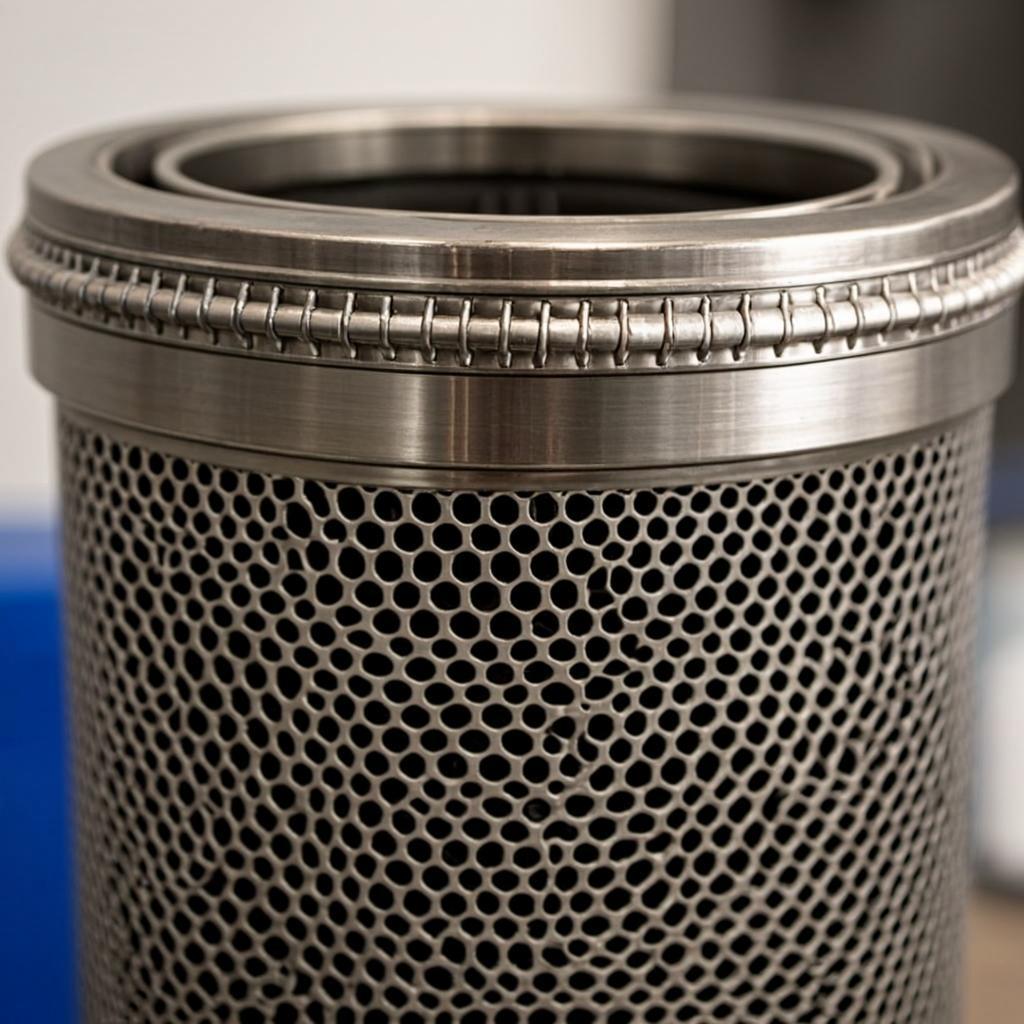
Our laboratory wire mesh is a high-precision filtration and separation medium designed for critical scientific and industrial processes. It is fabricated from premium materials, including 304 and 316 stainless steel, brass, and nickel, to ensure compatibility with a wide range of chemicals and solvents. Each mesh is woven with exacting tolerances, guaranteeing uniform aperture sizes and exceptional structural integrity. This product is essential for applications where the accuracy of particle retention, flow rate, and material purity directly impacts the validity of experimental data and production quality.
Key Features
- Ultra-Precise Weaving: Advanced weaving techniques produce consistently uniform mesh openings, critical for accurate particle size analysis and separation.
- Premium Material Selection: Available in corrosion-resistant alloys like 316L stainless steel for harsh chemical environments, ensuring long-term durability and preventing sample contamination.
- Rigorous Quality Control: Every batch undergoes stringent inspection for mesh count, wire diameter, and defect-free construction, guaranteeing performance you can trust.
- Clean Room Packaging: Meshes are cleaned, degreased, and packaged in controlled environments to deliver a product-ready for immediate use in sensitive applications.
- Custom Fabrication: We offer custom cutting, shaping, and edging (including welded frames or bound edges) to fit specific apparatus like filter presses, sieve shakers, or custom assemblies.
Technical Specifications
| Parameter | Specifications | Notes |
|---|---|---|
| Standard Materials | 304 Stainless Steel, 316/316L Stainless Steel, Brass, Nickel | Other alloys available upon request |
| Mesh Count Range | 2 to 635 mesh (10,000 μm to 20 μm nominal aperture) | Covers coarse screening to fine microfiltration |
| Weave Type | Plain Weave, Twill Weave, Dutch Weave | Selected for optimal strength and filtration characteristics |
| Standard Sheet Size | 1m x 30m (Rolls), 1m x 2m (Sheets) | Custom dimensions and shapes available |
| Surface Finish | Standard Mill, Electropolished | Electropolishing reduces adhesion and eases cleaning |
| Compliance | ISO 9044, ASTM E11, USP Class VI (on request) | Manufactured to international standards |
Application Scenarios
The versatility of high-quality wire mesh in laboratory settings makes it indispensable across numerous sectors:
- Pharmaceutical & Biotech: Critical for sterile filtration, cell culture, active pharmaceutical ingredient (API) separation, and catalyst recovery.
- Food & Beverage Testing: Used in particle analysis of powders, quality control of ingredients, and microbiological testing procedures.
- Environmental Science: Essential for soil analysis, water quality testing, and air particulate sampling.
- Geology & Metallurgy: Employed in mineral sizing, ore grading, and powder metallurgy processes.
- Chemical Research: Serves as a catalyst support, a filter for aggressive solvents, and a sieve for precise chemical powder separation.
- Academic & R&D: A fundamental tool in university and corporate research labs for material science, chemistry, and engineering projects.
Advantages
Choosing our specialized wire mesh in laboratory workflows delivers measurable benefits:
- Enhanced Data Integrity: Precise and consistent mesh openings ensure reliable and repeatable separation results, forming the basis for accurate scientific conclusions.
- Reduced Contamination Risk: High-purity materials and clean manufacturing processes minimize the risk of introducing foreign particles that could compromise samples.
- Improved Process Efficiency: Optimized weave designs offer excellent flow rates without sacrificing retention capabilities, speeding up filtration and analysis steps.
- Long-Term Cost Savings: Superior corrosion resistance and mechanical strength extend service life, reducing the frequency of replacement and downtime.
- Application-Specific Solutions: Our ability to customize allows for perfect integration into existing equipment, improving overall system performance.
Why Choose Us
As a dedicated supplier to the scientific and industrial sectors, we differentiate ourselves through a deep understanding of the critical role that wire mesh in laboratory environments plays. We are not just manufacturers; we are technical partners. Our team possesses the expertise to recommend the optimal mesh specification for your unique application, balancing aperture size, material compatibility, and mechanical demands. We combine state-of-the-art manufacturing with old-fashioned attention to detail, ensuring every square inch of mesh meets the rigorous standards your work demands. Our commitment to certification, traceability, and responsive customer support makes us the reliable partner for your precision filtration needs.
FAQ
How do I select the correct mesh count for my application?
Selection depends on the size of particles you need to retain or allow to pass. The mesh count refers to the number of openings per linear inch. A higher number indicates smaller openings. We strongly recommend consulting our technical team with your specific particle size distribution data to ensure optimal selection, as nominal aperture is just one factor.
What is the difference between 304 and 316 stainless steel for laboratory use?
Both are excellent. 304 SS is a general-purpose, corrosion-resistant alloy suitable for most applications. 316/316L stainless steel offers superior resistance to chlorides and harsh chemicals, making it the preferred choice for biological labs, pharmaceutical applications, and processes involving saline or acidic solutions.
Can you supply wire mesh cut to fit my specific equipment?
Yes, custom fabrication is a core service. We can precision-cut discs, rectangles, or complex shapes. We also offer edge finishing (sintered, welded, or folded) and can mount mesh into frames or housings per your technical drawings.
How should I clean and maintain laboratory wire mesh?
For general use, ultrasonic cleaning in a mild detergent or solvent is effective. For deeply embedded particles or sterile applications, autoclaving (check material tolerance first) or acid cleaning may be used. We provide detailed Material Safety and Handling Sheets with each order.
Do you provide certification for your wire mesh?
Yes. We can provide material certification (e.g., 3.1 Mill Certificate), dimensional inspection reports, and, upon request, certificates for specific standards like USP Class VI for biocompatibility. Full traceability from raw material to finished product is standard.